Kasambahay Law: Rights of Household Workers in the Philippines (2026 Guide)
Kasambahay Law: Mga Karapatan ng Kasambahay sa Pilipinas (2026 Gabay)
Quick Summary
Mabilis na Buod
Table of Contents
Talaan ng Nilalaman
- What is the Kasambahay Law?
- Who is a Kasambahay?
- Employer Obligations
- Minimum Wage for Kasambahay
- SSS, PhilHealth & Pag-IBIG Registration
- Rest Days & Leave
- Termination Rules
- What to Do If Your Rights Are Violated
- For Employers: Compliance Checklist
- Pro Tips
- Frequently Asked Questions
- Related Guides
- Ano ang Kasambahay Law?
- Sino ang Kasambahay?
- Mga Obligasyon ng Employer
- Minimum na Sahod ng Kasambahay
- SSS, PhilHealth at Pag-IBIG Registration
- Mga Araw ng Pahinga at Leave
- Mga Patakaran sa Pagtanggal
- Ano ang Gagawin Kung Nilabag ang Karapatan Mo
- Para sa mga Employer: Compliance Checklist
- Mga Payo
- Mga Madalas Itanong
- Mga Kaugnay na Gabay
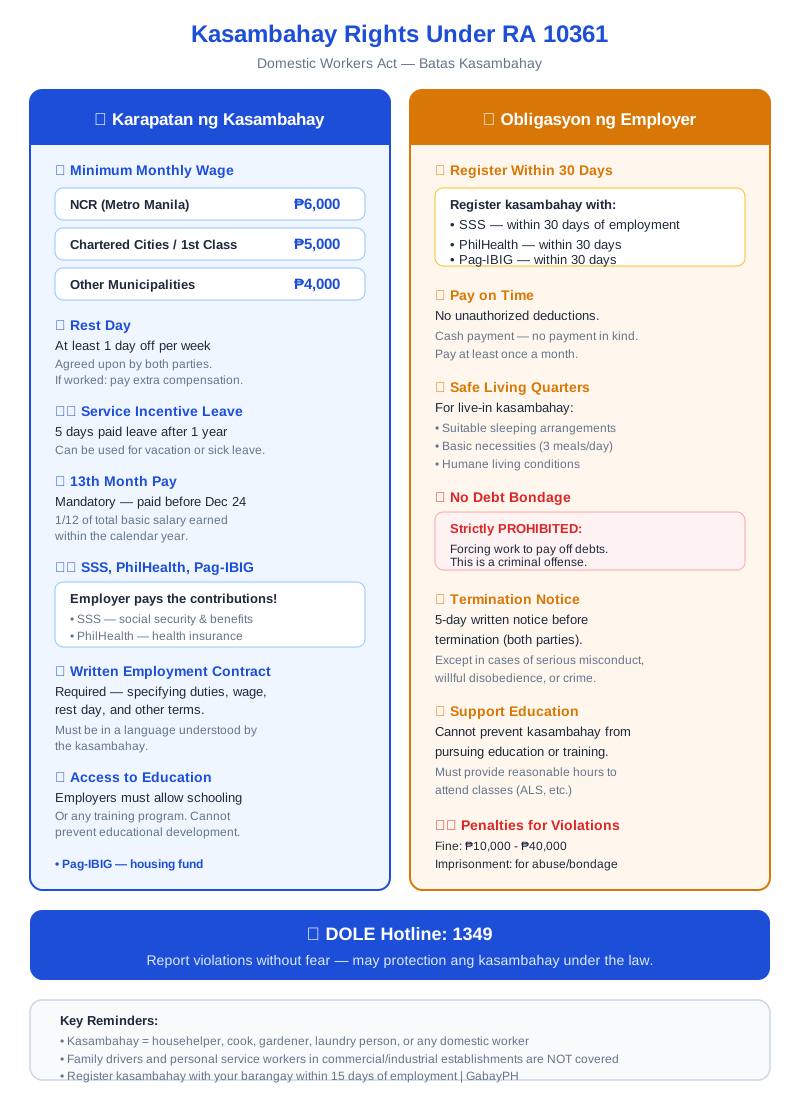
If you are a household worker in the Philippines — or if you employ one — you need to know about Republic Act 10361, also known as the Domestic Workers Act or Kasambahay Law. This landmark law, signed in 2013, protects the rights and welfare of millions of domestic workers across the country. Pero marami pa ring hindi alam ang mga karapatan nila under this law, both employers and kasambahay alike.
Kung ikaw ay isang kasambahay sa Pilipinas — o kung ikaw ay may empleyado sa bahay — kailangan mong malaman ang tungkol sa Republic Act 10361, na kilala rin bilang Domestic Workers Act o Kasambahay Law. Ang landmark na batas na ito, na nilagdaan noong 2013, ay nagpoprotekta sa mga karapatan at kapakanan ng milyun-milyong domestic workers sa buong bansa. Pero marami pa ring hindi alam ang mga karapatan nila under this law, both employers at kasambahay.
This guide breaks down everything you need to know about the Kasambahay Law in 2026 — minimum wage rates, mandatory benefits, employer obligations, rest days, termination rules, and what to do if your rights are being violated. Whether you are a yaya, cook, driver, gardener, or employer, this is for you.
Ibinabanghay ng gabay na ito ang lahat ng kailangan mong malaman tungkol sa Kasambahay Law ngayong 2026 — minimum na sahod, mandatory na benepisyo, mga obligasyon ng employer, mga araw ng pahinga, patakaran sa pagtanggal, at kung ano ang gagawin kapag nilalabag ang mga karapatan mo. Ikaw man ay yaya, cook, driver, gardener, o employer, para sa iyo ito.
What is the Kasambahay Law?
Ano ang Kasambahay Law?
The Kasambahay Law (RA 10361), officially titled the Domestic Workers Act, is a Philippine law that establishes the rights, working conditions, and minimum standards for domestic workers (kasambahay). It was signed into law on January 18, 2013, and its Implementing Rules and Regulations (IRR) took effect on May 2013.
Ang Kasambahay Law (RA 10361), na opisyal na tinatawag na Domestic Workers Act, ay isang batas sa Pilipinas na nagtatakda ng mga karapatan, kondisyon ng trabaho, at minimum na pamantayan para sa mga domestic workers (kasambahay). Nilagdaan ito bilang batas noong Enero 18, 2013, at ang Implementing Rules and Regulations (IRR) nito ay nag-take effect noong Mayo 2013.
Before this law, there was no comprehensive legislation specifically protecting household workers. Kasambahay were often not covered by labor standards that applied to other workers — walang minimum wage, walang mandatory benefits, walang written contract. RA 10361 changed that by giving kasambahay the same dignity and legal protection that other workers enjoy.
Bago ang batas na ito, walang komprehensibong batas na partikular na nagpoprotekta sa mga household workers. Ang mga kasambahay ay madalas na hindi sakop ng mga labor standards na naaangkop sa ibang manggagawa — walang minimum wage, walang mandatory benefits, walang written contract. Binago ito ng RA 10361 sa pamamagitan ng pagbibigay sa mga kasambahay ng parehong dignidad at legal na proteksyon na tinatamasa ng ibang manggagawa.
Key provisions of the law include:
Mga pangunahing probisyon ng batas:
- Minimum wage for kasambahay, varying by region
- Mandatory SSS, PhilHealth, and Pag-IBIG coverage — employer pays the premiums
- Written employment contract between employer and kasambahay
- Weekly rest day and service incentive leave
- 13th month pay and other labor standards
- Prohibition of debt bondage and any form of abuse
- Access to education — employers must allow kasambahay to finish basic education
- Minimum na sahod para sa kasambahay, nag-iiba depende sa rehiyon
- Mandatory na SSS, PhilHealth, at Pag-IBIG coverage — ang employer ang magbabayad ng premium
- Written na kontrata sa trabaho sa pagitan ng employer at kasambahay
- Lingguhang araw ng pahinga at service incentive leave
- 13th month pay at iba pang labor standards
- Pagbabawal ng debt bondage at anumang anyo ng pang-aabuso
- Access sa edukasyon — dapat payagan ng employer ang kasambahay na tapusin ang basic education
Who is a Kasambahay?
Sino ang Kasambahay?
Under RA 10361, a kasambahay (domestic worker) is any person who regularly performs household work in the employer's home. This includes both live-in and live-out arrangements. The law covers:
Sa ilalim ng RA 10361, ang kasambahay (domestic worker) ay sinumang tao na regular na gumaganap ng gawaing bahay sa tahanan ng employer. Kasama rito ang parehong live-in at live-out na kaayusan. Sakop ng batas ang:
- Yaya (childminder/nanny) — takes care of children in the household
- Cook — prepares meals for the household
- Gardener (hardinero) — maintains the garden, yard, or outdoor areas
- Laundry person (labandera/labandero) — does the household laundry
- Household driver — drives family members for personal/household purposes
- General househelper — cleaning, errands, general upkeep of the home
- Any other person who regularly performs domestic work
- Yaya (tagapag-alaga ng bata) — nag-aalaga ng mga bata sa bahay
- Cook (tagapagluto) — nagluluto ng pagkain para sa pamilya
- Hardinero/Hardinera — nag-aalaga ng hardin, bakuran, o labas ng bahay
- Labandera/Labandero — naglalaba para sa pamilya
- Household driver — nagmamaneho para sa mga miyembro ng pamilya para sa personal/household na layunin
- General househelper — naglilinis, nag-eerrand, nagpapanatili ng kaayusan ng bahay
- Sinumang ibang tao na regular na gumagawa ng domestic work
Who is NOT covered: Service providers and family drivers employed by companies (not individuals), persons who perform domestic work only occasionally or sporadically, and family members who perform household chores without pay are not considered kasambahay under the law.
Sino ang HINDI sakop: Ang mga service provider at family drivers na empleyado ng mga kumpanya (hindi ng mga indibidwal), ang mga tao na gumaganap ng domestic work paminsan-minsan lang, at mga miyembro ng pamilya na gumagawa ng gawaing bahay nang walang bayad ay hindi itinuturing na kasambahay sa ilalim ng batas.
The minimum working age for a kasambahay is 15 years old. Those aged 15 to 17 may work as kasambahay but have additional protections — they must not work more than 8 hours a day, must not be assigned to hazardous tasks, and their employer must ensure they continue to attend school.
Ang minimum na edad para magtrabaho bilang kasambahay ay 15 taong gulang. Ang mga may edad 15 hanggang 17 ay maaaring magtrabaho bilang kasambahay pero may dagdag na proteksyon — hindi sila dapat magtatrabaho nang higit sa 8 oras isang araw, hindi sila dapat i-assign sa mapanganib na gawain, at dapat tiyakin ng employer na patuloy silang nag-aaral.
Employer Obligations
Mga Obligasyon ng Employer
Under the Kasambahay Law, employers have the following mandatory obligations:
Sa ilalim ng Kasambahay Law, ang mga employer ay may sumusunod na mandatory na obligasyon:
- Provide a written employment contract (in a language understood by the kasambahay)
- Register the kasambahay with SSS, PhilHealth, and Pag-IBIG within 30 days of employment
- Pay at least the minimum wage set for your region
- Pay 13th month pay (not later than December 24 each year)
- Grant 5 days of service incentive leave (SIL) per year after 1 year of service
- Provide at least 1 rest day per week (24 consecutive hours)
- Provide safe and healthy working conditions
- For live-in kasambahay: provide suitable sleeping quarters, adequate meals, and basic necessities
- Allow the kasambahay access to education (at least basic education)
- Do not deduct from wages for breakage or losses unless proven due to willful negligence
- Do not engage in debt bondage or withhold wages as a form of punishment
- Magbigay ng written na kontrata sa trabaho (sa wikang naiintindihan ng kasambahay)
- I-register ang kasambahay sa SSS, PhilHealth, at Pag-IBIG sa loob ng 30 araw mula sa pag-empleyo
- Magbayad ng hindi bababa sa minimum na sahod na itinakda para sa iyong rehiyon
- Magbayad ng 13th month pay (hindi lalampas sa Disyembre 24 bawat taon)
- Magbigay ng 5 araw na service incentive leave (SIL) bawat taon pagkatapos ng 1 taon ng serbisyo
- Magbigay ng hindi bababa sa 1 araw ng pahinga bawat linggo (24 magkakasunod na oras)
- Magbigay ng ligtas at malusog na kondisyon sa trabaho
- Para sa live-in na kasambahay: magbigay ng maayos na tulugan, sapat na pagkain, at basic na pangangailangan
- Payagan ang kasambahay na mag-aral (kahit basic education man lang)
- Huwag magbawas sa sahod para sa nasirang gamit o pagkawala maliban kung napatunayang dahil sa willful negligence
- Huwag gumawa ng debt bondage o pagpigil ng sahod bilang parusa
Minimum Wage for Kasambahay
Minimum na Sahod ng Kasambahay
The Kasambahay Law sets minimum monthly wages that vary depending on where the employer's household is located. These rates serve as the floor — employers may pay more, but never less. The Regional Tripartite Wages and Productivity Boards may adjust these amounts periodically.
Ang Kasambahay Law ay nagtakda ng minimum na buwanang sahod na nag-iiba depende sa kung saan matatagpuan ang bahay ng employer. Ang mga rate na ito ay nagsisilbing sahig — maaaring magbayad ang mga employer ng higit pa, pero hindi kailanman mas mababa. Ang Regional Tripartite Wages and Productivity Boards ay maaaring mag-adjust ng mga halagang ito paminsan-minsan.
| Location | Monthly Minimum Wage |
|---|---|
| NCR (Metro Manila) | ₱6,000 |
| Other Chartered Cities & First Class Municipalities | ₱5,000 |
| Other Municipalities | ₱4,000 |
| Lokasyon | Buwanang Minimum na Sahod |
|---|---|
| NCR (Metro Manila) | ₱6,000 |
| Ibang Chartered Cities at First Class Municipalities | ₱5,000 |
| Ibang Municipalities | ₱4,000 |
Important: The minimum wage applies regardless of whether the kasambahay is live-in or live-out. For live-in kasambahay, the employer cannot deduct the value of meals and accommodation from the wage — these are provided on top of the salary. Hindi maaaring sabihin ng employer na "kasama na sa sahod ang pagkain at tulugan" para justipyin ang mas mababang bayad.
Mahalaga: Ang minimum na sahod ay naaangkop kahit live-in o live-out ang kasambahay. Para sa live-in na kasambahay, hindi maaaring ibawas ng employer ang halaga ng pagkain at tirahan mula sa sahod — ibinibigay ang mga ito sa ibabaw ng suweldo. Hindi maaaring sabihin ng employer na "kasama na sa sahod ang pagkain at tulugan" para justipyin ang mas mababang bayad.
Wages must be paid directly to the kasambahay (not through a third party), in cash or via bank/electronic transfer, and not less than once a month. The employer must keep a record of payment, and ideally, have the kasambahay sign a payslip or logbook.
Ang sahod ay dapat ibayad direkta sa kasambahay (hindi sa pamamagitan ng ibang tao), sa cash o sa pamamagitan ng bank/electronic transfer, at hindi bababa sa isang beses sa isang buwan. Dapat magpanatili ng rekord ng pagbabayad ang employer, at ideally, papirmahin ang kasambahay sa payslip o logbook.
SSS, PhilHealth & Pag-IBIG Registration
SSS, PhilHealth at Pag-IBIG Registration
One of the most important provisions of the Kasambahay Law is the mandatory registration of kasambahay with SSS, PhilHealth, and Pag-IBIG. The employer is responsible for registering the kasambahay and paying the premiums. Hindi ito optional — ito ay batas.
Isa sa pinakamahalagang probisyon ng Kasambahay Law ay ang mandatory na pagpaparehistro ng kasambahay sa SSS, PhilHealth, at Pag-IBIG. Ang employer ang responsable sa pagpaparehistro ng kasambahay at pagbabayad ng mga premium. Hindi ito optional — ito ay batas.
Here is how to register your kasambahay:
Narito kung paano i-register ang iyong kasambahay:
-
SSS Registration
If your kasambahay does not yet have an SSS number, register them online at sss.gov.ph or visit any SSS branch. You will need their valid ID, birth certificate, and a filled-out SSS application form (E-1 form). Once registered, the employer pays the monthly contribution based on the kasambahay's salary bracket. For kasambahay earning the minimum wage, the monthly SSS contribution is relatively small — and the employer shoulders the larger share.
-
PhilHealth Registration
Register your kasambahay at any PhilHealth office or online through the PhilHealth Member Portal. You will need a valid ID, birth certificate, and the PhilHealth Member Registration Form (PMRF). The employer pays the monthly PhilHealth premium. For kasambahay earning ₱6,000 or below, the premium is minimal. PhilHealth coverage gives your kasambahay access to hospitalization, outpatient care, and other health benefits.
-
Pag-IBIG Registration
Register at any Pag-IBIG Fund branch or online at pagibigfund.gov.ph. The kasambahay needs a valid ID and a filled-out Pag-IBIG Member's Data Form (MDF). The employer and kasambahay each contribute ₱100 per month (or the applicable rate based on salary). Pag-IBIG membership gives your kasambahay access to housing loans, multi-purpose loans, and savings benefits through the Pag-IBIG MP2 program.
-
Keep Records and Remit on Time
Make sure to remit contributions on time every month. Keep all receipts and records of payment. You can use the SSS, PhilHealth, and Pag-IBIG online portals to manage contributions and check payment history. Late payments may result in penalties. Huwag mag-skip ng kahit isang buwan — ang consistency ay mahalaga para ma-enjoy ng kasambahay mo ang mga benepisyo nila.
-
SSS Registration
Kung wala pang SSS number ang iyong kasambahay, i-register sila online sa sss.gov.ph o bumisita sa kahit anong SSS branch. Kakailanganin mo ang valid na ID nila, birth certificate, at na-fill out na SSS application form (E-1 form). Kapag naka-register na, ang employer ang magbabayad ng buwanang kontribusyon base sa salary bracket ng kasambahay. Para sa kasambahay na kumikita ng minimum wage, ang buwanang SSS contribution ay medyo maliit — at ang employer ang nagbabayad ng mas malaking bahagi.
-
PhilHealth Registration
I-register ang iyong kasambahay sa kahit anong PhilHealth office o online sa pamamagitan ng PhilHealth Member Portal. Kakailanganin mo ang valid na ID, birth certificate, at ang PhilHealth Member Registration Form (PMRF). Ang employer ang magbabayad ng buwanang PhilHealth premium. Para sa kasambahay na kumikita ng ₱6,000 o pababa, minimal ang premium. Ang PhilHealth coverage ay nagbibigay sa iyong kasambahay ng access sa hospitalization, outpatient care, at iba pang health benefits.
-
Pag-IBIG Registration
Magparehistro sa kahit anong Pag-IBIG Fund branch o online sa pagibigfund.gov.ph. Ang kasambahay ay nangangailangan ng valid na ID at na-fill out na Pag-IBIG Member's Data Form (MDF). Ang employer at kasambahay ay nagko-contribute ng tig-₱100 bawat buwan (o ang applicable na rate base sa sahod). Ang Pag-IBIG membership ay nagbibigay sa iyong kasambahay ng access sa housing loans, multi-purpose loans, at savings benefits sa pamamagitan ng Pag-IBIG MP2 program.
-
Mag-keep ng mga Record at Mag-remit on Time
Siguraduhing mag-remit ng mga kontribusyon on time bawat buwan. I-keep ang lahat ng resibo at rekord ng pagbabayad. Maaari mong gamitin ang SSS, PhilHealth, at Pag-IBIG online portals para i-manage ang mga kontribusyon at i-check ang payment history. Ang mga late na pagbabayad ay maaaring magresulta sa penalties. Huwag mag-skip ng kahit isang buwan — ang consistency ay mahalaga para ma-enjoy ng kasambahay mo ang mga benepisyo nila.
Rest Days & Leave
Mga Araw ng Pahinga at Leave
The Kasambahay Law guarantees domestic workers the right to rest and time off. These are not favors from the employer — they are legally mandated rights.
Ginagarantiyahan ng Kasambahay Law sa mga domestic workers ang karapatan sa pahinga at day off. Hindi ito mga pabor mula sa employer — ito ay mga karapatang legal na mandato.
- Weekly Rest Day: The kasambahay is entitled to at least 1 full rest day per week (24 consecutive hours). The specific day shall be agreed upon by the employer and kasambahay. If the kasambahay works on a rest day at the employer's request, the employer must pay the rest day premium (an additional 30% of the daily rate).
- Service Incentive Leave (SIL): After 1 year of continuous service, the kasambahay is entitled to 5 days of paid service incentive leave per year. These can be used for personal matters, medical needs, or rest. Unused SIL may be converted to cash at the end of the year.
- No unreasonable working hours: While the law does not set a specific maximum number of working hours for kasambahay (unlike for regular employees), it prohibits requiring kasambahay to work at unreasonable hours. The kasambahay must have adequate time for rest, sleep, and personal activities. Live-in kasambahay are especially vulnerable to overwork, so employers must be mindful of this.
- Holiday pay: Kasambahay are also entitled to holiday pay for regular holidays. If they work on a regular holiday, they should receive at least double their daily rate.
- Lingguhang Araw ng Pahinga: Ang kasambahay ay may karapatan sa hindi bababa sa 1 buong araw ng pahinga bawat linggo (24 magkakasunod na oras). Ang partikular na araw ay pagkakasunduan ng employer at kasambahay. Kung magtrabaho ang kasambahay sa rest day sa kahilingan ng employer, dapat magbayad ang employer ng rest day premium (dagdag na 30% ng daily rate).
- Service Incentive Leave (SIL): Pagkatapos ng 1 taon ng tuluy-tuloy na serbisyo, ang kasambahay ay may karapatan sa 5 araw na paid service incentive leave bawat taon. Maaari itong gamitin para sa personal na bagay, medikal na pangangailangan, o pahinga. Ang hindi nagamit na SIL ay maaaring i-convert sa cash sa dulo ng taon.
- Walang unreasonable na oras ng trabaho: Kahit hindi nagtakda ang batas ng partikular na maximum na oras ng trabaho para sa kasambahay (hindi tulad ng sa regular na empleyado), ipinagbabawal nito ang pag-require sa kasambahay na magtrabaho sa unreasonable na oras. Ang kasambahay ay dapat may sapat na oras para sa pahinga, tulog, at personal na aktibidad. Ang live-in na kasambahay ay lalo nang vulnerable sa overwork, kaya dapat maging maingat ang mga employer dito.
- Holiday pay: Ang mga kasambahay ay may karapatan din sa holiday pay para sa regular holidays. Kung magtrabaho sila sa regular holiday, dapat silang makatanggap ng hindi bababa sa doble ng kanilang daily rate.
Termination Rules
Mga Patakaran sa Pagtanggal
Both the employer and the kasambahay have the right to end the employment, but the law sets clear rules on how this should be done.
Parehong may karapatan ang employer at kasambahay na tapusin ang trabaho, pero nagtakda ang batas ng malinaw na patakaran kung paano ito dapat gawin.
The employer may terminate employment for:
Maaaring tanggalin ng employer ang kasambahay dahil sa:
- Misconduct or willful disobedience of the employer's lawful orders
- Gross habitual neglect of duties
- Fraud or loss of trust — such as theft or dishonesty
- Commission of a crime against the employer or any member of the household
- Violation of the employment contract
- Other causes analogous to the above as defined by law
- Misconduct o willful na pagsuway sa mga legal na utos ng employer
- Gross habitual neglect ng mga tungkulin
- Pandaraya o pagkawala ng tiwala — tulad ng pagnanakaw o kasinungalingan
- Paggawa ng krimen laban sa employer o sinumang miyembro ng pamilya
- Paglabag sa kontrata sa trabaho
- Iba pang katulad na dahilan na tinukoy ng batas
The kasambahay may resign for:
Maaaring mag-resign ang kasambahay dahil sa:
- Verbal or physical abuse by the employer or any household member
- Inhumane treatment including but not limited to physical violence, harassment, or verbal insults
- Commission of a crime by the employer against the kasambahay
- Violation of the employment contract by the employer
- Any other cause where continued employment is impossible, unreasonable, or unfair
- Verbal o pisikal na pang-aabuso ng employer o sinumang miyembro ng pamilya
- Hindi makatao na pagtrato kabilang ngunit hindi limitado sa pisikal na karahasan, harassment, o verbal na pang-iinsulto
- Paggawa ng krimen ng employer laban sa kasambahay
- Paglabag sa kontrata sa trabaho ng employer
- Anumang ibang dahilan kung saan ang patuloy na trabaho ay imposible, hindi makatwiran, o hindi patas
Notice requirement: Either party must give at least 5 days' written notice before termination, except in cases involving abuse, crime, or danger to life where immediate resignation or dismissal is justified. When the kasambahay is terminated without just cause, the employer must pay separation pay equivalent to at least half a month's pay for every year of service. Fractions of at least 6 months are counted as one whole year.
Kinakailangan na abiso: Dapat magbigay ng hindi bababa sa 5 araw na written notice ang alinmang partido bago ang pagtanggal, maliban sa mga kaso ng pang-aabuso, krimen, o panganib sa buhay kung saan justified ang agarang pag-resign o pagtanggal. Kapag tinanggal ang kasambahay nang walang just cause, dapat magbayad ang employer ng separation pay na katumbas ng hindi bababa sa kalahating buwang sahod para sa bawat taon ng serbisyo. Ang mga fraction na hindi bababa sa 6 na buwan ay binibilang bilang isang buong taon.
What to Do If Your Rights Are Violated
Ano ang Gagawin Kung Nilabag ang Karapatan Mo
If you are a kasambahay and your employer is not following the law — not paying minimum wage, refusing to register you for SSS/PhilHealth/Pag-IBIG, not giving rest days, or subjecting you to abuse — here is what you can do:
Kung ikaw ay kasambahay at hindi sinusunod ng employer mo ang batas — hindi nagbabayad ng minimum wage, tumatanggi na i-register ka sa SSS/PhilHealth/Pag-IBIG, hindi nagbibigay ng rest days, o ina-abuso ka — narito ang maaari mong gawin:
-
Talk to Your Employer First
Many violations happen because of ignorance, not malice. Some employers genuinely do not know about the Kasambahay Law. Try to have a calm, respectful conversation about your rights. You can even show them this guide or a copy of RA 10361. Minsan, ang simpleng pag-uusap lang ang kailangan para maayos ang sitwasyon.
-
File a Complaint at the Barangay
If talking does not work, your first formal step is to go to the barangay where you work and file a complaint. Under the Kasambahay Law, the barangay is the primary venue for settling disputes between employers and kasambahay. The barangay captain or the Lupong Tagapamayapa will try to mediate and settle the issue through conciliation.
-
Call the DOLE Hotline 1349
You can call the Department of Labor and Employment (DOLE) hotline at 1349 for advice, assistance, and information about your rights. The hotline is available during office hours and can guide you on the proper steps to take. DOLE can also conduct inspections and issue compliance orders to employers.
-
File a Case at the NLRC
If the barangay conciliation fails, you can escalate the complaint to the National Labor Relations Commission (NLRC). The NLRC handles labor disputes including illegal dismissal, non-payment of wages, and non-payment of benefits. You do not need a lawyer to file a case at the NLRC — the process is designed to be accessible to workers. You can also seek help from labor unions, NGOs, or the Public Attorney's Office (PAO) for free legal assistance.
-
Kausapin Muna ang Employer Mo
Maraming paglabag ang nangyayari dahil sa kawalang-alam, hindi sa masamang intensyon. Ang ilang employer ay talagang hindi alam ang tungkol sa Kasambahay Law. Subukang magkaroon ng mahinahon at magalang na pag-uusap tungkol sa iyong mga karapatan. Maaari mo ring ipakita sa kanila ang gabay na ito o kopya ng RA 10361. Minsan, ang simpleng pag-uusap lang ang kailangan para maayos ang sitwasyon.
-
Mag-file ng Reklamo sa Barangay
Kung hindi gumana ang pag-uusap, ang unang pormal na hakbang mo ay pumunta sa barangay kung saan ka nagtatrabaho at mag-file ng reklamo. Sa ilalim ng Kasambahay Law, ang barangay ang pangunahing venue para sa pag-aayos ng mga hindi pagkakaunawaan sa pagitan ng employer at kasambahay. Ang barangay captain o ang Lupong Tagapamayapa ay magtatangkang mag-mediate at ayusin ang isyu sa pamamagitan ng conciliation.
-
Tumawag sa DOLE Hotline 1349
Maaari kang tumawag sa Department of Labor and Employment (DOLE) hotline sa 1349 para sa payo, tulong, at impormasyon tungkol sa iyong mga karapatan. Ang hotline ay available tuwing office hours at maaaring gabayan ka sa mga tamang hakbang na gagawin. Maaari ring magsagawa ang DOLE ng mga inspeksyon at mag-issue ng compliance orders sa mga employer.
-
Mag-file ng Kaso sa NLRC
Kung mabigo ang barangay conciliation, maaari mong i-escalate ang reklamo sa National Labor Relations Commission (NLRC). Hinawakan ng NLRC ang mga labor disputes kabilang ang illegal dismissal, hindi pagbabayad ng sahod, at hindi pagbabayad ng mga benepisyo. Hindi mo kailangan ng abogado para mag-file ng kaso sa NLRC — ang proseso ay idinisenyo para maging accessible sa mga manggagawa. Maaari ka ring humingi ng tulong mula sa mga labor unions, NGOs, o sa Public Attorney's Office (PAO) para sa libreng legal na tulong.
For cases of abuse: If you are being physically or verbally abused, or if you feel your safety is in danger, do not wait for a formal process. Call the PNP hotline at 911, go to the nearest barangay hall, or contact the DOLE hotline at 1349 immediately. You have every right to leave an abusive situation.
Para sa mga kaso ng pang-aabuso: Kung ikaw ay pisikal o verbal na ina-abuso, o kung nararamdaman mong nasa panganib ang kaligtasan mo, huwag maghintay ng pormal na proseso. Tumawag sa PNP hotline sa 911, pumunta sa pinakamalapit na barangay hall, o makipag-ugnayan sa DOLE hotline sa 1349 kaagad. May karapatan kang umalis sa abusadong sitwasyon.
For Employers: Compliance Checklist
Para sa mga Employer: Compliance Checklist
Use this checklist to make sure you are following the Kasambahay Law. Non-compliance can result in fines and legal liability.
Gamitin ang checklist na ito para tiyaking sinusunod mo ang Kasambahay Law. Ang hindi pagsunod ay maaaring magresulta sa multa at legal na pananagutan.
- Written employment contract signed by both parties (keep a copy for each)
- Kasambahay registered with SSS (within 30 days of hiring)
- Kasambahay registered with PhilHealth (within 30 days of hiring)
- Kasambahay registered with Pag-IBIG (within 30 days of hiring)
- Monthly SSS, PhilHealth, and Pag-IBIG contributions remitted on time
- Paying at least the minimum wage for your region
- 13th month pay given by December 24 each year
- At least 1 rest day per week provided
- 5 days service incentive leave granted after 1 year of service
- Payslip or payment record maintained (kasambahay signs each time)
- Safe and decent living quarters provided for live-in kasambahay
- Adequate meals provided for live-in kasambahay (3 meals per day)
- No wage deductions for breakage/loss without proof of willful negligence
- Access to education allowed (if kasambahay has not finished basic schooling)
- Written na kontrata sa trabaho na nilagdaan ng dalawang partido (mag-keep ng kopya para sa bawat isa)
- Kasambahay na rehistrado sa SSS (sa loob ng 30 araw mula sa pag-hire)
- Kasambahay na rehistrado sa PhilHealth (sa loob ng 30 araw mula sa pag-hire)
- Kasambahay na rehistrado sa Pag-IBIG (sa loob ng 30 araw mula sa pag-hire)
- Buwanang kontribusyon sa SSS, PhilHealth, at Pag-IBIG na nire-remit on time
- Nagbabayad ng hindi bababa sa minimum na sahod para sa iyong rehiyon
- 13th month pay na ibinigay bago mag-Disyembre 24 bawat taon
- Hindi bababa sa 1 araw ng pahinga bawat linggo na ibinibigay
- 5 araw na service incentive leave na ibinibigay pagkatapos ng 1 taon ng serbisyo
- Payslip o rekord ng pagbabayad na naka-maintain (pumipirma ang kasambahay sa bawat pagkakataon)
- Ligtas at maayos na tirahan na ibinibigay para sa live-in na kasambahay
- Sapat na pagkain na ibinibigay para sa live-in na kasambahay (3 beses sa isang araw)
- Walang wage deductions para sa nasirang gamit/pagkawala nang walang patunay ng willful negligence
- Access sa edukasyon na pinapayagan (kung hindi pa tapos ang basic schooling ng kasambahay)
Pro Tips
Mga Payo
- For kasambahay — always keep a copy of your employment contract. If your employer does not give you one, request it in writing. The contract is your primary proof of employment terms, wages, and benefits. Without it, it is your word against theirs.
- For employers — treat your kasambahay like a professional employee. A written contract, on-time payments, proper registration with SSS/PhilHealth/Pag-IBIG, and rest days are not just legal requirements — they build loyalty and trust. Kasambahay who feel respected tend to stay longer and work better.
- Track everything in writing. Both employers and kasambahay should keep a simple logbook or record of hours worked, wages paid, leave taken, and any agreements. This prevents misunderstandings and serves as evidence if disputes arise.
- For kasambahay — check your SSS, PhilHealth, and Pag-IBIG contributions regularly. You can check online or at any branch. Some employers promise to register you but do not actually remit contributions. Verify every quarter.
- For employers — budget for the true cost of having a kasambahay. Beyond the monthly wage, factor in 13th month pay, SSS/PhilHealth/Pag-IBIG contributions, and daily living expenses for live-in workers. It is more affordable than you think, and it keeps you compliant with the law.
- Both parties can use the DOLE hotline 1349 for guidance. You do not have to be in a dispute to call. DOLE can help clarify any questions about the law, wage rates, or registration processes. Libre lang tumawag.
- Para sa kasambahay — palaging mag-keep ng kopya ng kontrata mo sa trabaho. Kung hindi ka bigyan ng employer mo, hilingin ito nang nakasulat. Ang kontrata ay ang pangunahing patunay mo ng mga kondisyon ng trabaho, sahod, at benepisyo. Kung wala ito, salita mo laban sa salita nila.
- Para sa mga employer — tratuhin ang iyong kasambahay bilang propesyonal na empleyado. Ang written na kontrata, on-time na pagbabayad, maayos na pagpaparehistro sa SSS/PhilHealth/Pag-IBIG, at mga araw ng pahinga ay hindi lang legal na kinakailangan — nagtatayo ito ng loyalty at tiwala. Ang kasambahay na nararamdamang respetado ay mas matagal manatili at mas magaling magtrabaho.
- I-track ang lahat nang nakasulat. Parehong employer at kasambahay ay dapat may simpleng logbook o rekord ng mga oras na nagtrabaho, sahod na binayad, leave na ginamit, at anumang kasunduan. Iniiwasan nito ang mga hindi pagkakaunawaan at nagsisilbing ebidensya kung magkaroon ng mga hindi pagkakasundo.
- Para sa kasambahay — i-check ang iyong SSS, PhilHealth, at Pag-IBIG contributions nang regular. Maaari mong i-check online o sa kahit anong branch. Ang ilang employer ay nangangakong ire-register ka pero hindi talaga nagre-remit ng mga kontribusyon. I-verify bawat quarter.
- Para sa mga employer — i-budget ang tunay na gastos ng pagkakaroon ng kasambahay. Bukod sa buwanang sahod, isama ang 13th month pay, SSS/PhilHealth/Pag-IBIG contributions, at araw-araw na gastos sa pamumuhay para sa live-in workers. Mas affordable ito kaysa sa akala mo, at pinapanatili ka nitong compliant sa batas.
- Parehong partido ay maaaring gumamit ng DOLE hotline 1349 para sa gabay. Hindi kailangang nasa dispute ka para tumawag. Maaaring tulungan ng DOLE na i-clarify ang anumang tanong tungkol sa batas, mga rate ng sahod, o mga proseso ng pagpaparehistro. Libre lang tumawag.
Frequently Asked Questions
Mga Madalas Itanong
Does the Kasambahay Law apply to live-out helpers?
Naaangkop ba ang Kasambahay Law sa mga live-out na helper?
Yes. The Kasambahay Law applies to both live-in and live-out domestic workers. If a person regularly performs household work for an employer, they are covered by RA 10361 regardless of whether they live in the employer's home or commute to work daily. The only difference is that live-in kasambahay are entitled to additional benefits like suitable sleeping quarters and adequate meals, which are not applicable to live-out workers.
Oo. Ang Kasambahay Law ay naaangkop sa parehong live-in at live-out na domestic workers. Kung ang isang tao ay regular na gumagawa ng gawaing bahay para sa isang employer, sakop sila ng RA 10361 kahit nakatira sila sa bahay ng employer o nag-cocommute araw-araw papasok. Ang pagkakaiba lang ay ang live-in na kasambahay ay may karapatan sa karagdagang benepisyo tulad ng maayos na tulugan at sapat na pagkain, na hindi naaangkop sa mga live-out na workers.
Can the employer deduct the cost of food and lodging from wages?
Maaari bang ibawas ng employer ang gastos sa pagkain at tirahan mula sa sahod?
No. Under RA 10361, the employer cannot deduct the cost of meals, lodging, or other basic necessities from the kasambahay's wages. These are considered part of the employer's obligation for live-in workers and must be provided on top of the minimum wage. Any deduction for board and lodging is illegal. Kung sinasabi ng employer na "kasama na sa sahod ang pagkain at tulugan," this is a violation of the law.
Hindi. Sa ilalim ng RA 10361, hindi maaaring ibawas ng employer ang gastos sa pagkain, tirahan, o iba pang basic na pangangailangan mula sa sahod ng kasambahay. Itinuturing ang mga ito bilang bahagi ng obligasyon ng employer para sa live-in workers at dapat ibigay sa ibabaw ng minimum na sahod. Anumang pagbabawas para sa board at lodging ay ilegal. Kung sinasabi ng employer na "kasama na sa sahod ang pagkain at tulugan," ito ay paglabag sa batas.
What happens if the employer does not register the kasambahay with SSS, PhilHealth, and Pag-IBIG?
Ano ang mangyayari kung hindi i-register ng employer ang kasambahay sa SSS, PhilHealth, at Pag-IBIG?
Failure to register the kasambahay with SSS, PhilHealth, and Pag-IBIG is a violation of RA 10361. The employer can face fines ranging from ₱10,000 to ₱40,000, depending on the severity and duration of the violation. DOLE can also issue compliance orders. More importantly, the kasambahay loses access to critical benefits — healthcare, disability coverage, maternity benefits, housing loans, and retirement savings. If your employer has not registered you, report it to DOLE hotline 1349.
Ang pagkabigong i-register ang kasambahay sa SSS, PhilHealth, at Pag-IBIG ay isang paglabag sa RA 10361. Ang employer ay maaaring harapin ang multa mula ₱10,000 hanggang ₱40,000, depende sa kalubhaan at tagal ng paglabag. Maaari rin mag-issue ang DOLE ng compliance orders. Higit sa lahat, nawawalan ang kasambahay ng access sa mga kritikal na benepisyo — healthcare, disability coverage, maternity benefits, housing loans, at retirement savings. Kung hindi ka pa nire-register ng employer mo, i-report ito sa DOLE hotline 1349.
Is a kasambahay entitled to 13th month pay?
Entitled ba ang kasambahay sa 13th month pay?
Yes. Under the Kasambahay Law, all domestic workers are entitled to 13th month pay. This is equivalent to one-twelfth (1/12) of the total basic salary earned during the calendar year, and it must be paid on or before December 24. For a kasambahay who has worked the full year at a monthly salary of ₱6,000, the 13th month pay would be ₱6,000. If they worked only part of the year, it is prorated accordingly.
Oo. Sa ilalim ng Kasambahay Law, lahat ng domestic workers ay may karapatan sa 13th month pay. Ito ay katumbas ng isa sa labindalawang bahagi (1/12) ng kabuuang basic salary na kinita sa buong taon, at dapat itong ibayad sa o bago ang Disyembre 24. Para sa kasambahay na nagtrabaho ng buong taon na may buwanang sahod na ₱6,000, ang 13th month pay ay ₱6,000. Kung nagtrabaho lang sila ng bahagi ng taon, proporsyonal ang pagkalkula.
Can a kasambahay be fired immediately without notice?
Maaari bang tanggalin ang kasambahay kaagad nang walang abiso?
Generally, no. The law requires at least 5 days' written notice before termination, giving both parties time to prepare. However, in cases involving serious misconduct, commission of a crime, or any act that endangers the life or safety of the employer or household members, the employer may terminate employment immediately. Even in such cases, the employer should document the reasons and be prepared to justify the dismissal if challenged. Ang same rule applies for kasambahay — they can leave immediately if they are being abused or their safety is at risk.
Sa pangkalahatan, hindi. Ang batas ay nangangailangan ng hindi bababa sa 5 araw na written notice bago ang pagtanggal, na nagbibigay sa dalawang partido ng oras para maghanda. Gayunpaman, sa mga kaso ng seryosong misconduct, paggawa ng krimen, o anumang aksyon na naglalagay sa panganib sa buhay o kaligtasan ng employer o miyembro ng pamilya, maaaring tanggalin agad ng employer ang kasambahay. Kahit sa ganitong mga kaso, dapat idokumento ng employer ang mga dahilan at maging handang i-justify ang pagtitiwalag kung i-challenge ito. Ang parehong patakaran ay naaangkop para sa kasambahay — maaari silang umalis kaagad kung sila ay ina-abuso o nasa panganib ang kanilang kaligtasan.
Where can I get a copy of the employment contract template?
Saan ako makakakuha ng kopya ng template ng kontrata sa trabaho?
DOLE provides a standard Kasambahay Employment Contract template that you can download from the DOLE website at dole.gov.ph. You can also pick up a copy at any DOLE regional or field office. The template covers all the essential terms required by RA 10361 — duties, wages, rest days, benefits, termination conditions, and more. Both the employer and kasambahay should sign two copies, with each party keeping one. It is best to have the contract notarized for added legal protection, pero hindi ito mandatory.
Nagbibigay ang DOLE ng standard na Kasambahay Employment Contract template na maaari mong i-download mula sa DOLE website sa dole.gov.ph. Maaari ka ring kumuha ng kopya sa kahit anong DOLE regional o field office. Ang template ay sumasaklaw sa lahat ng mahahalagang kondisyon na kinakailangan ng RA 10361 — mga tungkulin, sahod, araw ng pahinga, mga benepisyo, mga kondisyon ng pagtanggal, at iba pa. Parehong employer at kasambahay ang dapat pumirma ng dalawang kopya, at bawat partido ay mag-keep ng isa. Pinakamaganda na ma-notarize ang kontrata para sa karagdagang legal na proteksyon, pero hindi ito mandatory.