How to Build an Emergency Fund in the Philippines (2026 Guide)
Paano Mag-build ng Emergency Fund sa Pilipinas (2026 Gabay)
Quick Summary
Mabilis na Buod
Important Disclaimer
This guide is for educational purposes only and does not constitute financial advice. Individual circumstances vary. Consult a licensed financial advisor for personalized guidance.
Mahalagang Disclaimer
Ang gabay na ito ay para sa layuning pang-edukasyon lamang at hindi bumubuo ng financial advice. Iba-iba ang sitwasyon ng bawat tao. Kumonsulta sa isang lisensyadong financial advisor para sa personalized na gabay.
Table of Contents
Talaan ng Nilalaman
What You Need to Get Started
- A savings account or e-wallet — Bank account (BPI, BDO, CIMB, Tonik, etc.) or e-wallet (GCash, Maya)
- A clear picture of your monthly expenses — List your rent, food, utilities, transpo, and other essentials
- A target amount — Ideally 3-6 months of your monthly expenses
- Commitment to start — Even ₱500/month is a valid starting point
Mga Kakailanganin Mo Para Magsimula
- Savings account o e-wallet — Bank account (BPI, BDO, CIMB, Tonik, atbp.) o e-wallet (GCash, Maya)
- Malinaw na listahan ng buwanang gastusin — I-list ang upa, pagkain, utilities, transpo, at iba pang essentials
- Target na halaga — Ideally 3-6 na buwan ng buwanang gastusin mo
- Commitment na magsimula — Kahit ₱500/buwan ay sapat na simula
What is an Emergency Fund?
Ano ang Emergency Fund?
An emergency fund is money set aside specifically for unexpected expenses — it's your financial safety net. Think of it as your "pang-emerhensiya" money that you don't touch unless something truly urgent happens. It's NOT an investment, NOT vacation money, and NOT your regular savings. It's the cash that stands between you and financial disaster.
Ang emergency fund ay perang nakabukod para sa mga hindi inaasahang gastusin — ito ang financial safety net mo. Isipin mo ito bilang "pang-emerhensiya" na pera na hindi mo gagalawin maliban kung may totoong urgent na nangyari. Hindi ito investment, hindi pang-bakasyon, at hindi rin regular savings. Ito ang perang nakaharang sa pagitan mo at ng financial disaster.
Here's what an emergency fund is for:
Narito kung para saan ang emergency fund:
- Medical emergencies — Hospital bills, surgery, medication na hindi covered ng PhilHealth or HMO
- Job loss — Bills don't stop when your income does; your EF keeps you afloat while you find new work
- Natural disasters — Typhoons, floods, earthquakes — the Philippines gets hit by an average of 20 typhoons per year
- Major home or appliance repairs — Busted aircon, leaking roof, or broken washing machine
- Unexpected family needs — A relative in the hospital, or an urgent expense you can't plan for
- Medical emergencies — Hospital bills, surgery, gamot na hindi covered ng PhilHealth o HMO
- Pagkawala ng trabaho — Hindi humihinto ang mga bills kahit wala kang income; pinapanatili ka ng EF mo habang naghahanap ng bagong trabaho
- Natural disasters — Bagyo, baha, lindol — ang Pilipinas ay tinatamaan ng average na 20 bagyo bawat taon
- Malalaking home o appliance repairs — Sirang aircon, tumatagas na bubong, o sirang washing machine
- Hindi inaasahang pangangailangan ng pamilya — Kamag-anak na nasa ospital, o urgenteng gastusin na hindi mo na-plan
According to a BSP survey, only about 4 in 10 Filipino adults have savings that can cover expenses for at least 3 months. Maraming Pilipino ang isang emergency lang ang layo sa financial crisis. Building an EF is the single most important first step in getting your finances in order.
Ayon sa survey ng BSP, mga 4 lang sa 10 adult na Pilipino ang may savings na kayang i-cover ang gastusin nang kahit 3 buwan. Maraming Pilipino ang isang emergency lang ang layo sa financial crisis. Ang pag-build ng EF ang pinakamahalaga at unang hakbang para maiayos ang iyong finances.
How Much Do You Need?
Magkano ang Kailangan Mo?
The standard recommendation is 3 to 6 months' worth of your monthly expenses. Not your monthly income — your monthly expenses. There's a difference. If you earn ₱25,000 but only spend ₱18,000, your EF target is based on the ₱18,000.
Ang standard na rekomendasyon ay 3 hanggang 6 na buwan ng iyong buwanang gastusin. Hindi ang buwanang kita mo — ang buwanang gastusin mo. Magkaiba iyon. Kung kumikita ka ng ₱25,000 pero ₱18,000 lang ang ginagastos, ang EF target mo ay base sa ₱18,000.
Here's how to calculate yours:
Narito kung paano i-compute ang sa iyo:
Monthly Expense Calculator:
- Rent / Housing: ₱_____
- Food (groceries + palengke + kain sa labas): ₱_____
- Utilities (kuryente, tubig, internet): ₱_____
- Transportation (jeep, MRT, grab, gas): ₱_____
- Phone load / data: ₱_____
- Insurance / HMO: ₱_____
- Kids (school, baon, milk): ₱_____
- Other essentials: ₱_____
Total Monthly Expenses: ₱_____ x 6 months = Your EF Target: ₱_____
Monthly Expense Calculator:
- Upa / Bahay: ₱_____
- Pagkain (groceries + palengke + kain sa labas): ₱_____
- Utilities (kuryente, tubig, internet): ₱_____
- Transpo (jeep, MRT, grab, gas): ₱_____
- Load / data: ₱_____
- Insurance / HMO: ₱_____
- Bata (school, baon, gatas): ₱_____
- Iba pang essentials: ₱_____
Total Buwanang Gastusin: ₱_____ x 6 buwan = EF Target Mo: ₱_____
Quick examples based on common Filipino incomes:
Mga halimbawa base sa karaniwang kita ng Pilipino:
| Monthly Expenses | 3-Month EF | 6-Month EF (Ideal) |
|---|---|---|
| ₱10,000 | ₱30,000 | ₱60,000 |
| ₱15,000 | ₱45,000 | ₱90,000 |
| ₱20,000 | ₱60,000 | ₱120,000 |
| ₱30,000 | ₱90,000 | ₱180,000 |
| ₱50,000 | ₱150,000 | ₱300,000 |
| Buwanang Gastusin | 3-Buwang EF | 6-Buwang EF (Ideal) |
|---|---|---|
| ₱10,000 | ₱30,000 | ₱60,000 |
| ₱15,000 | ₱45,000 | ₱90,000 |
| ₱20,000 | ₱60,000 | ₱120,000 |
| ₱30,000 | ₱90,000 | ₱180,000 |
| ₱50,000 | ₱150,000 | ₱300,000 |
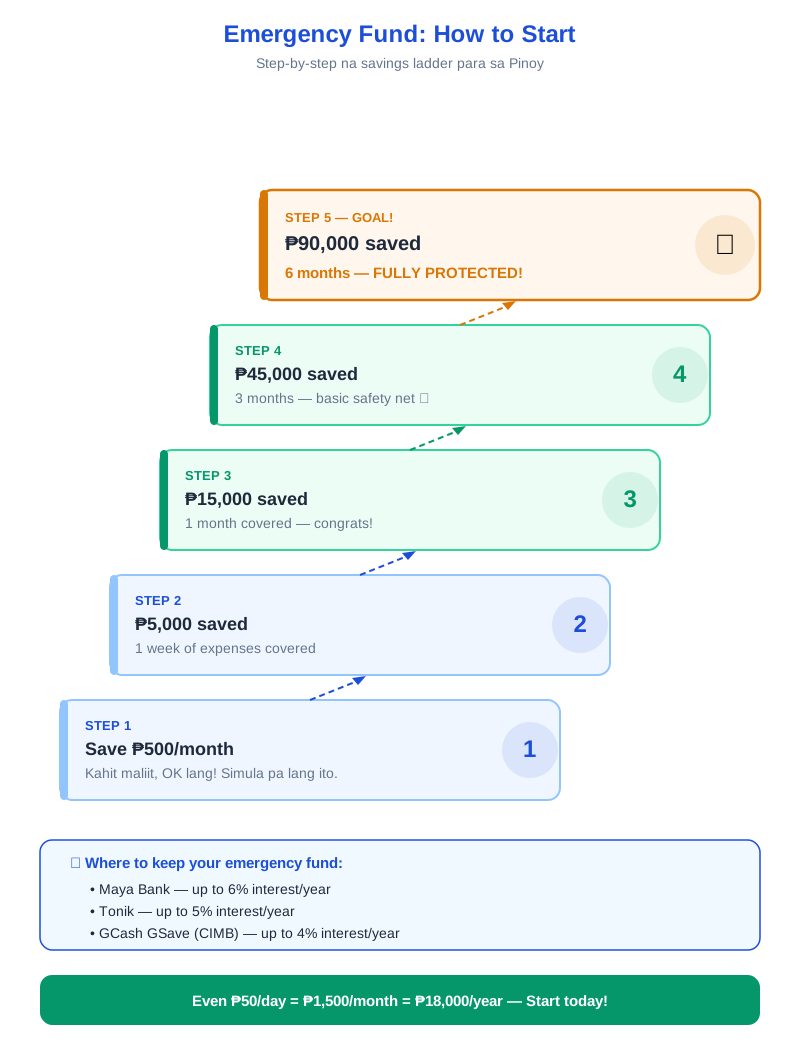
Start with 3 months first. Don't get overwhelmed by the 6-month target. Kahit 1 month lang ang EF mo, mas maganda na iyon kaysa wala. Build it up gradually — ang importante, nag-start ka.
Magsimula muna sa 3 buwan. Huwag ma-overwhelm sa 6-month target. Kahit 1 buwan lang ang EF mo, mas maganda na iyon kaysa wala. I-build ito nang unti-unti — ang importante, nag-start ka.
Where to Keep Your Emergency Fund
Saan Ilagay ang Emergency Fund Mo
Your emergency fund needs to be easy to access (liquid) but separate from your daily spending money. Hindi mo ito pwedeng i-invest sa stocks o crypto — kailangan mo itong makuha agad kapag may emergency. Here are the best options in the Philippines:
Ang emergency fund mo ay kailangang madaling ma-access (liquid) pero hiwalay sa pang-araw-araw mong gastusin. Hindi mo ito pwedeng i-invest sa stocks o crypto — kailangan mo itong makuha agad kapag may emergency. Narito ang mga pinakamahusay na options sa Pilipinas:
High-Yield Digital Savings Accounts (Recommended)
High-Yield Digital Savings Accounts (Rekomendasyon)
| Bank / App | Interest Rate | Min. Balance | PDIC Insured? |
|---|---|---|---|
| Maya Bank (formerly ING via Maya) | Up to 5% | ₱0 | Yes |
| Tonik Bank | Up to 5% | ₱0 | Yes |
| CIMB Bank (via GCash GSave) | Up to 4% | ₱0 | Yes |
| SeaBank | Up to 5% | ₱0 | Yes |
| GCash GInvest (money market funds) | ~3-4% | ₱50 | No (but SEC-regulated) |
| Bangko / App | Interest Rate | Min. Balance | PDIC Insured? |
|---|---|---|---|
| Maya Bank (dating ING via Maya) | Hanggang 5% | ₱0 | Oo |
| Tonik Bank | Hanggang 5% | ₱0 | Oo |
| CIMB Bank (sa GCash GSave) | Hanggang 4% | ₱0 | Oo |
| SeaBank | Hanggang 5% | ₱0 | Oo |
| GCash GInvest (money market funds) | ~3-4% | ₱50 | Hindi (pero SEC-regulated) |
Traditional Bank Savings Accounts
Traditional Bank Savings Accounts
BPI, BDO, Metrobank, and other big banks offer savings accounts too, but their interest rates are much lower — typically 0.10% to 0.25% per year. They also often require maintaining balances of ₱2,000-₱10,000 or charge monthly fees. These are fine if you already have one, pero para sa EF, mas maganda ang digital banks dahil sa mas mataas na interest at zero maintaining balance.
Ang BPI, BDO, Metrobank, at iba pang malalaking bangko ay nag-o-offer din ng savings accounts, pero mas mababa ang interest rates nila — karaniwang 0.10% hanggang 0.25% bawat taon. Madalas din silang nangangailangan ng maintaining balance na ₱2,000-₱10,000 o nagcha-charge ng monthly fees. Okay naman kung meron ka na, pero para sa EF, mas maganda ang digital banks dahil sa mas mataas na interest at zero maintaining balance.
What is PDIC insurance? The Philippine Deposit Insurance Corporation (PDIC) insures your deposits up to ₱500,000 per depositor per bank. This means even if the bank closes, your money (up to ₱500K) is protected. All banks listed above with "Yes" are PDIC-insured — your emergency fund is safe.
Ano ang PDIC insurance? Ang Philippine Deposit Insurance Corporation (PDIC) ay nag-i-insure ng mga deposito mo hanggang ₱500,000 bawat depositor bawat bangko. Ibig sabihin, kahit magsara ang bangko, protected ang pera mo (hanggang ₱500K). Lahat ng bangko sa listahan sa itaas na may "Oo" ay PDIC-insured — ligtas ang emergency fund mo.
Budget Methods for Filipinos
Mga Budget Method para sa Pilipino
The classic 50/30/20 rule is a good starting framework, but let's adapt it to Filipino reality:
Ang classic na 50/30/20 rule ay magandang starting framework, pero i-adapt natin ito sa realidad ng Pilipino:
The 50/30/20 Rule (Filipino Version)
Ang 50/30/20 Rule (Bersyon ng Pilipino)
- 50% — Needs (Pangangailangan)
- Rent / amortization / condo dues
- Palengke, groceries, rice, ulam
- Kuryente, tubig, internet
- Transpo (jeep, MRT, bus, gas, Grab)
- Phone load / data
- Insurance, SSS, PhilHealth, Pag-IBIG contributions
- 30% — Wants (Gusto)
- Eating out, milk tea, Jollibee treat
- Shopping, Netflix, Spotify
- Gym, hobbies, leisure
- Gifts and pakimkim
- If you're sending money to family (padala), this can come from needs or wants depending on your situation
- 20% — Savings & Debt (Ipon at Utang)
- Emergency fund first — this is priority #1
- Debt repayment (credit card, personal loans)
- After EF is complete: investments, retirement fund, MP2
- 50% — Pangangailangan (Needs)
- Upa / amortization / condo dues
- Palengke, groceries, bigas, ulam
- Kuryente, tubig, internet
- Transpo (jeep, MRT, bus, gas, Grab)
- Phone load / data
- Insurance, SSS, PhilHealth, Pag-IBIG contributions
- 30% — Gusto (Wants)
- Kain sa labas, milk tea, Jollibee treat
- Shopping, Netflix, Spotify
- Gym, hobbies, libangan
- Mga regalo at pakimkim
- Kung nagpapadala ka sa pamilya (padala), pwede itong manggaling sa needs o wants depende sa sitwasyon mo
- 20% — Ipon at Utang (Savings & Debt)
- Emergency fund muna — ito ang priority #1
- Pagbabayad ng utang (credit card, personal loans)
- Pagkatapos mabuo ang EF: investments, retirement fund, MP2
Example with ₱25,000 monthly income: ₱12,500 for needs, ₱7,500 for wants, ₱5,000 for savings/debt. If ₱5,000 goes to your EF monthly, you'll hit a ₱90,000 target (6 months at ₱15K expenses) in about 18 months. Kaya naman, di ba?
Halimbawa sa ₱25,000 na buwanang kita: ₱12,500 para sa pangangailangan, ₱7,500 para sa gusto, ₱5,000 para sa ipon/utang. Kung ₱5,000 ang napupunta sa EF mo bawat buwan, maa-achieve mo ang ₱90,000 target (6 na buwan sa ₱15K gastusin) sa loob ng 18 buwan. Kaya naman, di ba?
Realistic adjustment: If 50/30/20 doesn't fit your budget, try 60/20/20 or even 70/20/10. Ang importante, may napupunta sa savings kahit maliit. Don't let the "perfect" budget stop you from starting an imperfect one.
Realistic adjustment: Kung hindi kasya ang 50/30/20 sa budget mo, subukan ang 60/20/20 o kahit 70/20/10. Ang importante, may napupunta sa savings kahit maliit. Huwag hayaang ang "perfect" na budget ang humadlang sa iyo na magsimula ng imperfect na isa.
Step-by-Step: Starting from Zero
Hakbang-Hakbang: Pagsisimula Mula sa Zero
-
Calculate Your Monthly Expenses
Before anything else, know your numbers. List down all your essential monthly expenses — rent, food, utilities, transpo, load, insurance. Use the calculator above or simply track your spending for one month. Be honest — include the unplanned kain sa labas and the random Shopee orders. Round up to the nearest thousand for safety.
-
Set Your Emergency Fund Target
Multiply your monthly expenses by 3 (minimum) or 6 (ideal). Write this number down and put it somewhere you'll see it regularly. For example, if your monthly expenses are ₱18,000, your initial target is ₱54,000 (3 months) and your stretch goal is ₱108,000 (6 months). Don't overthink it — start with 3 months.
-
Open a Dedicated Savings Account
This is crucial: do NOT keep your emergency fund in the same account as your daily spending money. Open a separate account specifically for your EF. We recommend a digital bank like Maya Bank, Tonik, or CIMB (via GCash GSave) because they offer higher interest, zero maintaining balance, and you can transfer money easily from your phone.
Name this account "Emergency Fund" or "HUWAG GALAWIN" — whatever reminds you not to touch it.
-
I-compute ang Buwanang Gastusin Mo
Bago ang lahat, alamin ang mga numero mo. I-list ang lahat ng essential na buwanang gastusin mo — upa, pagkain, utilities, transpo, load, insurance. Gamitin ang calculator sa itaas o simpleng i-track ang spending mo sa loob ng isang buwan. Maging honest — isama ang hindi planong kain sa labas at ang random na Shopee orders. I-round up sa pinakamalapit na libo para safe.
-
I-set ang Emergency Fund Target Mo
I-multiply ang buwanang gastusin mo sa 3 (minimum) o 6 (ideal). Isulat ang number na ito at ilagay kung saan mo ito regular na makikita. Halimbawa, kung ₱18,000 ang buwanang gastusin mo, ang initial target mo ay ₱54,000 (3 buwan) at ang stretch goal mo ay ₱108,000 (6 na buwan). Huwag mag-overthink — magsimula sa 3 buwan.
-
Mag-open ng Dedicated Savings Account
Napakahalaga nito: HUWAG ilagay ang emergency fund mo sa parehong account ng pang-araw-araw mong gastusin. Mag-open ng hiwalay na account para lang sa EF mo. Nirerekomenda namin ang digital bank tulad ng Maya Bank, Tonik, o CIMB (sa GCash GSave) dahil mas mataas ang interest, zero maintaining balance, at madali mong ma-transfer ang pera mula sa phone mo.
I-pangalan ang account na ito na "Emergency Fund" o "HUWAG GALAWIN" — kahit anong magpapaalala sa iyong huwag itong galawin.
-
Set Up Automatic Transfers
The secret to actually building your EF: automate it. Set up a recurring transfer from your payroll account to your EF account every payday. Most digital banks and e-wallets support scheduled transfers. If you get paid on the 15th and 30th, set an automatic ₱2,500 transfer on those dates. Treat it like a bill — hindi optional, kundi required.
If automation isn't available, set a phone alarm on payday with the reminder: "Transfer to EF now."
-
Start Small — Even ₱500/Month Counts
Don't wait until you "have enough." Start with whatever you can afford — ₱500, ₱1,000, or ₱2,000 per month. The habit matters more than the amount. Here's how ₱500/month adds up:
- After 6 months: ₱3,000
- After 1 year: ₱6,000
- After 2 years: ₱12,000
It may seem small, but ₱6,000 can cover an unexpected medical bill or a week's worth of groceries during a crisis. Every peso counts.
-
Increase Gradually
As your income grows or you find ways to cut expenses, increase your EF contribution. Got a raise? Add 50% of the increase to your EF. Got a bonus? Put at least half into your EF. Nag-sideline ka at may extra income? Even ₱500 extra per month makes a big difference over time.
Challenge yourself: every 3 months, increase your monthly EF contribution by at least ₱500. You'll be surprised how fast it builds up.
-
Mag-set Up ng Automatic Transfers
Ang sikreto sa tunay na pag-build ng EF mo: i-automate ito. Mag-set up ng recurring transfer mula sa payroll account mo papunta sa EF account mo tuwing payday. Karamihan ng digital banks at e-wallets ay sumusuporta sa scheduled transfers. Kung binabayaran ka sa ika-15 at ika-30, mag-set ng automatic na ₱2,500 transfer sa mga petsa na iyon. Ituring mo itong parang bill — hindi optional, kundi required.
Kung hindi available ang automation, mag-set ng phone alarm tuwing payday na may reminder: "I-transfer sa EF ngayon."
-
Magsimula Nang Maliit — Kahit ₱500/Buwan ay Sapat Na
Huwag hintayin na "may sapat" ka na. Magsimula sa kahit anong kaya mo — ₱500, ₱1,000, o ₱2,000 bawat buwan. Mas mahalaga ang ugali kaysa sa halaga. Narito kung paano tumataas ang ₱500/buwan:
- Pagkatapos ng 6 buwan: ₱3,000
- Pagkatapos ng 1 taon: ₱6,000
- Pagkatapos ng 2 taon: ₱12,000
Mukhang maliit, pero ang ₱6,000 ay kayang mag-cover ng hindi inaasahang medical bill o isang linggo na groceries sa panahon ng krisis. Bawat piso ay mahalaga.
-
Dagdagan Nang Unti-unti
Habang lumalaki ang kita mo o nakakahanap ka ng paraan para bawasan ang gastusin, dagdagan ang EF contribution mo. May raise? Idagdag ang 50% ng increase sa EF mo. May bonus? Ilagay ang kahit kalahati sa EF mo. Nag-sideline ka at may extra income? Kahit ₱500 extra per buwan ay malaking kaibahan sa paglipas ng panahon.
I-challenge ang sarili mo: tuwing 3 buwan, dagdagan ang monthly EF contribution mo ng kahit ₱500. Magugulat ka kung gaano kabilis itong lumalaki.
Budget for Low-Income Families (₱15K-₱20K/Month)
Budget para sa Low-Income na Pamilya (₱15K-₱20K/Buwan)
Let's be real: kung ₱15,000 lang ang combined household income mo, saving feels almost impossible. Halos lahat napupunta sa pagkain, bills, at transpo. But even in this situation, you CAN start building an emergency fund — slowly and steadily.
Maging totoo tayo: kung ₱15,000 lang ang combined household income mo, halos imposibleng mag-ipon. Halos lahat napupunta sa pagkain, bills, at transpo. Pero kahit sa ganitong sitwasyon, KAYA mong simulan ang pag-build ng emergency fund — mabagal at tuloy-tuloy.
Realistic monthly breakdown for ₱15,000 income:
Realistikong buwanang breakdown para sa ₱15,000 na kita:
- Rice + food (palengke, wet market): ₱5,000-₱6,000
- Rent / housing: ₱2,000-₱4,000
- Utilities (kuryente, tubig): ₱1,500-₱2,000
- Transportation: ₱1,500-₱2,000
- Phone load: ₱200-₱500
- Kids (baon, school needs): ₱1,000-₱2,000
- Remaining for savings: ₱500-₱2,000
- Bigas + pagkain (palengke, wet market): ₱5,000-₱6,000
- Upa / bahay: ₱2,000-₱4,000
- Utilities (kuryente, tubig): ₱1,500-₱2,000
- Transpo: ₱1,500-₱2,000
- Load: ₱200-₱500
- Bata (baon, pang-eskwela): ₱1,000-₱2,000
- Natitira para sa ipon: ₱500-₱2,000
Tips to save when money is tight:
Mga tips sa pag-iipon kapag kakaunti ang pera:
- ₱100/week challenge — Set aside ₱100 every Sunday. That's ₱400/month, ₱4,800/year. It adds up!
- Coin jar method — Every day, put your loose coins in a jar. At the end of the month, deposit it all to your EF. Surprise yourself — it's usually ₱200-₱500.
- Buy sa palengke, not sa supermarket — You save 20-30% on vegetables, fish, and meat
- Cook at home more — A ₱200 budget at the palengke can feed a family of 4 for the whole day; eating out costs ₱200 per person
- Use WiFi piso net instead of data — Save ₱100-₱300/month on phone data
- Sari-sari store savings trick — Give your trusted suki ₱20-₱50 per day for safekeeping (tago). After a month, that's ₱600-₱1,500. Some sari-sari store owners do this as a community savings service.
- Join a paluwagan — Informal rotating savings group common in Filipino communities. You contribute a fixed amount weekly/monthly and receive the pool once on your turn. Good for forced savings, pero be careful — only join with people you trust.
- ₱100/linggo challenge — Magtabi ng ₱100 tuwing Linggo. ₱400 iyon bawat buwan, ₱4,800 bawat taon. Dumadami din!
- Coin jar method — Araw-araw, ilagay ang mga barya mo sa isang garapon. Sa dulo ng buwan, i-deposit lahat sa EF mo. Magugulat ka — karaniwang ₱200-₱500 iyon.
- Bumili sa palengke, hindi sa supermarket — Makakatipid ka ng 20-30% sa gulay, isda, at karne
- Magluto sa bahay nang mas madalas — Ang ₱200 na budget sa palengke ay kayang pakainin ang pamilya na apat sa buong araw; ang kain sa labas ay ₱200 bawat tao
- Gamitin ang WiFi piso net imbes na data — Makatipid ng ₱100-₱300/buwan sa phone data
- Sari-sari store savings trick — Ibigay sa trusted suki mo ang ₱20-₱50 bawat araw para itago. Pagkatapos ng isang buwan, ₱600-₱1,500 na iyon. May mga may-ari ng sari-sari store na gumagawa nito bilang community savings service.
- Sumali sa paluwagan — Informal na rotating savings group na karaniwan sa mga komunidad ng Pilipino. Nagko-contribute ka ng fixed amount weekly/monthly at natatanggap mo ang pool sa turn mo. Maganda para sa forced savings, pero mag-ingat — sumali lang sa mga taong pinagkakatiwalaan mo.
Remember: ₱100/week = ₱5,200/year. In 2 years, that's ₱10,400 — enough to cover a medical emergency co-pay, a week of lost income, or emergency groceries after a typhoon. Hindi kailangan malaki — ang kailangan, consistent.
Tandaan: ₱100/linggo = ₱5,200/taon. Sa 2 taon, ₱10,400 na iyon — sapat para i-cover ang medical emergency co-pay, isang linggo na nawala ang kita, o emergency na groceries pagkatapos ng bagyo. Hindi kailangan malaki — ang kailangan, consistent.
When to Use Your Emergency Fund
Kailan Gagamitin ang Emergency Fund
This is where discipline comes in. Not everything that feels urgent is a real emergency. Here's a clear guide:
Dito pumapasok ang disiplina. Hindi lahat ng pakiramdam na urgent ay totoong emergency. Narito ang malinaw na gabay:
YES — Use Your EF For:
OO — Gamitin ang EF Mo Para Sa:
- Medical emergencies — Hospital bills, ER visits, urgent surgery, medicine not covered by HMO/PhilHealth
- Job loss or sudden income drop — You need to pay rent and buy food while you look for new work
- Natural disaster damage — Typhoon destroyed your roof, flood damaged your belongings
- Essential car or appliance breakdown — Your car broke down and you need it to get to work; your refrigerator died and food is spoiling
- Emergency family situation — Parent or child needs urgent help that only money can solve
- Medical emergencies — Hospital bills, ER visits, urgent na surgery, gamot na hindi covered ng HMO/PhilHealth
- Pagkawala ng trabaho o biglang pagbaba ng kita — Kailangan mong magbayad ng upa at bumili ng pagkain habang naghahanap ng bagong trabaho
- Sira dahil sa natural disaster — Sinira ng bagyo ang bubong mo, nabaha ang mga gamit mo
- Sira ng essential na sasakyan o appliance — Nasira ang kotse mo at kailangan mo ito para makapunta sa trabaho; nasira ang ref mo at nasisira na ang pagkain
- Emergency na sitwasyon ng pamilya — Magulang o anak na nangangailangan ng urgent na tulong na pera lang ang solusyon
NO — Don't Touch Your EF For:
HINDI — Huwag Galawin ang EF Mo Para Sa:
- Sale at SM or Shopee — A good deal is not an emergency, kahit 70% off pa
- Vacation or travel — Save for these separately; your EF is not a travel fund
- New phone or gadget — Unless your current phone literally broke and you need it for work
- Birthday party or Christmas gifts — These are predictable expenses you should budget for
- Wants disguised as needs — "But I NEED the new iPhone" — no, you don't
- Investment opportunities — "Sure tip" sa stocks or crypto? That's not what your EF is for
- Sale sa SM o Shopee — Ang magandang deal ay hindi emergency, kahit 70% off pa
- Bakasyon o biyahe — Mag-ipon nang hiwalay para dito; ang EF mo ay hindi travel fund
- Bagong phone o gadget — Maliban kung literal na nasira ang phone mo at kailangan mo ito para sa trabaho
- Birthday party o Christmas gifts — Ito ay mga predictable expenses na dapat mong i-budget
- Mga gusto na nagpapanggap na pangangailangan — "Pero KAILANGAN ko ang bagong iPhone" — hindi, hindi mo kailangan
- Investment opportunities — "Sure tip" sa stocks o crypto? Hindi para diyan ang EF mo
The 24-hour rule: Before touching your EF, wait 24 hours. If after a day you still genuinely need it for a real emergency, go ahead. But most impulse spending won't pass the 24-hour test.
Ang 24-hour rule: Bago galawin ang EF mo, maghintay ng 24 oras. Kung pagkatapos ng isang araw ay talagang kailangan mo pa rin ito para sa totoong emergency, sige. Pero karamihan ng impulse spending ay hindi papasa sa 24-hour test.
Rebuilding After Using Your Emergency Fund
Pag-rebuild Pagkatapos Gamitin ang Emergency Fund Mo
Using your emergency fund is not a failure — it's exactly what it was built for. The important thing is what you do next. Here's how to rebuild:
Ang paggamit ng emergency fund mo ay hindi kabiguan — ito mismo ang dahilan kung bakit mo ito binuo. Ang mahalaga ay kung ano ang gagawin mo pagkatapos. Narito kung paano mag-rebuild:
- Don't panic. You did the right thing by using money you prepared for this exact situation. Pat yourself on the back — most Filipinos don't even have an EF.
- Assess the damage. How much did you use? How much is left? Do you need to replenish ₱5,000 or ₱50,000?
- Restart the process. Go back to your automatic transfers. If you paused them during the crisis, turn them back on as soon as your income stabilizes.
- Temporarily increase your savings rate. If you were saving 20%, try 25-30% for a few months until you're back on track.
- Cut non-essential spending. Skip the milk tea and Netflix for a month or two. Redirect those funds to rebuilding your EF.
- Use windfalls. Tax refund? Birthday gift money? 13th month pay bonus? Put some or all of it toward your EF.
- Huwag mag-panic. Tama ang ginawa mo sa paggamit ng perang inihanda mo para sa eksaktong sitwasyon na ito. I-tap ang sarili mo sa likod — karamihan ng mga Pilipino ay wala pa ngang EF.
- I-assess ang pinsala. Magkano ang nagamit mo? Magkano ang natitira? Kailangan mo bang palitan ang ₱5,000 o ₱50,000?
- I-restart ang proseso. Bumalik sa automatic transfers mo. Kung pinatigil mo ito habang may krisis, i-on ulit pagka-stable ng income mo.
- Pansamantalang dagdagan ang savings rate mo. Kung 20% ang ini-save mo, subukang 25-30% nang ilang buwan hanggang bumalik ka sa target.
- I-cut ang mga hindi essential na gastusin. I-skip ang milk tea at Netflix ng isa o dalawang buwan. I-redirect ang mga pondo na iyon sa pag-rebuild ng EF mo.
- Gamitin ang mga windfall. Tax refund? Pera na regalo sa birthday? 13th month pay bonus? Ilagay ang ilan o lahat sa EF mo.
Think of your EF like a fire extinguisher — after you use it, you replace it immediately. You don't say, "Well, the fire's out, I probably won't need another one." Hindi ganun ang buhay.
Isipin ang EF mo na parang fire extinguisher — pagkatapos mong gamitin, papalitan mo agad. Hindi mo sasabihing, "Eh, napatay na ang sunog, siguro hindi ko na kailangan ng isa pa." Hindi ganun ang buhay.
Pro Tips
Mga Payo
- Automate, automate, automate. The best savings plan is one you don't have to think about. Set up auto-transfer and forget about it — let it build quietly in the background.
- Keep your EF separate from your daily spending. If it's in the same account, you WILL spend it. Out of sight, out of mind. Use a different bank or e-wallet for your EF.
- Use GCash or Maya auto-save features. Both apps have "save automatically" functions — GCash has GSave (powered by CIMB), and Maya has Maya Savings. Set up round-ups or scheduled saves.
- Don't invest your emergency fund. Stocks, crypto, mutual funds — these can lose value. Your EF should be in a savings account that doesn't fluctuate. Boring is good for emergency funds.
- Tell someone about your goal. Accountability works. Let a trusted friend or family member know you're building an EF. They can help you stay on track — and avoid lending it to others.
- Celebrate milestones. When you hit ₱10,000, ₱25,000, ₱50,000 — treat yourself to something small. Building an EF is a marathon, not a sprint. The small celebrations keep you motivated.
- I-automate, i-automate, i-automate. Ang pinakamahusay na savings plan ay iyong hindi mo na kailangang isipin. Mag-set up ng auto-transfer at kalimutan na ito — hayaang lumaki nang tahimik sa background.
- Panatilihing hiwalay ang EF mo sa pang-araw-araw na gastusin. Kung nasa parehong account ito, GAGASTUSIN mo ito. Out of sight, out of mind. Gumamit ng ibang bangko o e-wallet para sa EF mo.
- Gamitin ang GCash o Maya auto-save features. Parehong may "save automatically" function ang dalawang app — may GSave ang GCash (powered ng CIMB), at may Maya Savings ang Maya. Mag-set up ng round-ups o scheduled saves.
- Huwag i-invest ang emergency fund mo. Stocks, crypto, mutual funds — pwedeng bumaba ang halaga nito. Ang EF mo ay dapat nasa savings account na hindi nagbabago-bago. Boring is good pagdating sa emergency funds.
- Sabihin sa isang tao ang goal mo. Gumagana ang accountability. Ipaalam sa trusted na kaibigan o kapamilya na nagbu-build ka ng EF. Makakatulong sila sa iyo na manatili sa track — at iwasang ipahiram ito sa iba.
- I-celebrate ang mga milestones. Kapag naabot mo ang ₱10,000, ₱25,000, ₱50,000 — mag-treat ng maliit sa sarili mo. Ang pag-build ng EF ay marathon, hindi sprint. Ang maliliit na celebration ang nagpapanatili sa iyo na motivated.
Frequently Asked Questions
Mga Madalas Itanong
How much emergency fund do I need in the Philippines?
The recommended amount is 3 to 6 months' worth of your monthly expenses (not income). If your monthly expenses are ₱15,000, aim for ₱45,000 to ₱90,000. Start with a 3-month target and build up to 6 months over time. If you have dependents, a single income, or work in an unstable industry, lean toward the 6-month side.
Magkano ang kailangan kong emergency fund sa Pilipinas?
Ang rekomendasyon ay 3 hanggang 6 na buwan ng iyong buwanang gastusin (hindi kita). Kung ₱15,000 ang buwanang gastusin mo, mag-aim ng ₱45,000 hanggang ₱90,000. Magsimula sa 3-buwang target at buuin hanggang 6 buwan sa paglipas ng panahon. Kung may dependents ka, isang income lang, o nagtatrabaho sa unstable na industriya, pumunta sa 6-month side.
Where is the best place to keep an emergency fund in the Philippines?
The best place is a high-yield digital savings account like Maya Bank, Tonik, CIMB (via GCash GSave), or SeaBank. These offer interest rates of 4-5% per year (compared to 0.10-0.25% at traditional banks), have zero maintaining balance, and are PDIC-insured up to ₱500,000. The key is choosing an account that's easy to access in emergencies but separate from your daily spending.
Saan ang pinakamahusay na lugar para ilagay ang emergency fund sa Pilipinas?
Ang pinakamahusay na lugar ay high-yield digital savings account tulad ng Maya Bank, Tonik, CIMB (sa GCash GSave), o SeaBank. Nag-o-offer ang mga ito ng interest rates na 4-5% bawat taon (kumpara sa 0.10-0.25% sa tradisyunal na bangko), may zero maintaining balance, at PDIC-insured hanggang ₱500,000. Ang susi ay pumili ng account na madaling ma-access sa emergencies pero hiwalay sa pang-araw-araw mong gastusin.
Can I use GCash or Maya as my emergency fund account?
Your regular GCash or Maya wallet is not ideal for your EF because it's too easy to spend from. However, GCash GSave (powered by CIMB Bank) and Maya Savings (powered by Maya Bank) are excellent because they're separate savings pockets within the app — your money earns higher interest and is harder to accidentally spend. Both are PDIC-insured since the funds are actually held by a bank.
Pwede ko bang gamitin ang GCash o Maya bilang emergency fund account?
Ang regular GCash o Maya wallet mo ay hindi ideal para sa EF mo dahil napakadaling gastusin mula doon. Gayunpaman, ang GCash GSave (powered ng CIMB Bank) at Maya Savings (powered ng Maya Bank) ay mahusay dahil hiwalay na savings pockets ito sa loob ng app — kumikita ng mas mataas na interest ang pera mo at mas mahirap aksidenteng gastusin. Parehong PDIC-insured dahil hawak talaga ng bangko ang mga pondo.
Should I pay off debt first or build an emergency fund?
Do both at the same time. Build a mini emergency fund of ₱5,000-₱10,000 first (about 2 weeks' worth of expenses), then aggressively pay off high-interest debt (credit cards, lending apps). Once your debt is cleared, redirect all that money to completing your full 3-6 month EF. The reason: without even a small EF, any unexpected expense will push you deeper into debt — it becomes a cycle.
Dapat ko bang bayaran muna ang utang o mag-build ng emergency fund?
Gawin ang dalawa nang sabay. Mag-build muna ng mini emergency fund na ₱5,000-₱10,000 (mga 2 linggo ng gastusin), pagkatapos ay agresibong bayaran ang high-interest na utang (credit cards, lending apps). Kapag naka-clear na ang utang mo, i-redirect ang lahat ng perang iyon para makumpleto ang buong 3-6 na buwang EF mo. Ang dahilan: kapag wala ka kahit maliit na EF, anumang hindi inaasahang gastusin ay magtutulak sa iyo nang mas malalim sa utang — nagiging cycle ito.
How long does it take to build a full emergency fund?
It depends on how much you can save monthly. Here are some examples for a ₱90,000 target (6 months at ₱15K/month expenses):
- Saving ₱1,000/month: 7.5 years (90 months)
- Saving ₱2,500/month: 3 years (36 months)
- Saving ₱5,000/month: 1.5 years (18 months)
- Saving ₱7,500/month: 1 year (12 months)
Start wherever you are and adjust as your income grows. Even slow progress is progress.
Gaano katagal mag-build ng buong emergency fund?
Depende ito sa kung magkano ang ma-save mo bawat buwan. Narito ang ilang halimbawa para sa ₱90,000 target (6 na buwan sa ₱15K/buwang gastusin):
- Nag-iipon ng ₱1,000/buwan: 7.5 taon (90 buwan)
- Nag-iipon ng ₱2,500/buwan: 3 taon (36 buwan)
- Nag-iipon ng ₱5,000/buwan: 1.5 taon (18 buwan)
- Nag-iipon ng ₱7,500/buwan: 1 taon (12 buwan)
Magsimula kung nasaan ka at i-adjust habang lumalaki ang kita mo. Kahit mabagal na progreso ay progreso pa rin.
Is ₱100,000 enough for an emergency fund?
It depends on your monthly expenses. If you spend ₱15,000/month, then ₱100,000 covers about 6.5 months — that's excellent. If you spend ₱30,000/month, ₱100,000 only covers about 3.3 months — still good, but you may want to keep building. The goal is 3-6 months of YOUR specific expenses, not a fixed peso amount. What matters is how many months of bills it can cover for your household.
Sapat ba ang ₱100,000 para sa emergency fund?
Depende sa buwanang gastusin mo. Kung ₱15,000/buwan ang ginagastos mo, ang ₱100,000 ay sapat para sa mga 6.5 buwan — napakahusay niyan. Kung ₱30,000/buwan ang ginagastos mo, ang ₱100,000 ay sapat lang para sa mga 3.3 buwan — maganda pa rin, pero baka gusto mong patuloy na dagdagan. Ang target ay 3-6 na buwan ng IYONG mga specific na gastusin, hindi isang fixed na halaga ng piso. Ang mahalaga ay kung ilang buwan ng bills ang kayang i-cover nito para sa household mo.