How to Claim Maternity Benefits in the Philippines (SSS & PhilHealth 2026 Guide)
Paano Mag-claim ng Maternity Benefits sa Pilipinas (SSS at PhilHealth 2026 Gabay)
Quick Summary
Mabilis na Buod
Important Disclaimer
This guide is for informational purposes only. Fees, requirements, contribution tables, and processes may change without notice. Always verify current information on the official SSS website or visit your nearest SSS branch. GabayPH is not affiliated with any government agency.
Mahalagang Disclaimer
Ang gabay na ito ay para sa layuning pang-impormasyon lamang. Ang mga bayarin, requirements, contribution tables, at proseso ay maaaring magbago nang walang abiso. Palaging i-verify ang kasalukuyang impormasyon sa opisyal na SSS website o bumisita sa pinakamalapit na SSS branch. Ang GabayPH ay hindi kaanib ng kahit anong ahensya ng gobyerno.
Table of Contents
Talaan ng Nilalaman
Overview: RA 11210 Expanded Maternity Leave Law
Pangkalahatang-tanaw: RA 11210 Expanded Maternity Leave Law
Republic Act No. 11210, also known as the Expanded Maternity Leave Law, was signed into law in 2019 and is one of the most progressive maternity protection laws in Southeast Asia. It grants every Filipino mother — whether employed, self-employed, or voluntary SSS member — generous paid leave and financial benefits when she gives birth, suffers a miscarriage, or undergoes emergency termination of pregnancy.
Ang Republic Act No. 11210, kilala rin bilang Expanded Maternity Leave Law, ay nilagdaan bilang batas noong 2019 at isa sa pinaka-progressive na maternity protection laws sa Southeast Asia. Nagbibigay ito sa bawat Pilipinang ina — empleyada man, self-employed, o voluntary SSS member — ng mahabang paid leave at financial benefits kapag siya ay nanganak, nagkaroon ng miscarriage, o nagkaroon ng emergency termination of pregnancy.
Here are the key provisions:
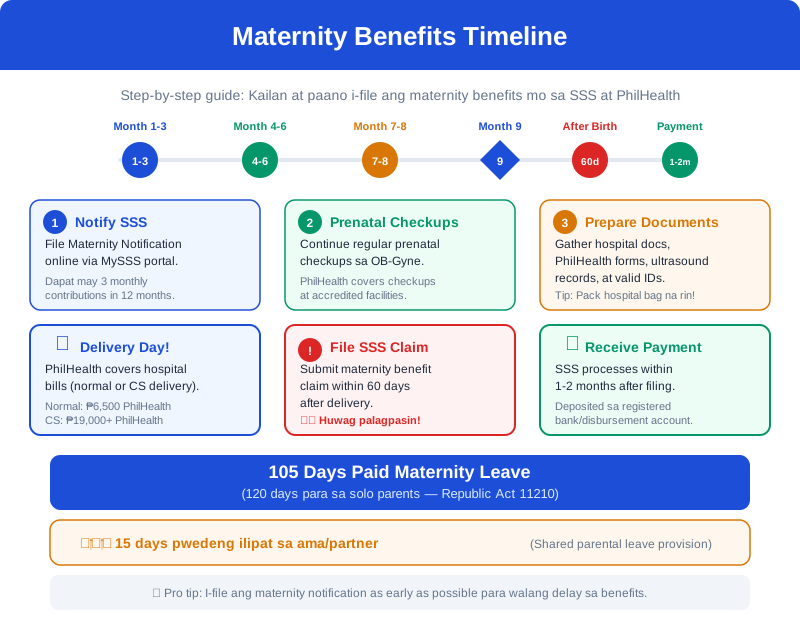
- 105 days of paid maternity leave for live childbirth (regardless of delivery method — normal or cesarean)
- 120 days for solo parents — an additional 15 days on top of the standard 105
- 60 days for miscarriage or emergency termination of pregnancy
- 15 days transferable leave — the mother can allocate 7 of the 105 days to the father of the child or an alternate caregiver (such as a family member who will help care for the newborn)
- Option to extend by 30 days — the mother can request an additional 30 days of unpaid leave
- Applies to every pregnancy — no cap on the number of pregnancies covered (the old law limited it to the first 4 deliveries)
The maternity benefit itself comes from two sources: SSS provides income replacement (daily cash allowance based on your salary credit), while PhilHealth covers hospital and medical costs. You can claim both — they address different needs and are not mutually exclusive.
Narito ang mga pangunahing probisyon:
- 105 araw na may bayad na maternity leave para sa live childbirth (kahit anong paraan ng panganganak — normal o cesarean)
- 120 araw para sa solo parents — dagdag na 15 araw sa karaniwang 105
- 60 araw para sa miscarriage o emergency termination of pregnancy
- 15 araw na transferable leave — pwede ilipat ng ina ang 7 sa 105 araw sa ama ng bata o alternate caregiver (tulad ng miyembro ng pamilya na tutulong mag-alaga ng sanggol)
- Opsyon na i-extend ng 30 araw — pwedeng humiling ang ina ng dagdag na 30 araw na walang bayad na leave
- Applicable sa bawat pagbubuntis — walang cap sa bilang ng pregnancies na covered (ang lumang batas ay limitado sa unang 4 na panganganak lamang)
Ang mismong maternity benefit ay galing sa dalawang source: ang SSS ang nagbibigay ng income replacement (daily cash allowance batay sa salary credit mo), habang ang PhilHealth ang nagco-cover ng hospital at medical costs. Pwede mong i-claim pareho — magkaibang pangangailangan ang tinutugunan nila at hindi sila mutually exclusive.
Who Qualifies for Maternity Benefits?
Sino ang Kwalipikado sa Maternity Benefits?
SSS Maternity Benefit
To be eligible for the SSS maternity benefit, you must meet these requirements:
- Active SSS member — employed, self-employed, voluntary, or OFW
- At least 3 monthly contributions within the 12-month period immediately before the semester of delivery or miscarriage. The "semester of delivery" is the 6-month period containing your due date. For example, if your due date is August 2026, the semester is July-December 2026, and SSS will check contributions from July 2025 to June 2026.
- Notified SSS of pregnancy — ideally before delivery (you can still file after, but it may delay processing)
PhilHealth Maternity Coverage
To use PhilHealth maternity coverage:
- Active PhilHealth member or dependent — if you're covered as a dependent (e.g., wife of a member), you still qualify
- At least 3 monthly premium contributions within the last 6 months before delivery
- Deliver at a PhilHealth-accredited hospital or lying-in clinic — this is important because non-accredited facilities cannot process your PhilHealth claim directly
Good news: Kahit first-time mom ka or pangatlo mo nang anak, kwalipikado ka. Under RA 11210, there is no more limit on the number of pregnancies covered. Even unmarried mothers and those in informal employment are entitled to these benefits as long as they have sufficient SSS and PhilHealth contributions.
SSS Maternity Benefit
Para maging kwalipikado sa SSS maternity benefit, kailangan mong matugunan ang mga requirements na ito:
- Active na SSS member — empleyada, self-employed, voluntary, o OFW
- Hindi bababa sa 3 buwanang contribution sa loob ng 12-buwan na period bago ang semester ng panganganak o miscarriage. Ang "semester of delivery" ay ang 6-buwan na period na kinabibilangan ng due date mo. Halimbawa, kung ang due date mo ay Agosto 2026, ang semester ay Hulyo-Disyembre 2026, at titingnan ng SSS ang contributions mula Hulyo 2025 hanggang Hunyo 2026.
- Na-notify ang SSS tungkol sa pagbubuntis — mas mainam bago manganak (pwede pa ring mag-file pagkatapos, pero posibleng ma-delay ang processing)
PhilHealth Maternity Coverage
Para magamit ang PhilHealth maternity coverage:
- Active na PhilHealth member o dependent — kung covered ka bilang dependent (hal., asawa ng member), kwalipikado ka pa rin
- Hindi bababa sa 3 buwanang premium contributions sa nakaraang 6 na buwan bago manganak
- Manganak sa PhilHealth-accredited na hospital o lying-in clinic — mahalaga ito dahil hindi pwedeng i-proseso ng non-accredited facilities ang PhilHealth claim mo nang direkta
Magandang balita: Kahit first-time mom ka o pangatlo mo nang anak, kwalipikado ka. Sa ilalim ng RA 11210, wala nang limit sa bilang ng pregnancies na covered. Kahit mga unmarried mothers at mga nasa informal employment ay may karapatan sa mga benefits na ito basta may sapat na SSS at PhilHealth contributions.
What You Need to Prepare
- SSS Maternity Notification Form — Submit online via MySSS portal or at any SSS branch. Ideally filed before the expected delivery date.
- PhilHealth Claim Form (CF-2) — The hospital usually provides and helps you fill this out. Also known as the Member's Certification.
- Birth certificate or hospital records — PSA-issued birth certificate of the newborn, or hospital/lying-in discharge summary. For miscarriage: medical certificate from attending physician.
- Valid government ID — UMID, passport, driver's license, PhilSys National ID, or any SSS-accepted ID (original + photocopy)
- Employer certification (if employed) — Certification from your employer confirming your employment status and that you will be on maternity leave. Self-employed and voluntary members skip this.
Mga Kakailanganin Mo
- SSS Maternity Notification Form — I-submit online sa MySSS portal o sa kahit anong SSS branch. Mas mainam na i-file bago ang inaasahang petsa ng panganganak.
- PhilHealth Claim Form (CF-2) — Karaniwan, ibibigay at tutulungan ka ng hospital na sagutan ito. Kilala rin bilang Member's Certification.
- Birth certificate o hospital records — PSA-issued na birth certificate ng sanggol, o hospital/lying-in discharge summary. Para sa miscarriage: medical certificate mula sa attending physician.
- Valid na government ID — UMID, passport, driver's license, PhilSys National ID, o kahit anong SSS-accepted ID (original + photocopy)
- Employer certification (kung empleyada) — Certification mula sa employer mo na nagco-confirm ng employment status at maternity leave mo. Hindi na kailangan ng self-employed at voluntary members.
SSS Maternity Benefit: Step-by-Step
SSS Maternity Benefit: Hakbang-Hakbang
-
Notify SSS of Your Pregnancy
As soon as you know you're pregnant, file the SSS Maternity Notification. You can do this in two ways:
- Online via MySSS: Log in to member.sss.gov.ph > go to "E-Services" > "Apply for Maternity Notification". Enter your expected delivery date, attending physician's name, and hospital/clinic details. Submit and save the confirmation number.
- At an SSS branch: Fill out the Maternity Notification form at the branch. Bring a valid ID. Processing is same-day.
When to file: Ideally, file during your pregnancy — before the expected due date. Late filing is allowed (you can still file after delivery), but it may cause delays in benefit processing. The earlier you notify, the smoother the process.
For employed members: Your employer may also submit the maternity notification on your behalf through the employer portal. Check with your HR department.
-
After Delivery: Gather Your Documents
Once you've given birth (or in the case of miscarriage), gather the following documents for your benefit claim:
- Birth certificate of the child — The hospital issues a temporary one; the PSA-issued copy takes a few weeks. Either is accepted for initial filing.
- Hospital discharge summary — Shows the date of delivery, type of delivery (normal/cesarean), and attending physician details
- Valid government ID — Original and photocopy
- Employer certification — If employed, your HR will provide a certification of your employment and that you're on approved maternity leave
- Bank account details — SSS deposits the benefit directly to your bank account (UnionBank, RCBC, PNB, Landbank, or any SSS-accredited disbursement partner). Make sure your bank account is linked on your MySSS profile.
For miscarriage: Instead of a birth certificate, you'll need a medical certificate from your attending physician confirming the miscarriage and the date it occurred.
-
File the Maternity Benefit Claim
You can file the claim online or at an SSS branch:
- Online via MySSS: Log in > "E-Services" > "Apply for Maternity Benefit". Upload scanned copies of your supporting documents. Make sure all uploads are clear and readable.
- At an SSS branch: Submit your documents directly. Get a claim acknowledgment receipt and keep it safe.
Filing deadline: You should file within 60 days from delivery or miscarriage. Filing beyond this window is still possible but may result in delayed processing or additional verification requirements.
For employed members: Your employer typically advances the maternity benefit to you (included in your regular payroll during leave), and then SSS reimburses the employer. Check with your HR whether your company follows this advance-payment arrangement. If they don't, you'll receive the benefit directly from SSS.
-
I-notify ang SSS Tungkol sa Pagbubuntis Mo
Sa sandaling malaman mong buntis ka, mag-file ng SSS Maternity Notification. Dalawang paraan para gawin ito:
- Online sa MySSS: Mag-log in sa member.sss.gov.ph > pumunta sa "E-Services" > "Apply for Maternity Notification". Ilagay ang expected delivery date, pangalan ng attending physician, at detalye ng hospital/clinic. I-submit at i-save ang confirmation number.
- Sa SSS branch: Sagutan ang Maternity Notification form sa branch. Magdala ng valid ID. Same-day ang processing.
Kailan mag-file: Mas mainam na mag-file habang buntis ka — bago ang expected due date. Pinapayagan ang late filing (pwede pa ring mag-file pagkatapos manganak), pero posibleng magdulot ng delay sa benefit processing. Kung mas maaga kang mag-notify, mas maayos ang proseso.
Para sa mga employed members: Posibleng i-submit din ng employer mo ang maternity notification para sa iyo sa pamamagitan ng employer portal. I-check sa HR department mo.
-
Pagkatapos Manganak: Ihanda ang Mga Dokumento
Pagkatapos mong manganak (o sa kaso ng miscarriage), ihanda ang mga sumusunod na dokumento para sa benefit claim mo:
- Birth certificate ng bata — Mag-iisyu ang hospital ng temporary na kopya; ang PSA-issued copy ay ilang linggo bago makuha. Pareho ay tinatanggap sa initial filing.
- Hospital discharge summary — Makikita dito ang petsa ng panganganak, uri ng delivery (normal/cesarean), at mga detalye ng attending physician
- Valid na government ID — Original at photocopy
- Employer certification — Kung empleyada ka, magbibigay ang HR mo ng certification ng employment status mo at na nasa approved maternity leave ka
- Bank account details — Direktang ide-deposit ng SSS ang benepisyo sa bank account mo (UnionBank, RCBC, PNB, Landbank, o kahit anong SSS-accredited disbursement partner). Siguraduhing naka-link ang bank account mo sa MySSS profile mo.
Para sa miscarriage: Sa halip na birth certificate, kakailanganin mo ang medical certificate mula sa attending physician mo na nagko-confirm ng miscarriage at petsa kung kailan ito nangyari.
-
Mag-file ng Maternity Benefit Claim
Pwede kang mag-file ng claim online o sa SSS branch:
- Online sa MySSS: Mag-log in > "E-Services" > "Apply for Maternity Benefit". I-upload ang scanned copies ng supporting documents mo. Siguraduhing malinaw at nababasa ang lahat ng uploads.
- Sa SSS branch: I-submit ang mga dokumento mo nang direkta. Kumuha ng claim acknowledgment receipt at itago ito.
Deadline ng pag-file: Kailangan mong mag-file sa loob ng 60 araw mula sa panganganak o miscarriage. Pwede pa ring mag-file lampas sa window na ito pero posibleng mag-delay ang processing o magkaroon ng additional verification requirements.
Para sa mga employed members: Karaniwan, ang employer mo ang nag-a-advance ng maternity benefit sa iyo (kasama sa regular payroll mo habang naka-leave), at pagkatapos ay rire-reimburse ng SSS ang employer. I-check sa HR mo kung sinusunod ng company mo ang advance-payment arrangement na ito. Kung hindi, direkta mong matatanggap ang benepisyo mula sa SSS.
-
Wait for Processing and Receive Your Benefit
After filing, SSS will process your claim. Here's what to expect:
- Processing time: Typically 1-2 months after complete submission of all documents. Online filings tend to be processed slightly faster than branch submissions.
- How you'll be paid: SSS deposits the benefit directly to your registered bank account or through an SSS disbursement partner (like a disbursement card). Make sure your disbursement account is active and linked in MySSS.
- Track your claim: Log in to MySSS > "Inquiry" > "Benefit Application Status" to check if your claim is being processed, approved, or already released.
If your claim is denied: The most common reason is insufficient contributions. Double-check your contribution history on MySSS. If you believe there's an error, visit an SSS branch with your proof of payment to request correction.
-
Allocate the Transferable Leave (Optional)
Under RA 11210, you can transfer 7 of your 105 days of paid maternity leave to the father of the child or to an alternate caregiver. To do this:
- Submit a written notice to your employer (or to SSS if self-employed/voluntary) indicating that you wish to allocate the 7-day transferable leave
- Identify the recipient — the father or an alternate caregiver (such as a grandparent, sibling, or any person who will help care for the child)
- The recipient must also be employed or must coordinate with their own employer to take the leave
This is optional — if you don't allocate it, you simply use all 105 days yourself. Many moms prefer to transfer it to the father so he can stay home during the first week after delivery.
-
Hintayin ang Processing at Tanggapin ang Benepisyo
Pagkatapos mag-file, ipro-process ng SSS ang claim mo. Narito ang inaasahan:
- Processing time: Karaniwang 1-2 buwan pagkatapos ng kumpletong submission ng lahat ng dokumento. Ang online filings ay medyo mas mabilis i-proseso kaysa sa branch submissions.
- Paano ka babayaran: Direktang ide-deposit ng SSS ang benepisyo sa registered bank account mo o sa pamamagitan ng SSS disbursement partner (tulad ng disbursement card). Siguraduhing active at naka-link ang disbursement account mo sa MySSS.
- I-track ang claim mo: Mag-log in sa MySSS > "Inquiry" > "Benefit Application Status" para i-check kung ang claim mo ay napro-process na, na-approve, o na-release na.
Kung ma-deny ang claim mo: Ang pinakakaraniwang dahilan ay kulang na contributions. I-double-check ang contribution history mo sa MySSS. Kung sa tingin mo may error, bumisita sa SSS branch na may dalang proof of payment para humiling ng correction.
-
I-allocate ang Transferable Leave (Opsyonal)
Sa ilalim ng RA 11210, pwede mong ilipat ang 7 sa 105 araw ng may bayad na maternity leave sa ama ng bata o sa isang alternate caregiver. Para gawin ito:
- Mag-submit ng written notice sa employer mo (o sa SSS kung self-employed/voluntary) na nagpapahiwatig na gusto mong i-allocate ang 7-day transferable leave
- Tukuyin ang tatanggap — ang ama o isang alternate caregiver (tulad ng lola/lolo, kapatid, o sinumang taong tutulong sa pag-aalaga ng bata)
- Ang tatanggap ay kailangan ding empleyado o kailangan niyang i-coordinate sa sarili niyang employer para makapagliban sa trabaho
Ito ay opsyonal — kung hindi mo ito ia-allocate, gagamitin mo na lang lahat ng 105 araw. Maraming mga nanay ang mas gustong ilipat ito sa ama para makapanatili siya sa bahay noong unang linggo pagkatapos manganak.
PhilHealth Maternity Coverage
PhilHealth Maternity Coverage
PhilHealth provides a separate maternity package that covers hospital and medical costs. This is different from SSS, which provides income replacement. You can (and should) claim both.
Coverage Amounts
- Normal spontaneous delivery (NSD): ₱6,500 - ₱16,000 package depending on the facility level
- Cesarean section (CS): ₱19,000 - ₱32,000 package depending on the facility level
- Miscarriage or ectopic pregnancy: Coverage varies; usually included under the medical/surgical package
- Pre-natal and post-natal care: Covered through the maternity care package at accredited primary care facilities
No-Balance Billing
If you're classified as a financially indigent member or you deliver at a government hospital or PhilHealth-accredited lying-in clinic under the basic maternity package, you may qualify for no-balance billing (NBB). This means you pay zero out-of-pocket costs. Ang maganda dito, for basic deliveries sa government hospitals, walang babayaran ang pasyente.
How to Use PhilHealth at the Hospital
- Present your PhilHealth ID or MDR number upon admission. The hospital's billing department will verify your membership.
- Fill out Claim Form 2 (CF-2) — the hospital provides this. It contains your member information, diagnosis, and attending physician details.
- The hospital deducts the PhilHealth coverage from your total bill automatically. You only pay the remaining balance (if any).
- For non-accredited facilities: You'll need to pay the full amount upfront, then file a claim at the nearest PhilHealth office with your CF-2, official receipt, and supporting documents for reimbursement.
Tip: Always confirm with the hospital's admissions or billing office that they are PhilHealth-accredited before you check in. If you have a choice, choose an accredited facility so the PhilHealth deduction is handled automatically and you avoid the hassle of filing for reimbursement later.
Nagbibigay ang PhilHealth ng hiwalay na maternity package na nagco-cover ng hospital at medical costs. Iba ito sa SSS, na nagbibigay ng income replacement. Pwede mong (at dapat mong) i-claim pareho.
Mga Halaga ng Coverage
- Normal spontaneous delivery (NSD): ₱6,500 - ₱16,000 na package depende sa level ng facility
- Cesarean section (CS): ₱19,000 - ₱32,000 na package depende sa level ng facility
- Miscarriage o ectopic pregnancy: Iba-iba ang coverage; karaniwan ay kasama sa medical/surgical package
- Pre-natal at post-natal care: Covered sa maternity care package sa mga accredited primary care facilities
No-Balance Billing
Kung classified ka bilang financially indigent member o manganak ka sa government hospital o PhilHealth-accredited na lying-in clinic sa ilalim ng basic maternity package, posibleng kwalipikado ka sa no-balance billing (NBB). Ibig sabihin, zero ang babayaran mo mula sa bulsa. Ang maganda dito, para sa basic deliveries sa government hospitals, walang babayaran ang pasyente.
Paano Gamitin ang PhilHealth sa Hospital
- Ipakita ang PhilHealth ID o MDR number mo sa admission. Ive-verify ng billing department ng hospital ang membership mo.
- Sagutan ang Claim Form 2 (CF-2) — ibibigay ito ng hospital. Naglalaman ito ng member information, diagnosis, at detalye ng attending physician.
- Ide-deduct ng hospital ang PhilHealth coverage mula sa kabuuang bill mo nang awtomatiko. Ikaw na lang ang magbabayad ng natitirang balanse (kung meron).
- Para sa non-accredited na facilities: Kailangan mong bayaran ang buong halaga upfront, pagkatapos ay mag-file ng claim sa pinakamalapit na PhilHealth office na may dalang CF-2, official receipt, at supporting documents para sa reimbursement.
Tip: Palaging i-confirm sa admissions o billing office ng hospital na PhilHealth-accredited sila bago ka mag-check in. Kung may pagpipilian ka, piliin ang accredited na facility para awtomatikong ma-handle ang PhilHealth deduction at maiwasan ang abala ng pag-file ng reimbursement pagkatapos.
Solo Parent Benefits
Mga Benepisyo para sa Solo Parent
If you're a solo parent, you get extra maternity leave and additional protections under both RA 11210 (Expanded Maternity Leave Law) and RA 8972 (Solo Parents' Welfare Act). Here's what you need to know:
- 120 days of paid maternity leave — that's 15 days more than the standard 105 days. This applies to all types of delivery, including normal, cesarean, and miscarriage (60 days for miscarriage regardless of solo parent status).
- Additional 15-day allocation: The extra 15 days is automatically added; you don't need to apply separately. Just indicate your solo parent status in your maternity notification and benefit claim.
- Solo Parent ID requirement: To claim the additional 15 days, you'll need a Solo Parent ID issued by your city or municipality's social welfare office (CSWDO/MSWDO). If you don't have one yet, apply at your barangay first, then proceed to the CSWDO/MSWDO.
- DSWD certification: In some cases, SSS may require a DSWD certification confirming your solo parent status. This is obtainable from the DSWD regional office or through your local CSWDO.
Who counts as a solo parent? Under the law, solo parents include: unmarried mothers, widows, women separated from their spouse, mothers whose spouse is detained or incapacitated, and any parent who solely provides parental care. Hindi lang siya para sa mga single mom — kahit separated ka or widowed, covered ka.
Kung solo parent ka, may extra maternity leave ka at dagdag na proteksyon sa ilalim ng RA 11210 (Expanded Maternity Leave Law) at RA 8972 (Solo Parents' Welfare Act). Narito ang kailangan mong malaman:
- 120 araw na may bayad na maternity leave — 15 araw na higit pa sa karaniwang 105 araw. Applicable ito sa lahat ng uri ng delivery, kasama ang normal, cesarean, at miscarriage (60 araw para sa miscarriage kahit solo parent).
- Dagdag na 15-araw na allocation: Awtomatikong idinaragdag ang extra 15 araw; hindi mo na kailangang mag-apply nang hiwalay. I-indicate lang ang solo parent status mo sa maternity notification at benefit claim.
- Solo Parent ID na kinakailangan: Para ma-claim ang dagdag na 15 araw, kailangan mo ng Solo Parent ID na inisyu ng social welfare office ng iyong siyudad o munisipalidad (CSWDO/MSWDO). Kung wala ka pa, mag-apply sa barangay mo muna, pagkatapos pumunta sa CSWDO/MSWDO.
- DSWD certification: Sa ilang kaso, maaaring hilingin ng SSS ang DSWD certification na nagko-confirm ng solo parent status mo. Makukuha ito sa DSWD regional office o sa pamamagitan ng iyong local CSWDO.
Sino ang counted bilang solo parent? Sa ilalim ng batas, kasama sa solo parents ang: mga unmarried mothers, biyuda, mga babaeng separated sa asawa, mga ina na ang asawa ay nakakulong o incapacitated, at sinumang magulang na mag-isang nagbibigay ng parental care. Hindi lang siya para sa mga single mom — kahit separated ka o nabiyuda, covered ka.
Self-Employed & Voluntary Members
Self-Employed at Voluntary Members
If you're self-employed, a freelancer, or a voluntary SSS member, the maternity benefit process is slightly different since you don't have an employer to facilitate the claim. Here's your step-by-step:
- Ensure your contributions are up to date — You need at least 3 monthly contributions within the 12-month period before the semester of your delivery. Check your contribution history on MySSS. Kung may gaps, bayaran agad ang mga kulang na buwan before your due date.
- File the maternity notification yourself — Go to MySSS or visit an SSS branch. Unlike employed members, walang employer na gagawa nito para sa iyo.
- After delivery, file the maternity benefit claim directly with SSS — Submit your documents online via MySSS or at an SSS branch. Since there's no employer-advance arrangement, SSS will pay you directly.
- Timeline for direct payment: Expect to receive the benefit 1-2 months after filing all complete documents. SSS deposits the full amount to your bank account in one lump sum.
Documents needed (self-employed/voluntary):
- SSS Maternity Notification (already filed during pregnancy)
- Birth certificate of the child or medical certificate (for miscarriage)
- Valid government ID (original + photocopy)
- Bank account details registered on MySSS
Important tip: Hindi mo kailangan ng employer certification. But you do need to make sure your SSS member type is correctly recorded as "Self-Employed" or "Voluntary." If you previously had an employer but are now freelancing, check if SSS has updated your member type. Outdated records can delay your claim.
Kung self-employed ka, freelancer, o voluntary SSS member, medyo kakaiba ang proseso ng maternity benefit dahil walang employer na mag-fa-facilitate ng claim para sa iyo. Narito ang hakbang-hakbang mo:
- Siguraduhing updated ang contributions mo — Kailangan mo ng hindi bababa sa 3 buwanang contributions sa loob ng 12-buwan na period bago ang semester ng panganganak mo. I-check ang contribution history mo sa MySSS. Kung may gaps, bayaran agad ang mga kulang na buwan bago ang due date mo.
- Ikaw mismo ang mag-file ng maternity notification — Pumunta sa MySSS o bumisita sa SSS branch. Hindi katulad ng mga employed members, walang employer na gagawa nito para sa iyo.
- Pagkatapos manganak, direktang mag-file ng maternity benefit claim sa SSS — I-submit ang mga dokumento mo online sa MySSS o sa SSS branch. Dahil walang employer-advance arrangement, direktang magbabayad ang SSS sa iyo.
- Timeline para sa direct payment: Asahan mong matatanggap ang benepisyo 1-2 buwan pagkatapos mag-file ng lahat ng kumpletong dokumento. Ide-deposit ng SSS ang buong halaga sa bank account mo sa isang lump sum.
Mga dokumentong kailangan (self-employed/voluntary):
- SSS Maternity Notification (na-file na habang buntis)
- Birth certificate ng bata o medical certificate (para sa miscarriage)
- Valid na government ID (original + photocopy)
- Bank account details na nakaregistro sa MySSS
Mahalagang tip: Hindi mo kailangan ng employer certification. Pero kailangan mong siguraduhing tama ang naka-record na SSS member type mo bilang "Self-Employed" o "Voluntary." Kung dati kang may employer pero ngayon ay freelancing ka na, i-check kung na-update na ng SSS ang member type mo. Ang outdated records ay pwedeng mag-delay sa claim mo.
Computation Examples
Mga Halimbawa ng Computation
Your SSS maternity benefit is computed based on your average daily salary credit (ADSC) multiplied by the number of days of leave. The ADSC is derived from your six highest monthly salary credits (MSC) within the 12-month period before the semester of delivery.
Here's the formula:
Maternity Benefit = Average Daily Salary Credit x Number of Paid Leave Days
To get your average daily salary credit: take the sum of your 6 highest MSCs in the relevant period, divide by 6, then divide by 30.
Example 1: Employed Member with ₱15,000 MSC
- 6 highest MSCs = ₱15,000 x 6 = ₱90,000
- Average MSC = ₱90,000 / 6 = ₱15,000
- Average Daily Salary Credit = ₱15,000 / 30 = ₱500/day
- For 105 days (standard): ₱500 x 105 = ₱52,500
- For 120 days (solo parent): ₱500 x 120 = ₱60,000
Example 2: Self-Employed Member with ₱20,000 MSC (Maximum)
- 6 highest MSCs = ₱20,000 x 6 = ₱120,000
- Average MSC = ₱120,000 / 6 = ₱20,000
- Average Daily Salary Credit = ₱20,000 / 30 = ₱666.67/day
- For 105 days: ₱666.67 x 105 = ₱70,000
- For 120 days (solo parent): ₱666.67 x 120 = ₱80,000
Example 3: Voluntary Member with ₱10,000 MSC
- 6 highest MSCs = ₱10,000 x 6 = ₱60,000
- Average MSC = ₱60,000 / 6 = ₱10,000
- Average Daily Salary Credit = ₱10,000 / 30 = ₱333.33/day
- For 105 days: ₱333.33 x 105 = ₱35,000
- For 60 days (miscarriage): ₱333.33 x 60 = ₱20,000
Key takeaway: The higher your MSC, the bigger your maternity benefit. If you're self-employed or voluntary and planning to get pregnant, consider increasing your contribution bracket a few months before your due date. Just make sure you have the 3 required monthly contributions at the higher bracket within the relevant period.
Ang SSS maternity benefit mo ay kinocompute batay sa iyong average daily salary credit (ADSC) na i-multiply sa bilang ng araw ng leave. Ang ADSC ay kinukuha mula sa iyong anim na pinakamataas na monthly salary credits (MSC) sa loob ng 12-buwan na period bago ang semester ng panganganak.
Narito ang formula:
Maternity Benefit = Average Daily Salary Credit x Bilang ng Paid Leave Days
Para makuha ang average daily salary credit: kunin ang kabuuan ng 6 na pinakamataas na MSCs sa relevant period, hatiin sa 6, pagkatapos hatiin sa 30.
Halimbawa 1: Employed Member na may ₱15,000 MSC
- 6 na pinakamataas na MSCs = ₱15,000 x 6 = ₱90,000
- Average MSC = ₱90,000 / 6 = ₱15,000
- Average Daily Salary Credit = ₱15,000 / 30 = ₱500/araw
- Para sa 105 araw (standard): ₱500 x 105 = ₱52,500
- Para sa 120 araw (solo parent): ₱500 x 120 = ₱60,000
Halimbawa 2: Self-Employed Member na may ₱20,000 MSC (Maximum)
- 6 na pinakamataas na MSCs = ₱20,000 x 6 = ₱120,000
- Average MSC = ₱120,000 / 6 = ₱20,000
- Average Daily Salary Credit = ₱20,000 / 30 = ₱666.67/araw
- Para sa 105 araw: ₱666.67 x 105 = ₱70,000
- Para sa 120 araw (solo parent): ₱666.67 x 120 = ₱80,000
Halimbawa 3: Voluntary Member na may ₱10,000 MSC
- 6 na pinakamataas na MSCs = ₱10,000 x 6 = ₱60,000
- Average MSC = ₱60,000 / 6 = ₱10,000
- Average Daily Salary Credit = ₱10,000 / 30 = ₱333.33/araw
- Para sa 105 araw: ₱333.33 x 105 = ₱35,000
- Para sa 60 araw (miscarriage): ₱333.33 x 60 = ₱20,000
Mahalagang punto: Kung mas mataas ang MSC mo, mas malaki ang maternity benefit mo. Kung self-employed ka o voluntary at nagpaplano kang magbuntis, pag-isipan ang pagtaas ng contribution bracket mo ilang buwan bago ang due date mo. Siguraduhin lang na mayroon kang 3 required na buwanang contributions sa mas mataas na bracket sa loob ng relevant period.
Pro Tips
Mga Payo
- File your maternity notification early — Don't wait until you give birth. Filing during pregnancy helps SSS prepare your records and speeds up your benefit claim later. Ideally, file as soon as you get your first prenatal checkup.
- Keep all receipts and medical records — Hospital bills, discharge summary, prenatal ultrasound records, official receipts — save everything. You'll need these for both SSS and PhilHealth claims, and for any disputes or follow-ups.
- Use the MySSS portal to track everything — Check your contribution history, maternity notification status, and benefit claim status online. It's faster than calling the hotline or visiting a branch. Mas tipid pa sa oras.
- Your employer cannot deny your maternity leave — Under RA 11210, maternity leave is a legal right, not a company benefit. Employers who deny or reduce maternity leave face penalties. If your HR gives you a hard time, cite the law and escalate to DOLE.
- SSS maternity benefit is tax-free — The full amount you receive is not subject to income tax. You don't need to declare it as taxable income.
- Claim both SSS and PhilHealth — Many first-time moms don't realize they can get benefits from both. SSS covers your income during leave; PhilHealth covers your hospital bill. Huwag kalimutang i-claim pareho!
- Mag-file ng maternity notification nang maaga — Huwag hintayin na manganak ka pa bago mag-file. Ang pag-file habang buntis ay nakakatulong sa SSS na ihanda ang records mo at pinapabilis ang benefit claim mo pagkatapos. Mas mainam, mag-file agad pagkatapos ng unang prenatal checkup mo.
- Itago lahat ng resibo at medical records — Hospital bills, discharge summary, prenatal ultrasound records, official receipts — i-save lahat. Kakailanganin mo ang mga ito para sa SSS at PhilHealth claims, at para sa kahit anong disputes o follow-ups.
- Gamitin ang MySSS portal para i-track ang lahat — I-check ang contribution history, maternity notification status, at benefit claim status online. Mas mabilis ito kaysa tumawag sa hotline o bumisita sa branch. Mas tipid pa sa oras.
- Hindi pwedeng tanggihan ng employer mo ang maternity leave — Sa ilalim ng RA 11210, ang maternity leave ay legal na karapatan, hindi company benefit. Ang mga employer na tumatanggi o nagbabawas ng maternity leave ay may mga penalty. Kung binibigyan ka ng hirap ng HR mo, i-cite ang batas at i-escalate sa DOLE.
- Tax-free ang SSS maternity benefit — Ang buong halaga na matatanggap mo ay hindi subject sa income tax. Hindi mo kailangan ideklara ito bilang taxable income.
- I-claim pareho ang SSS at PhilHealth — Maraming first-time moms ang hindi nakakaalam na pwede silang makakuha ng benepisyo mula sa dalawa. Ang SSS ang nagco-cover ng income mo habang naka-leave; ang PhilHealth ang nagco-cover ng hospital bill mo. Huwag kalimutang i-claim pareho!
Frequently Asked Questions
Mga Madalas Itanong
How much will I receive from SSS maternity benefit?
The amount depends on your average daily salary credit (ADSC), which is based on your 6 highest monthly salary credits in the 12 months before the semester of delivery. Your benefit is calculated as: ADSC x number of paid leave days.
- Minimum (₱4,000 MSC): ₱133.33/day x 105 days = approximately ₱14,000
- Mid-range (₱15,000 MSC): ₱500/day x 105 days = ₱52,500
- Maximum (₱20,000 MSC): ₱666.67/day x 105 days = ₱70,000
Solo parents receive 120 days instead of 105, so the amounts are proportionally higher. For miscarriage, the benefit covers 60 days.
Magkano ang matatanggap ko mula sa SSS maternity benefit?
Depende ang halaga sa iyong average daily salary credit (ADSC), na base sa 6 na pinakamataas na monthly salary credits mo sa 12 buwan bago ang semester ng panganganak. Ang benepisyo mo ay kinocompute bilang: ADSC x bilang ng paid leave days.
- Minimum (₱4,000 MSC): ₱133.33/araw x 105 araw = humigit-kumulang ₱14,000
- Mid-range (₱15,000 MSC): ₱500/araw x 105 araw = ₱52,500
- Maximum (₱20,000 MSC): ₱666.67/araw x 105 araw = ₱70,000
Ang mga solo parent ay tumatanggap ng 120 araw sa halip na 105, kaya proportionally mas mataas ang halaga. Para sa miscarriage, ang benepisyo ay para sa 60 araw.
Can my employer deny my maternity leave?
No. Under RA 11210 (Expanded Maternity Leave Law), maternity leave is a legal right that applies to all working mothers — whether in the private sector, government, or informal economy. Your employer is legally obligated to:
- Grant you the full 105 days of paid maternity leave (120 for solo parents)
- Advance the SSS maternity benefit through your regular payroll
- Not terminate or threaten termination due to pregnancy or maternity leave
- Accept your return to the same or equivalent position after leave
Employers who violate these provisions face fines of ₱20,000 to ₱200,000 and/or imprisonment of 6 months to 6 years. If your employer denies or reduces your maternity leave, report it to the Department of Labor and Employment (DOLE) hotline at 1349 or file a complaint at your nearest DOLE regional office.
Pwede bang tanggihan ng employer ko ang maternity leave ko?
Hindi. Sa ilalim ng RA 11210 (Expanded Maternity Leave Law), ang maternity leave ay legal na karapatan na applicable sa lahat ng nagtatrabahong ina — maging sa private sector, gobyerno, o informal economy. Legal na obligasyon ng employer mo na:
- Ibigay sa iyo ang buong 105 araw na may bayad na maternity leave (120 para sa solo parents)
- I-advance ang SSS maternity benefit sa pamamagitan ng regular payroll mo
- Hindi ka tanggalin o bantaan ng termination dahil sa pagbubuntis o maternity leave
- Tanggapin ang pagbabalik mo sa pareho o katumbas na posisyon pagkatapos ng leave
Ang mga employer na lumabag sa mga probisyong ito ay maaaring pagmultahin ng ₱20,000 hanggang ₱200,000 at/o makulong ng 6 na buwan hanggang 6 na taon. Kung tinanggihan o binawasan ng employer mo ang maternity leave mo, i-report sa Department of Labor and Employment (DOLE) hotline sa 1349 o mag-file ng reklamo sa pinakamalapit na DOLE regional office.
How long does SSS maternity processing take?
After submitting all required documents, SSS maternity benefit processing typically takes 1-2 months. Here's the typical timeline:
- Online filing via MySSS: Usually slightly faster — around 3-6 weeks if all documents are complete and clear
- Branch filing: May take 4-8 weeks depending on branch workload and document completeness
- Payment release: Once approved, the benefit is deposited to your bank account within 1-2 weeks
The most common reason for delays is incomplete documents — unclear scans, missing employer certification, or unregistered bank account. To speed things up, make sure all documents are complete and clear before filing, and that your bank account is active and linked on your MySSS profile.
Gaano katagal ang processing ng SSS maternity?
Pagkatapos i-submit ang lahat ng required documents, ang SSS maternity benefit processing ay karaniwang tumatagal ng 1-2 buwan. Narito ang karaniwang timeline:
- Online filing sa MySSS: Karaniwan ay medyo mas mabilis — mga 3-6 na linggo kung kumpleto at malinaw ang lahat ng dokumento
- Branch filing: Posibleng tumagal ng 4-8 linggo depende sa workload ng branch at pagiging kumpleto ng dokumento
- Payment release: Kapag na-approve na, ide-deposit ang benepisyo sa bank account mo sa loob ng 1-2 linggo
Ang pinakakaraniwang dahilan ng delay ay hindi kumpletong dokumento — malabong scans, kulang na employer certification, o hindi nakaregistrong bank account. Para mapabilis, siguraduhing kumpleto at malinaw ang lahat ng dokumento bago mag-file, at active at naka-link ang bank account mo sa MySSS profile mo.
Does PhilHealth cover cesarean delivery?
Yes. PhilHealth covers cesarean (C-section) deliveries with a higher package amount than normal delivery:
- Normal spontaneous delivery: ₱6,500 - ₱16,000 coverage
- Cesarean section: ₱19,000 - ₱32,000 coverage
The exact amount depends on the facility level (primary, secondary, or tertiary hospital). In accredited government hospitals, the no-balance billing policy may cover the entire cost of a basic C-section for financially indigent members. In private hospitals, PhilHealth coverage is deducted from your total bill, and you pay the remaining balance.
PhilHealth also covers complications arising from delivery, which may have additional coverage on top of the maternity package.
Nako-cover ba ng PhilHealth ang cesarean delivery?
Oo. Nako-cover ng PhilHealth ang cesarean (C-section) deliveries na may mas mataas na package amount kaysa sa normal delivery:
- Normal spontaneous delivery: ₱6,500 - ₱16,000 na coverage
- Cesarean section: ₱19,000 - ₱32,000 na coverage
Ang eksaktong halaga ay depende sa level ng facility (primary, secondary, o tertiary hospital). Sa mga accredited government hospitals, posibleng ma-cover ng no-balance billing policy ang buong gastos ng basic C-section para sa financially indigent members. Sa mga private hospitals, ide-deduct ang PhilHealth coverage mula sa kabuuang bill mo, at ikaw ang magbabayad ng natitirang balanse.
Nako-cover din ng PhilHealth ang mga komplikasyon na nagmumula sa delivery, na posibleng may dagdag na coverage sa ibabaw ng maternity package.
Can I claim both SSS and PhilHealth maternity benefits?
Yes, absolutely! SSS and PhilHealth maternity benefits cover different things and you should claim both:
- SSS maternity benefit = income replacement. This is your daily cash allowance while you're on maternity leave. It replaces the salary you're not earning while on leave.
- PhilHealth maternity coverage = hospital cost coverage. This pays for your hospitalization, delivery room, medications, and doctor's fees related to giving birth.
They are completely separate programs with separate claims processes. Filing one does not affect the other. Maraming nanay ang hindi nakakaalam nito at nami-miss ang PhilHealth claim nila — so make sure you claim both. You're paying contributions to both agencies, so take advantage of both benefits.
Pwede ko bang i-claim pareho ang SSS at PhilHealth maternity benefits?
Oo, sigurado! Ang SSS at PhilHealth maternity benefits ay nagco-cover ng magkaibang bagay at dapat mong i-claim pareho:
- SSS maternity benefit = income replacement. Ito ang daily cash allowance mo habang naka-maternity leave. Pinapalitan nito ang sahod na hindi mo kinikita habang naka-leave.
- PhilHealth maternity coverage = hospital cost coverage. Nagbabayad ito para sa hospitalization, delivery room, gamot, at doctor's fees na may kinalaman sa panganganak.
Completely separate na programs sila na may magkahiwalay na claims process. Ang pag-file ng isa ay hindi nakakaapekto sa isa. Maraming nanay ang hindi nakakaalam nito at nami-miss ang PhilHealth claim nila — so siguraduhing i-claim mo pareho. Nagbabayad ka ng contributions sa dalawang ahensya, kaya samantalahin ang dalawang benepisyo.
What if I'm unemployed or self-employed?
You can still claim SSS maternity benefits even if you're unemployed, self-employed, or a freelancer — as long as you meet the contribution requirement of at least 3 monthly contributions in the 12 months before the semester of delivery.
- Self-employed / voluntary members: You file the maternity notification and benefit claim directly with SSS (no employer involved). SSS pays you directly to your bank account.
- Previously employed but now unemployed: If you have sufficient past contributions that fall within the qualifying period, you're still eligible. Kahit hindi ka na nagtatrabaho, basta may sapat na contributions, kwalipikado ka pa rin.
- OFWs: You can file online through MySSS or at an SSS branch when you return to the Philippines. Your employer abroad does not need to be involved — SSS processes it directly.
Important: If you're planning to get pregnant and you're currently not employed, start paying voluntary SSS contributions now. You need at least 3 months of contributions in the qualifying period. Don't wait until you're pregnant — mag-umpisa na ngayon para sigurado.
Paano kung unemployed o self-employed ako?
Pwede ka pa ring mag-claim ng SSS maternity benefits kahit unemployed, self-employed, o freelancer ka — basta natutugunan mo ang contribution requirement na hindi bababa sa 3 buwanang contributions sa 12 buwan bago ang semester ng panganganak.
- Self-employed / voluntary members: Ikaw ang mag-fa-file ng maternity notification at benefit claim nang direkta sa SSS (walang employer na kasangkot). Direktang magbabayad ang SSS sa bank account mo.
- Dating employed pero ngayon ay unemployed na: Kung may sapat na nakaraang contributions na nasa loob ng qualifying period, kwalipikado ka pa rin. Kahit hindi ka na nagtatrabaho, basta may sapat na contributions, kwalipikado ka pa rin.
- Mga OFW: Pwede kang mag-file online sa MySSS o sa SSS branch kapag bumalik ka sa Pilipinas. Hindi kailangan makisangkot ang employer mo sa abroad — direktang pinoproseso ito ng SSS.
Mahalaga: Kung nagpaplano kang magbuntis at kasalukuyang walang trabaho, magsimulang magbayad ng voluntary SSS contributions ngayon. Kailangan mo ng hindi bababa sa 3 buwan ng contributions sa qualifying period. Huwag hintaying mabuntis ka pa — mag-umpisa na ngayon para sigurado.