How to Cut Monthly Expenses in the Philippines (2026 Guide)
Paano Magtipid sa Buwanang Gastos sa Pilipinas (2026 Gabay)
Quick Summary
Mabilis na Buod
Important Disclaimer
This guide is for educational purposes only and does not constitute financial advice. Individual circumstances vary. Consult a licensed financial advisor for personalized guidance.
Mahalagang Disclaimer
Ang gabay na ito ay para sa layuning pang-edukasyon lamang at hindi bumubuo ng financial advice. Iba-iba ang sitwasyon ng bawat tao. Kumonsulta sa isang lisensyadong financial advisor para sa personalized na gabay.
Table of Contents
Talaan ng Nilalaman
- Bakit Nag-overspend ang mga Pilipino
- Groceries at Pagkain — Ang Pinakamalaking Tipid
- Utilities — Kuryente at Tubig
- Transportasyon
- Mga Subscription at Serbisyo
- Pamimili at Lifestyle
- Utang at Interest
- Mga Pinoy Money-Saving Hack
- Mga Discount para sa Senior Citizen at PWD
- Magkano Talaga ang Pwede Mong Matipid?
- Mga Payo
- Mga Madalas Itanong
Why Filipinos Overspend
Bakit Nag-overspend ang mga Pilipino
Before we talk about cutting expenses, let's be honest about why we overspend in the first place. Understanding these patterns is the first step to breaking them.
Bago natin pag-usapan kung paano magtipid, maging honest muna tayo kung bakit tayo nag-overspend. Ang pag-intindi sa mga pattern na ito ang unang hakbang para mabago ang mga ito.
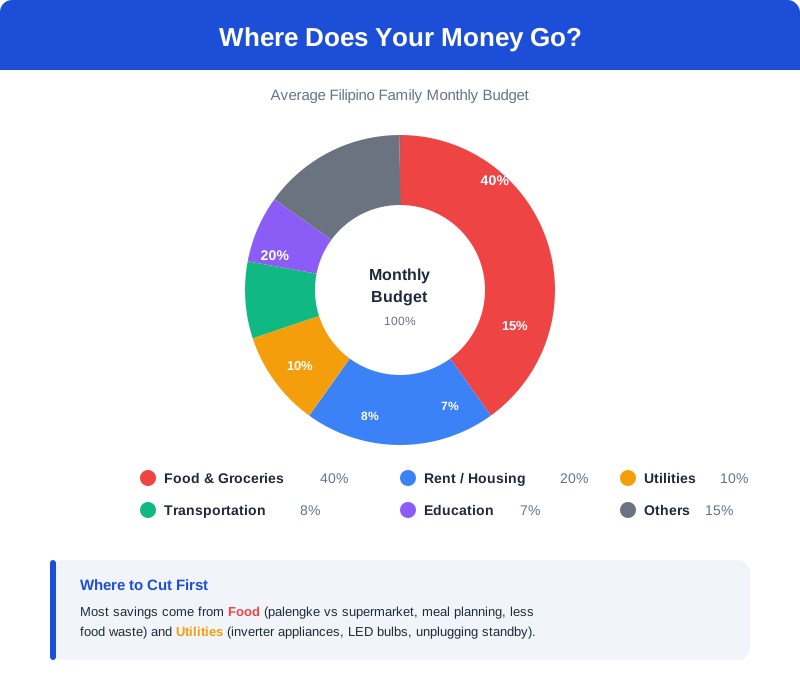
According to the Philippine Statistics Authority, the average Filipino family spends roughly ₱14,000-₱18,000/month — and for many families, gastos often exceeds income. Here's where the money usually goes:
- Food: 40-45% — The biggest chunk. Rice, ulam, meryenda, kain sa labas — it adds up fast
- Housing & utilities: 15-20% — Rent/amortization, kuryente, tubig, internet
- Transportation: 8-12% — Pamasahe, gas, Grab/Angkas
- Education: 5-10% — Tuition, school supplies, baon ng anak
- Everything else: 15-25% — Load, subscriptions, clothes, gadgets, celebrations
But the numbers only tell part of the story. Here's what really drives overspending:
- Lifestyle creep — You get a raise, your gastos goes up by the same amount. New salary = new Grab habit, new coffee shop routine, new phone every year. Your lifestyle inflates to match your income, so you never save more.
- "Libre" culture — Nakakahiya kung hindi ka mag-libre kapag sweldo. Birthday? Libre sa office. Promotion? Libre ang barkada. It's generous and very Filipino, pero it eats into your budget. Saying "pass muna" is okay.
- Utang cycle — Maraming Pilipino ang nag-uutang para i-cover ang gastos, then nag-uutang ulit to pay the first utang. Lending apps like Tala, 5Peso, and Cashalo make borrowing too easy — and their interest rates are brutal.
- Emotional spending — Stressed? "Kailangan ko ng gala." Sad? Milk tea or Shopee add-to-cart. Happy? "Deserve ko 'to!" We tie spending to emotions, and emotions are daily.
- Tingi-tingi mindset — Buying sachets, small bottles, and single-serve packs feels cheaper per transaction, but costs 30-50% more per gram/ml than buying in bulk. The convenience trap is real.
Ayon sa Philippine Statistics Authority, ang average na pamilyang Pilipino ay gumagastos ng humigit-kumulang ₱14,000-₱18,000/buwan — at para sa maraming pamilya, madalas na lumalampas ang gastos sa kita. Narito kung saan karaniwang napupunta ang pera:
- Pagkain: 40-45% — Ang pinakamalaking chunk. Bigas, ulam, meryenda, kain sa labas — mabilis itong naiipon
- Tirahan at utilities: 15-20% — Renta/amortization, kuryente, tubig, internet
- Transportasyon: 8-12% — Pamasahe, gas, Grab/Angkas
- Edukasyon: 5-10% — Tuition, school supplies, baon ng anak
- Lahat ng iba pa: 15-25% — Load, subscriptions, damit, gadgets, celebrations
Pero ang mga numero ay bahagi lang ng kwento. Narito ang talagang nagdu-drive ng overspending:
- Lifestyle creep — Nag-increase ang sahod, nag-increase din ang gastos ng parehong halaga. Bagong sweldo = bagong Grab habit, bagong coffee shop routine, bagong phone every year. Umaayon ang lifestyle mo sa kita mo, kaya hindi ka kailanman nakatitipid nang mas malaki.
- "Libre" culture — Nakakahiya kung hindi ka mag-libre kapag sweldo. Birthday? Libre sa office. Promotion? Libre ang barkada. Generous at very Filipino, pero kinakain nito ang budget mo. Okay lang sabihing "pass muna."
- Utang cycle — Maraming Pilipino ang nag-uutang para i-cover ang gastos, tapos nag-uutang ulit para bayaran ang unang utang. Ginagawa ng mga lending app tulad ng Tala, 5Peso, at Cashalo na sobrang dali mag-borrow — at ang interest rates nila ay brutal.
- Emotional spending — Stressed? "Kailangan ko ng gala." Malungkot? Milk tea o Shopee add-to-cart. Masaya? "Deserve ko 'to!" Tina-tie natin ang spending sa emotions, at daily ang emotions.
- Tingi-tingi mindset — Ang pagbili ng sachet, maliliit na bote, at single-serve packs ay pakiramdam na mas mura bawat transaction, pero nagkakahalaga ng 30-50% more per gram/ml kaysa sa pagbili nang bulk. Real ang convenience trap.
The good news? You don't need to earn more to have more left over. You just need to plug the leaks. Let's go through every category of spending and find the savings hiding in your monthly gastos.
Ang magandang balita? Hindi mo kailangang kumita ng mas malaki para magkaroon ng mas matira. Kailangan mo lang i-plug ang mga tulo. Suriin natin ang bawat kategorya ng gastos at hanapin ang tipid na nakatago sa buwanang gastos mo.
Groceries & Food — The Biggest Win
Groceries at Pagkain — Ang Pinakamalaking Tipid
Food takes up 40-45% of the average Filipino household budget. That means even small changes here have the biggest impact on your wallet. This is where you should start.
Ang pagkain ay kumukuha ng 40-45% ng average na budget ng household na Pilipino. Ibig sabihin, kahit maliit na pagbabago dito ang may pinakamalaking impact sa wallet mo. Dito ka dapat magsimula.
Palengke vs Supermarket
This is the single most impactful switch you can make. Buying meat, fish, and vegetables at the palengke typically saves 20-30% compared to supermarket prices. Here's why:
- Meat: Pork belly at SM Supermarket is ~₱350/kg. At the palengke, ₱260-₱290/kg. That's ₱60-₱90 saved per kilo.
- Fish: Bangus at the supermarket: ₱200-₱240/kg. Palengke price: ₱140-₱180/kg.
- Vegetables: Kangkong, sitaw, kalabasa, kamote — almost always 30-50% cheaper at the wet market.
- Bonus: At the palengke, you can negotiate. "Ate, dagdagan mo na lang" — that almost never works at SM.
Estimated savings: ₱1,500-₱3,000/month for a family of 4.
Cook at Home vs Eating Out
Here's the math that will change your perspective:
- Home-cooked meal for 4: ₱150-₱250 (rice, ulam like adobo or sinigang, gulay)
- Eating out for 4: ₱600-₱1,200 (even at a carinderia, it's ₱60-₱80/person; fast food is ₱150-₱200/person)
If you eat out 3 times a week and replace just 2 of those with home-cooked meals, you save roughly ₱2,000-₱3,000/month.
Buy in Bulk, Not Tingi
- Rice: A 25kg sako costs ₱1,200-₱1,500. Buying per kilo at the sari-sari store costs ₱60-₱70/kg = ₱1,500-₱1,750 for 25kg. Savings: ₱200-₱350 per sako.
- Coffee: A sachet of 3-in-1 is ~₱8. That's ₱240/month if you drink one daily. A jar of instant coffee + sugar + creamer costs ₱200-₱250 and lasts a month. You save ~₱100-₱150/month on coffee alone.
- Shampoo, detergent, cooking oil: The sachet/tingi price is always 30-50% more expensive per ml. Buy the big bottle or refill pack.
Meal Planning & Batch Cooking
- Plan your menu for the week before going to the palengke. This prevents impulse buying and food waste.
- Batch cook on Sundays: make a big pot of adobo, caldereta, or mechado that lasts 2-3 days. Reheat portions instead of cooking from scratch daily.
- Cook extra rice for tomorrow's sinangag — it's actually better fried when day-old, and you save gas/electricity.
- Use Shopee/Lazada for non-perishables: Canned goods, noodles, and household items are often cheaper online, especially during sale events. Stack with credit card promos for double savings.
Palengke vs Supermarket
Ito ang pinaka-impactful na switch na pwede mong gawin. Ang pagbili ng karne, isda, at gulay sa palengke ay karaniwang nakakatipid ng 20-30% kumpara sa presyo sa supermarket. Narito kung bakit:
- Karne: Pork belly sa SM Supermarket ay ~₱350/kg. Sa palengke, ₱260-₱290/kg. ₱60-₱90 ang natitipid bawat kilo.
- Isda: Bangus sa supermarket: ₱200-₱240/kg. Presyo sa palengke: ₱140-₱180/kg.
- Gulay: Kangkong, sitaw, kalabasa, kamote — halos palaging 30-50% na mas mura sa wet market.
- Bonus: Sa palengke, pwede kang tumawad. "Ate, dagdagan mo na lang" — halos hindi 'yan gumagana sa SM.
Estimated savings: ₱1,500-₱3,000/buwan para sa pamilya ng 4.
Magluto sa Bahay vs Kain sa Labas
Narito ang math na magbabago ng pananaw mo:
- Home-cooked meal para sa 4: ₱150-₱250 (kanin, ulam tulad ng adobo o sinigang, gulay)
- Kain sa labas para sa 4: ₱600-₱1,200 (kahit sa carinderia, ₱60-₱80/tao; fast food ay ₱150-₱200/tao)
Kung kumakain ka sa labas ng 3 beses sa isang linggo at pinalitan mo ng home-cooked meals ang 2 sa mga iyon, makakatipid ka ng humigit-kumulang ₱2,000-₱3,000/buwan.
Bumili nang Bulk, Hindi Tingi
- Bigas: Ang 25kg sako ay ₱1,200-₱1,500. Pagbili per kilo sa sari-sari store ay ₱60-₱70/kg = ₱1,500-₱1,750 para sa 25kg. Savings: ₱200-₱350 bawat sako.
- Kape: Isang sachet ng 3-in-1 ay ~₱8. Ibig sabihin ₱240/buwan kung isa ang iniinom mo araw-araw. Isang garapon ng instant coffee + asukal + creamer ay ₱200-₱250 at nagtatagal ng isang buwan. Makakatipid ka ng ~₱100-₱150/buwan sa kape lang.
- Shampoo, sabon panlaba, cooking oil: Ang presyo ng sachet/tingi ay palaging 30-50% na mas mahal per ml. Bilhin ang malaking bote o refill pack.
Meal Planning at Batch Cooking
- I-plan ang menu mo para sa linggo bago pumunta sa palengke. Iniiwasan nito ang impulse buying at food waste.
- Batch cook tuwing Linggo: gumawa ng malaking kaldero ng adobo, caldereta, o mechado na tatagal ng 2-3 araw. I-reheat ang mga portions imbes na magluto mula sa simula araw-araw.
- Mag-luto ng dagdag na kanin para sa sinangag kinabukasan — mas masarap pa nga 'yan pag day-old, at nakakatipid ka pa ng gas/kuryente.
- Gamitin ang Shopee/Lazada para sa non-perishables: Mga de-lata, noodles, at household items ay madalas na mas mura online, lalo na kapag sale events. I-stack sa credit card promos para sa double savings.
Utilities — Kuryente & Tubig
Utilities — Kuryente at Tubig
Your electricity and water bills are the second biggest monthly expense you can control. The key word is control — unlike rent, you can actually reduce these.
Ang kuryente at tubig mo ang ikalawang pinakamalaking buwanang gastos na pwede mong kontrolin. Ang keyword ay kontrol — hindi tulad ng renta, pwede mong talagang bawasan ang mga ito.
Electricity — Kuryente
- Switch to inverter appliances. An inverter AC saves 30-50% on electricity vs a non-inverter. Yes, the upfront cost is higher (₱18,000-₱25,000 vs ₱12,000-₱15,000), pero you earn it back in 12-18 months through lower bills. An inverter AC can save you ₱500-₱1,500/month depending on usage.
- Set AC to 25°C, not 18°C. Every degree below 25°C adds roughly 3-5% to your electricity cost. 25°C with a fan is comfortable — 18°C is expensive overkill.
- Unplug appliances on standby. Your TV, charger, microwave, and WiFi router consume "phantom power" even when turned off. Use a power strip with a switch to kill everything at once before bed.
- Switch to LED bulbs. An LED bulb uses only 7-10 watts vs 60 watts for incandescent. If you have 10 bulbs running 6 hours a day, that's a savings of roughly ₱200-₱400/month.
- Do laundry during off-peak hours if your utility offers time-of-use rates. Use cold water for most loads — the washing machine's heater is a massive electricity consumer.
- Inverter refrigerator: Runs 24/7 so the savings are significant — an inverter ref uses 30-40% less electricity than an old non-inverter model.
Water — Tubig
- Fix leaks immediately. A dripping faucet wastes 20+ liters per day. A running toilet can waste 200+ liters daily. That's hundreds of pesos per month, literally going down the drain.
- Shorter showers. The tabo method is actually more water-efficient than a shower head. If you use a shower, aim for 5 minutes max.
- Collect rainwater for watering plants, cleaning the yard, or flushing toilets. Free tubig from the sky.
- Full loads only for your washing machine. Half-loads waste water and electricity.
Internet
- Audit your plan. Do you actually need the 100Mbps plan at ₱2,500/month? If you're just browsing, streaming, and working from home, 50Mbps at ₱1,500-₱1,699 may be enough. Savings: ₱800-₱1,000/month.
- Call your ISP and negotiate. Retention departments often have unadvertised plans or discounts. Say "I'm thinking of switching to [competitor]" — you'd be surprised what they offer.
- Prepaid WiFi as backup: If your main line is reliable, you might not need a landline phone bundled with your internet. Remove extras you don't use.
Kuryente
- Lumipat sa inverter appliances. Ang inverter AC ay nakakatipid ng 30-50% sa kuryente kumpara sa non-inverter. Oo, mas mataas ang upfront cost (₱18,000-₱25,000 vs ₱12,000-₱15,000), pero mababawi mo ito sa 12-18 buwan sa mas mababang bills. Ang inverter AC ay makakatipid sa iyo ng ₱500-₱1,500/buwan depende sa usage.
- I-set ang AC sa 25°C, hindi 18°C. Bawat degree na mas mababa sa 25°C ay nagdadagdag ng humigit-kumulang 3-5% sa kuryente mo. 25°C na may electric fan ay komportable — 18°C ay mahal na overkill.
- I-unplug ang mga appliance na naka-standby. Ang TV, charger, microwave, at WiFi router mo ay kumikuha ng "phantom power" kahit naka-off. Gumamit ng power strip na may switch para patayin lahat bago matulog.
- Lumipat sa LED bulbs. Ang LED bulb ay gumagamit lamang ng 7-10 watts kumpara sa 60 watts ng incandescent. Kung may 10 bulbs ka na tumatakbo ng 6 oras araw-araw, humigit-kumulang ₱200-₱400/buwan ang matitipid.
- Maglaba sa off-peak hours kung ang utility company mo ay nag-o-offer ng time-of-use rates. Gumamit ng malamig na tubig para sa karamihan ng labada — ang heater ng washing machine ay malaking consumer ng kuryente.
- Inverter refrigerator: Tumatakbo nang 24/7 kaya malaki ang savings — gumagamit ng 30-40% na mas kaunting kuryente ang inverter ref kumpara sa lumang non-inverter model.
Tubig
- Ayusin kaagad ang mga tulo. Ang tumutulo na gripo ay nag-aaksaya ng 20+ litro bawat araw. Ang tumatakbo na toilet ay pwedeng mag-aksaya ng 200+ litro araw-araw. Daan-daang piso bawat buwan, literal na napupunta sa drain.
- Mas maigsi na shower. Ang tabo method ay mas water-efficient kaysa shower head. Kung shower ang gamit mo, 5 minuto lang ang target.
- Mangolekta ng rainwater para sa pagdidilig, paglilinis ng bakuran, o pag-flush ng toilet. Libreng tubig galing sa langit.
- Full loads lang sa washing machine. Nag-aaksaya ng tubig at kuryente ang half-loads.
Internet
- I-audit ang plan mo. Kailangan mo ba talaga ng 100Mbps plan sa ₱2,500/buwan? Kung nagba-browse, nag-stream, at nagwo-work from home ka lang, baka sapat na ang 50Mbps sa ₱1,500-₱1,699. Savings: ₱800-₱1,000/buwan.
- Tawagan ang ISP mo at mag-negotiate. Ang retention departments ay madalas na may unadvertised na plans o discounts. Sabihin mo "Nag-iisip akong lumipat sa [competitor]" — magugulat ka sa ino-offer nila.
- Prepaid WiFi bilang backup: Kung reliable ang main line mo, baka hindi mo na kailangan ang landline phone na kasama sa internet mo. Alisin ang mga extras na hindi mo ginagamit.
Transportation
Transportasyon
Transportation costs can silently eat ₱3,000-₱8,000 of your monthly budget. Here's how to cut it down without sacrificing your sanity.
Ang gastos sa transportasyon ay tahimik na kumakain ng ₱3,000-₱8,000 ng buwanang budget mo. Narito kung paano bawasan ito nang hindi nagiging baliw.
Commute Cost Comparison
For a typical Metro Manila commute (10-15km one way):
- Jeepney + MRT/LRT: ₱30-₱50/trip = ₱1,200-₱2,200/month (22 working days, round trip)
- Bus: ₱30-₱60/trip = ₱1,320-₱2,640/month
- Grab/Angkas: ₱150-₱350/trip = ₱6,600-₱15,400/month (the convenience tax is steep)
- Private car: Gas + parking + maintenance + insurance = ₱8,000-₱15,000/month
If you're using Grab daily for commuting, switching to public transport even 3 days a week can save you ₱2,000-₱5,000/month.
Other Ways to Save
- Carpooling with officemates. Split gas costs 3-4 ways. What's ₱200/day alone becomes ₱50-₱65 when shared. Check Waze Carpool or ask around your office.
- WFH days = instant savings. Every day you work from home, you save ₱100-₱300 on transport + ₱50-₱150 on food. If you WFH twice a week, that's ₱1,200-₱3,600/month saved.
- Bike for short distances. For trips under 5km, a bike is faster than a jeepney (no traffic jams) and free. A decent bike costs ₱5,000-₱8,000 — pays for itself in 2-3 months of saved pamasahe.
- Use Sakay.ph to find the cheapest and fastest route. It shows jeepney, bus, train, and UV Express combinations you might not know about.
- Batch your errands. Instead of making 3 separate trips throughout the week, plan one efficient route that covers everything. Saves gas or fare money.
Pagkumpara ng Gastos sa Commute
Para sa typical na Metro Manila commute (10-15km one way):
- Jeepney + MRT/LRT: ₱30-₱50/biyahe = ₱1,200-₱2,200/buwan (22 working days, round trip)
- Bus: ₱30-₱60/biyahe = ₱1,320-₱2,640/buwan
- Grab/Angkas: ₱150-₱350/biyahe = ₱6,600-₱15,400/buwan (mataas ang convenience tax)
- Private car: Gas + parking + maintenance + insurance = ₱8,000-₱15,000/buwan
Kung gumagamit ka ng Grab araw-araw para mag-commute, ang paglipat sa public transport kahit 3 araw sa isang linggo ay makakatipid ng ₱2,000-₱5,000/buwan.
Iba Pang Paraan para Makatipid
- Carpooling kasama ang mga officemates. Hatiin ang gastos sa gas ng 3-4 na paraan. Ang ₱200/araw mag-isa ay nagiging ₱50-₱65 kapag hinati. Tignan ang Waze Carpool o magtanong sa office.
- WFH days = instant na savings. Bawat araw na nag-WFH ka, nakakatipid ka ng ₱100-₱300 sa transpo + ₱50-₱150 sa pagkain. Kung dalawang beses ka nag-WFH sa isang linggo, ₱1,200-₱3,600/buwan ang natitipid.
- Mag-bike para sa malapit na distansya. Para sa mga biyahe na wala pang 5km, mas mabilis ang bike kaysa jeepney (walang traffic) at libre. Ang disenteng bike ay ₱5,000-₱8,000 — mababawi mo sa 2-3 buwan ng natipid na pamasahe.
- Gamitin ang Sakay.ph para mahanap ang pinakamurang at pinakamabilis na ruta. Pinapakita nito ang mga kombinasyon ng jeepney, bus, tren, at UV Express na baka hindi mo alam.
- I-batch ang mga errands mo. Imbes na 3 hiwalay na lakad sa buong linggo, mag-plan ng isang efficient route na i-cover ang lahat. Nakakatipid ng gas o pamasahe.
Subscriptions & Services
Mga Subscription at Serbisyo
Subscriptions are the silent budget killers. They're small amounts that auto-debit every month, so you forget about them — until you add them all up.
Ang mga subscription ay mga tahimik na budget killer. Maliit na halaga na auto-debit bawat buwan, kaya nakakalimutan mo sila — hanggang sa i-add mo lahat.
Audit Everything
Sit down and list every recurring charge on your GCash, credit card, or bank statement. Common ones:
- Netflix: ₱149-₱549/month
- Spotify: ₱149/month (individual) or ₱239/month (family)
- YouTube Premium: ₱159/month
- iCloud/Google One storage: ₱49-₱399/month
- Gym membership: ₱1,500-₱3,500/month
- Postpaid phone plan: ₱999-₱2,499/month
Total for one person can easily be ₱3,000-₱6,000/month. Multiply that by 2 if your spouse has similar subscriptions.
How to Cut
- Share family plans. Spotify Family is ₱239 split 6 ways = ₱40/person. YouTube Premium Family is ₱239 for 5 people. Netflix Standard (2 screens) shared with a housemate halves your cost.
- Cancel unused gym memberships. Be honest — when was the last time you went? If it's been 2+ weeks, cancel it and use free YouTube workout videos (Pamela Reif, Blogilates, JEFIT). Savings: ₱1,500-₱3,500/month.
- Switch postpaid to prepaid. Many postpaid plans lock you into paying ₱999-₱2,499/month for data and calls you don't fully use. A ₱99-₱199 prepaid promo (Globe GoSURF, Smart Magic Data) often gives you enough data for the month. Savings: ₱800-₱2,000/month.
- Review insurance policies. Are you paying for redundant coverage? If your employer provides HMO, you might not need a separate health insurance. Don't cancel life or critical illness insurance — just make sure you're not double-covered for the same thing.
- Free alternatives exist. Spotify Free (with ads), YouTube Free, Canva Free — many premium features aren't necessary for casual use.
I-audit Lahat
Umupo at i-list lahat ng recurring charge sa GCash, credit card, o bank statement mo. Mga karaniwan:
- Netflix: ₱149-₱549/buwan
- Spotify: ₱149/buwan (individual) o ₱239/buwan (family)
- YouTube Premium: ₱159/buwan
- iCloud/Google One storage: ₱49-₱399/buwan
- Gym membership: ₱1,500-₱3,500/buwan
- Postpaid phone plan: ₱999-₱2,499/buwan
Total para sa isang tao ay madaling maging ₱3,000-₱6,000/buwan. I-multiply ng 2 kung may katulad na subscriptions ang asawa mo.
Paano Bawasan
- I-share ang family plans. Ang Spotify Family ay ₱239 na hinati sa 6 = ₱40/tao. YouTube Premium Family ay ₱239 para sa 5 tao. Netflix Standard (2 screens) na shared sa kasambahay ay hinahati ang gastos mo.
- I-cancel ang hindi ginagamit na gym membership. Maging honest — kailan ka huling pumunta? Kung 2+ linggo na, i-cancel at gumamit ng libreng YouTube workout videos (Pamela Reif, Blogilates, JEFIT). Savings: ₱1,500-₱3,500/buwan.
- Lumipat sa prepaid mula sa postpaid. Maraming postpaid plan ang nagla-lock sa iyo na magbayad ng ₱999-₱2,499/buwan para sa data at calls na hindi mo fully nagagamit. Ang ₱99-₱199 prepaid promo (Globe GoSURF, Smart Magic Data) ay madalas na sapat na sa data mo para sa buwan. Savings: ₱800-₱2,000/buwan.
- I-review ang mga insurance policy. Nagbabayad ka ba ng redundant na coverage? Kung may HMO ang employer mo, baka hindi mo na kailangan ng hiwalay na health insurance. Huwag i-cancel ang life o critical illness insurance — siguruhin lang na hindi ka double-covered para sa parehong bagay.
- May mga libreng alternatibo. Spotify Free (may ads), YouTube Free, Canva Free — maraming premium features ang hindi kailangan para sa casual use.
Shopping & Lifestyle
Pamimili at Lifestyle
This is where self-discipline meets strategy. You don't have to stop shopping — you just need to shop smarter.
Dito nagtatagpo ang self-discipline at strategy. Hindi mo kailangang huminto sa pamimili — kailangan mo lang mamili nang mas matalino.
- The 48-hour rule. See something you want but don't need? Wait 48 hours before buying. If you still want it after 2 days — and it fits your budget — go ahead. Most impulse purchases won't survive the 48-hour test. This alone can save you ₱1,000-₱3,000/month.
- Shopee/Lazada: play it smart. Use vouchers, coins cashback, and free shipping. Stack with bank promos and credit card deals. But here's the trap: "sale" events make you buy things you don't need just because they're discounted. A ₱500 item at 50% off is not saving ₱250 — it's spending ₱250 on something you weren't going to buy.
- Thrift shopping (ukay-ukay). Branded clothes for ₱50-₱200? Ukay-ukay is a goldmine for everyday wear, office clothes, and even name-brand items. Divisoria, Baguio, and local ukay shops have great finds.
- Compare prices before buying. Check PriceSpy PH, Google Shopping, or just search the item on multiple platforms. A 5-minute price check can save ₱200-₱500 per purchase.
- Avoid "window shopping" at malls. Going to SM or Robinsons "just to walk around" almost always leads to spending. If you need entertainment, go to a park, walk around the neighborhood, or visit a friend. Free and healthier.
- One in, one out rule. For every new item you buy, sell or donate one existing item. This naturally slows down your buying habits.
- Ang 48-hour rule. May nakita kang gusto pero hindi kailangan? Maghintay ng 48 oras bago bilhin. Kung gusto mo pa rin pagkatapos ng 2 araw — at kasya sa budget mo — sige. Karamihan ng impulse purchases ay hindi makakaligtas sa 48-hour test. Ito lang ay pwedeng makatipid ng ₱1,000-₱3,000/buwan.
- Shopee/Lazada: maging smart. Gumamit ng vouchers, coins cashback, at free shipping. I-stack sa bank promos at credit card deals. Pero narito ang trap: ang mga "sale" events ay nagpapabili sa iyo ng mga hindi mo kailangan dahil lang discounted. Ang ₱500 item sa 50% off ay hindi nakatitipid ng ₱250 — gumagastos ka ng ₱250 sa bagay na hindi mo naman bibilhin.
- Thrift shopping (ukay-ukay). Branded clothes sa ₱50-₱200? Goldmine ang ukay-ukay para sa pang-araw-araw, office clothes, at maging name-brand items. Divisoria, Baguio, at local ukay shops ay may magagandang finds.
- I-compare ang presyo bago bumili. Tignan ang PriceSpy PH, Google Shopping, o i-search lang ang item sa maraming platform. Ang 5 minuto na price check ay makakatipid ng ₱200-₱500 bawat purchase.
- Iwasang mag-"window shopping" sa malls. Ang pagpunta sa SM o Robinsons "para lang maglakad" ay halos palaging nagreresulta sa paggastos. Kung kailangan mo ng entertainment, pumunta sa park, maglakad sa neighborhood, o bumisita sa kaibigan. Libre at mas healthy.
- One in, one out rule. Sa bawat bagong item na binili mo, mag-benta o mag-donate ng isang existing item. Natural itong pinapabagal ang buying habits mo.
Debt & Interest
Utang at Interest
Debt isn't just an expense — it's an expense multiplier. High-interest debt makes everything else more expensive because money that should go to savings or needs is going to interest payments instead.
Ang utang ay hindi lang gastos — ito ay gastos na multiplier. Ang high-interest na utang ay ginagawang mas mahal ang lahat dahil ang pera na dapat napupunta sa ipon o pangangailangan ay napupunta sa interest payments.
- Pay off credit cards first. Philippine credit cards charge 24-36% annual interest (2-3% per month). If you carry a ₱20,000 balance and pay only the minimum, you'll pay ₱4,800-₱7,200 in interest alone per year. That's money literally thrown away. Pay the full balance every month — or at least pay more than the minimum.
- Avoid lending app cycles. Apps like 5Peso, Tala, Cashalo, and JuanHand make borrowing dangerously easy. Their interest rates range from 5-15% per month. If you're borrowing from one app to pay another, you're in a debt spiral. Stop. Seek help from a family member or look into SSS/Pag-IBIG salary loans (much lower interest).
- Consolidate if possible. If you have multiple high-interest debts, check if your bank offers a debt consolidation loan at a lower rate. Even GCredit or Maya Credit (5% monthly) is better than a 5-6 loan (20% monthly). But the best option: SSS Salary Loan at 10% per year.
- Never borrow to fund lifestyle. If you need a loan for a new phone, clothes, or vacation — you can't afford it yet. Save for it instead. Using credit for wants creates a cycle that's very hard to break.
- The snowball method: List all debts from smallest to largest. Pay minimums on everything except the smallest debt — throw every extra peso at that one. When it's paid off, roll that payment into the next smallest. The psychological wins keep you motivated.
- Bayaran muna ang credit cards. Ang Philippine credit cards ay nagsisi-singil ng 24-36% annual interest (2-3% bawat buwan). Kung may dala kang ₱20,000 balance at minimum lang ang binabayaran, magbabayad ka ng ₱4,800-₱7,200 sa interest lang bawat taon. Perang literal na tinatapunan. Bayaran ang buong balance bawat buwan — o bayaran man lang ng higit sa minimum.
- Iwasang ma-trap sa lending app cycle. Ang mga app tulad ng 5Peso, Tala, Cashalo, at JuanHand ay ginagawang mapanganib na madali ang pag-borrow. Ang interest rates nila ay nasa 5-15% bawat buwan. Kung humiram ka sa isang app para bayaran ang isa pa, nasa debt spiral ka na. Tumigil. Humingi ng tulong sa pamilya o tignan ang SSS/Pag-IBIG salary loans (mas mababang interest).
- Mag-consolidate kung pwede. Kung may maraming high-interest debts ka, tignan kung nag-o-offer ang bangko mo ng debt consolidation loan sa mas mababang rate. Kahit GCredit o Maya Credit (5% monthly) ay mas mabuti kaysa sa 5-6 loan (20% monthly). Pero ang pinakamainam: SSS Salary Loan sa 10% bawat taon.
- Huwag kailanman mag-utang para sa lifestyle. Kung kailangan mo ng loan para sa bagong phone, damit, o bakasyon — hindi mo pa kaya. Mag-ipon para dito. Ang paggamit ng credit para sa mga gusto ay lumilikha ng cycle na napakahirap i-break.
- Ang snowball method: I-list lahat ng utang mula pinakamaliit hanggang pinakamalaki. Bayaran ang minimum sa lahat maliban sa pinakamaliit na utang — ilagay ang bawat extra peso doon. Kapag nabayaran na, i-roll ang payment na iyon sa susunod na pinakamaliit. Ang mga psychological wins ang nagpapanatili sa iyo na motivated.
Filipino Money-Saving Hacks
Mga Pinoy Money-Saving Hack
These are uniquely Filipino strategies that have been saving families money for generations — updated with modern twists.
Ito ay mga uniquely Filipino na strategy na nakakatipid sa mga pamilya ng pera sa loob ng maraming henerasyon — updated na may modernong twist.
- Sari-sari store savings trick. Give ₱50/day to a trusted suki at the sari-sari store to hold for you. At the end of the month, that's ₱1,500. Some sari-sari store owners in communities actually offer this as an informal savings service. It works because the money is "gone" — out of your wallet, out of temptation.
- Paluwagan (rotating savings group). 10 people contribute ₱1,000/month each. One person receives ₱10,000 per month on rotation. It's forced savings, interest-free, and deeply ingrained in Filipino culture. Just make sure you trust everyone in the group — walang contract, puro tiwala lang.
- "No Spend Day" challenge. Pick 1-2 days per week where you spend absolutely ₱0. Pack lunch, skip the kape, stay in. If you successfully do 2 no-spend days per week, that's 8-10 days/month where you save ₱100-₱300 each = ₱800-₱3,000/month.
- Envelope method — Pinoy edition. Label envelopes: Bigas, Ulam, Kuryente, Tubig, Pamasahe, Ipon, Gusto. On payday, distribute cash into each envelope. When an envelope is empty, done ka na for that category. What's in the Ipon envelope goes straight to the bank — never touch it.
- GCash & Maya cashback promos. Both apps regularly offer cashback on bills payment, online shopping, and QR payments. Small amounts — ₱5 here, ₱20 there — pero they add up to ₱200-₱500/month if you're strategic. Check the "Promos" tab weekly.
- Credit card deals for groceries and gas. If you use a credit card responsibly (pay in full every month!), take advantage of supermarket and gas station promos. BPI, Metrobank, and BDO regularly offer 5-10% rebates. Check our Credit Card Deals page for the latest promos.
- Cook extra rice for sinangag. Leftover rice + garlic + oil = sinangag for breakfast. Pair with egg and hotdog, and you have a ₱20-₱30 silog breakfast that would cost ₱60-₱90 at a karenderia. Day-old rice actually makes better sinangag — less mushy, more crispy.
- Refill water instead of buying bottled. A water refilling station charges ₱25-₱35 per 5 gallons. Buying individual bottled water costs ₱15-₱20 per 500ml. A family drinking 3-4 liters/day saves ₱600-₱1,000/month by refilling.
- Sari-sari store savings trick. Magbigay ng ₱50/araw sa trusted na suki sa sari-sari store para itago. Sa katapusan ng buwan, ₱1,500 na iyon. May mga may-ari ng sari-sari store sa mga komunidad na nag-o-offer nito bilang informal savings service. Gumagana ito dahil "wala na" ang pera — wala na sa wallet mo, wala nang temptation.
- Paluwagan (rotating savings group). 10 tao ang nagco-contribute ng ₱1,000/buwan bawat isa. Isang tao ang tumatanggap ng ₱10,000 bawat buwan nang rotation. Forced savings ito, walang interest, at malalim na nakaukit sa kulturang Pilipino. Siguruhin lang na pinagkakatiwalaan mo lahat sa grupo — walang contract, puro tiwala lang.
- "No Spend Day" challenge. Pumili ng 1-2 araw sa isang linggo na absolutely ₱0 ang gastos. Magdala ng baon, skip ang kape, manatili sa bahay. Kung matagumpay kang gumawa ng 2 no-spend days bawat linggo, ₱800-₱3,000/buwan ang natitipid.
- Envelope method — Pinoy edition. Mag-label ng mga sobre: Bigas, Ulam, Kuryente, Tubig, Pamasahe, Ipon, Gusto. Sa payday, i-distribute ang cash sa bawat sobre. Kapag wala nang laman ang isang sobre, tapos ka na sa kategoryang iyon. Ang nasa Ipon envelope ay diretso sa bangko — huwag galawin.
- GCash at Maya cashback promos. Pareho regular na nag-o-offer ng cashback sa bills payment, online shopping, at QR payments. Maliliit na halaga — ₱5 dito, ₱20 doon — pero umabot ng ₱200-₱500/buwan kung strategic ka. Tignan ang "Promos" tab linggo-linggo.
- Credit card deals para sa groceries at gas. Kung gumagamit ka ng credit card nang responsable (bayaran nang buo bawat buwan!), samantalahin ang supermarket at gas station promos. BPI, Metrobank, at BDO ay regular na nag-o-offer ng 5-10% rebates. Tingnan ang aming Credit Card Deals page para sa mga pinakabagong promo.
- Mag-luto ng extra rice para sa sinangag. Tirang kanin + bawang + mantika = sinangag para sa almusal. I-partner sa itlog at hotdog, at meron ka nang ₱20-₱30 silog breakfast na nagkakahalaga ng ₱60-₱90 sa karenderia. Mas masarap pa talaga ang sinangag kapag day-old na rice — hindi malambot, mas crispy.
- Mag-refill ng tubig imbes na bumili ng bote. Ang water refilling station ay nagsi-singil ng ₱25-₱35 bawat 5 gallons. Ang pagbili ng individual na bottled water ay ₱15-₱20 bawat 500ml. Ang pamilyang umiinom ng 3-4 litro/araw ay nakakatipid ng ₱600-₱1,000/buwan sa pag-refill.
Senior Citizen & PWD Discounts (RA 9994 & RA 10754)
Mga Discount para sa Senior Citizen at PWD (RA 9994 at RA 10754)
If you or a family member is 60 years old or above, or has a disability, you're entitled to significant discounts under Philippine law. This is one of the most impactful ways to cut monthly expenses — and many Filipinos don't claim everything they're entitled to.
Kung ikaw o isang miyembro ng pamilya mo ay 60 taong gulang o higit pa, o may kapansanan, may karapatan ka sa malaking mga discount sa ilalim ng batas ng Pilipinas. Isa ito sa pinaka-epektibong paraan para bawasan ang buwanang gastos — at maraming Pilipino ang hindi nakukuha ang lahat ng nararapat sa kanila.
20% Discount + VAT Exemption on:
20% Discount + Walang VAT sa:
- Medicine and medical supplies — All pharmacies (Mercury Drug, Watsons, TGP, generics). Savings: ₱500-₱3,000/month for maintenance medication (hypertension, diabetes, heart disease)
- Medical and dental services — Doctor consultations, lab tests, hospital fees, dental checkups
- Restaurants and food — 20% off at any restaurant, fast food, or cafe. That ₱500 family dinner becomes ₱400. Use this when dining out!
- Recreation — Movie theaters, concerts, sports facilities, amusement parks
- Hotels and lodging — 20% off room rates
- Public transport — 20% off buses, jeepneys, MRT/LRT, domestic flights, and ferries
- Funeral and burial services — 20% off
- Gamot at medical supplies — Lahat ng botika (Mercury Drug, Watsons, TGP, generics). Savings: ₱500-₱3,000/buwan para sa maintenance medication (hypertension, diabetes, sakit sa puso)
- Medical at dental services — Konsultasyon sa doktor, lab tests, hospital fees, dental checkups
- Restaurants at pagkain — 20% off sa anumang restaurant, fast food, o cafe. Ang ₱500 na family dinner ay magiging ₱400. Gamitin ito kapag kumakain sa labas!
- Recreation — Sinehan, concerts, sports facilities, amusement parks
- Hotels at lodging — 20% off sa room rates
- Public transport — 20% off sa bus, jeepney, MRT/LRT, domestic flights, at ferries
- Funeral at burial services — 20% off
Utility Discounts
Mga Discount sa Utilities
- Electricity — Households with a senior citizen consuming 100 kWh or less per month are entitled to a 50% discount on electricity. Even above 100 kWh, some electric cooperatives offer 5-10% discounts.
- Water — Manila Water and Maynilad offer lifeline rates for low-consumption households with senior citizens
- Kuryente — Ang mga household na may senior citizen na gumagamit ng 100 kWh o mas mababa bawat buwan ay may karapatan sa 50% discount sa kuryente. Kahit higit sa 100 kWh, may mga electric cooperative na nag-o-offer ng 5-10% discounts.
- Tubig — Ang Manila Water at Maynilad ay nag-o-offer ng lifeline rates para sa mga household na mababa ang konsumo at may senior citizen
How to Claim These Discounts
Paano Makuha ang mga Discount na Ito
- Get a Senior Citizen ID from your barangay or city/municipal social welfare office (free). See our Senior Citizen ID guide.
- For PWD, get a PWD ID from your barangay. See our PWD ID guide.
- Present your ID at restaurants, pharmacies, and clinics before paying.
- For utility discounts, submit a copy of your ID to your electricity and water provider.
- The discount applies to one companion when buying food or medicine for the senior/PWD.
- Kumuha ng Senior Citizen ID mula sa iyong barangay o city/municipal social welfare office (libre). Tingnan ang aming gabay sa Senior Citizen ID.
- Para sa PWD, kumuha ng PWD ID mula sa iyong barangay. Tingnan ang aming gabay sa PWD ID.
- Ipakita ang iyong ID sa restaurants, botika, at clinics bago magbayad.
- Para sa utility discounts, magsumite ng kopya ng iyong ID sa electricity at water provider mo.
- Ang discount ay maaaring gamitin ng isang kasama kapag bumibili ng pagkain o gamot para sa senior/PWD.
Monthly savings potential: A senior citizen who uses their ID consistently can save ₱1,000-₱5,000/month on medicine, dining, transport, and utilities combined. If you have a senior parent living with you, make sure they have their SC ID and use it everywhere.
Potensiyal na matitipid bawat buwan: Ang isang senior citizen na palaging gumagamit ng kanilang ID ay makakatipid ng ₱1,000-₱5,000/buwan sa gamot, kainan, transpo, at utilities. Kung may senior parent kang kasama sa bahay, siguraduhing may SC ID sila at ginagamit ito kahit saan.
Splitting a restaurant bill with a senior? Use our Bill Splitter Calculator — it has a built-in SC/PWD discount calculator that computes the 20% off + VAT exemption automatically.
Hahatiin ang bill sa restaurant kasama ang isang senior? Gamitin ang aming Bill Splitter Calculator — may built-in SC/PWD discount calculator na awtomatikong kino-compute ang 20% off + VAT exemption.
How Much Can You Actually Save?
Magkano Talaga ang Pwede Mong Matipid?
Let's put real numbers together. Here's what a typical Filipino family of 4 can save by implementing even half of the strategies above:
Pagsamahin natin ang mga totoong numero. Narito ang pwedeng matipid ng isang typical na pamilyang Pilipino ng 4 sa pag-implement kahit kalahati lang ng mga strategy sa itaas:
| Strategy | Monthly Savings |
|---|---|
| Palengke instead of supermarket | ₱1,500–₱3,000 |
| Cook at home 2 more days/week | ₱2,000–₱3,000 |
| Buy bulk instead of tingi | ₱300–₱600 |
| Inverter AC + LED bulbs | ₱700–₱1,900 |
| Downgrade internet plan | ₱800–₱1,000 |
| Public transport 3 days/week | ₱2,000–₱5,000 |
| Cancel unused subscriptions | ₱500–₱2,000 |
| Switch postpaid to prepaid | ₱800–₱2,000 |
| 48-hour rule on impulse buys | ₱1,000–₱3,000 |
| Total Potential Savings | ₱9,600–₱21,500 |
Realistically, most families can save ₱3,000-₱10,000/month by making targeted changes — you don't need to do everything at once. Start with 2-3 strategies that fit your lifestyle, track the results for a month, then add more.
That's ₱36,000-₱120,000 per year. Enough for an emergency fund, a family vacation, tuition payment, or the down payment on a dream purchase. The money was always there — it was just leaking through the cracks.
| Strategy | Buwanang Tipid |
|---|---|
| Palengke imbes na supermarket | ₱1,500–₱3,000 |
| Magluto sa bahay 2 araw pa/linggo | ₱2,000–₱3,000 |
| Bumili nang bulk imbes na tingi | ₱300–₱600 |
| Inverter AC + LED bulbs | ₱700–₱1,900 |
| I-downgrade ang internet plan | ₱800–₱1,000 |
| Public transport 3 araw/linggo | ₱2,000–₱5,000 |
| I-cancel ang hindi gamit na subscriptions | ₱500–₱2,000 |
| Lumipat sa prepaid mula postpaid | ₱800–₱2,000 |
| 48-hour rule sa impulse buys | ₱1,000–₱3,000 |
| Kabuuang Pwedeng Matipid | ₱9,600–₱21,500 |
Sa totoo lang, karamihan ng mga pamilya ay makakatipid ng ₱3,000-₱10,000/buwan sa pag-gawa ng targeted na mga pagbabago — hindi mo kailangang gawin lahat nang sabay. Magsimula sa 2-3 strategy na bagay sa lifestyle mo, i-track ang resulta sa loob ng isang buwan, tapos magdagdag pa.
Iyan ay ₱36,000-₱120,000 bawat taon. Sapat para sa emergency fund, family vacation, bayad sa tuition, o down payment sa pangarap na bilihin. Nandoon palagi ang pera — tumutulo lang ito sa mga butas.
Pro Tips — Top 5 Quick Wins
Mga Payo — Top 5 Mabilisang Panalo
- Switch to palengke this week. This is the single biggest savings lever for most families. Go once a week, buy for the whole week, and watch your grocery bill drop 20-30%.
- Do the subscription audit tonight. Open your GCash, Maya, and credit card statements. Cancel everything you haven't used in 30 days. Takes 10 minutes, saves ₱500-₱3,000/month.
- Set your AC to 25°C now. If it's at 18°C, you're burning money. 25°C with a fan is comfortable and costs significantly less. Adjust tonight, see the savings on your next electricity bill.
- Pack lunch tomorrow. Every baon day saves ₱80-₱200 vs eating out. That's ₱1,600-₱4,000/month if you bring lunch on weekdays. Start with just 3 days/week.
- Apply the 48-hour rule starting today. The next time you want to buy something non-essential, screenshot it and wait 48 hours. You'll be amazed at how many "must-haves" you forget about.
- Lumipat sa palengke ngayong linggo. Ito ang pinakamalaking savings lever para sa karamihan ng pamilya. Pumunta nang isang beses sa isang linggo, bilhin para sa buong linggo, at panoorin ang grocery bill mo bumaba ng 20-30%.
- Gawin ang subscription audit ngayong gabi. Buksan ang GCash, Maya, at credit card statements mo. I-cancel lahat ng hindi mo ginamit sa nakaraang 30 araw. 10 minuto lang, nakatitipid ng ₱500-₱3,000/buwan.
- I-set ang AC mo sa 25°C ngayon. Kung nasa 18°C ito, sinusunog mo ang pera. 25°C na may fan ay komportable at mas mura nang malaki. I-adjust ngayong gabi, makikita ang tipid sa susunod na kuryente bill.
- Magdala ng baon bukas. Bawat araw na may baon ka, nakatitipid ng ₱80-₱200 kumpara sa kain sa labas. ₱1,600-₱4,000/buwan iyan kung nagdadala ng lunch sa weekdays. Magsimula sa 3 araw/linggo lang muna.
- I-apply ang 48-hour rule simula ngayon. Sa susunod na may gusto kang bilhin na hindi essential, i-screenshot at maghintay ng 48 oras. Magugulat ka sa dami ng "must-have" na makakalimutan mo.
Frequently Asked Questions
Mga Madalas Itanong
How much can a Filipino family save per month by cutting expenses?
A typical family of 4 can realistically save ₱3,000-₱10,000/month by implementing targeted changes. The biggest wins come from switching to palengke shopping (₱1,500-₱3,000/month), cooking at home more often (₱2,000-₱3,000/month), and optimizing utilities (₱700-₱1,900/month). You don't need to do everything — even 2-3 changes can make a significant difference. Start small and build up.
Magkano ang pwedeng matipid ng pamilyang Pilipino bawat buwan sa pagbawas ng gastos?
Ang typical na pamilya ng 4 ay realistikong makakatipid ng ₱3,000-₱10,000/buwan sa pag-implement ng targeted na mga pagbabago. Ang pinakamalaking savings ay mula sa paglipat sa palengke shopping (₱1,500-₱3,000/buwan), mas madalas na pagluluto sa bahay (₱2,000-₱3,000/buwan), at pag-optimize ng utilities (₱700-₱1,900/buwan). Hindi mo kailangang gawin lahat — kahit 2-3 pagbabago ay makaka-gawa ng malaking pagkakaiba. Magsimula nang maliit at buuin.
What's the fastest way to reduce monthly expenses?
The three fastest wins, requiring almost zero upfront cost:
- Cancel unused subscriptions — takes 10 minutes, saves ₱500-₱3,000/month instantly
- Switch from eating out to cooking at home — replacing just 2 restaurant meals/week with home-cooked saves ₱2,000-₱3,000/month
- Set your AC to 25°C — one setting change, visible on your next electricity bill
These three alone can save ₱2,500-₱6,000/month with minimal effort.
Ano ang pinakamabilis na paraan para bawasan ang buwanang gastos?
Ang tatlong pinakamabilis na panalo, na halos walang upfront cost:
- I-cancel ang hindi ginagamit na subscriptions — 10 minuto lang, nakakatipid ng ₱500-₱3,000/buwan agad
- Lumipat sa pagluluto sa bahay mula sa kain sa labas — ang pagpalit ng 2 restaurant meals/linggo ng home-cooked ay nakatitipid ng ₱2,000-₱3,000/buwan
- I-set ang AC mo sa 25°C — isang setting change, makikita sa susunod na kuryente bill
Ang tatlong ito lang ay makakatipid ng ₱2,500-₱6,000/buwan na may minimal na effort.
Is buying from Shopee/Lazada really cheaper?
It depends on what you're buying and how you buy it. For non-perishable household items (detergent, toiletries, canned goods), online shopping is often 10-20% cheaper than retail — especially during sale events (3.3, 6.6, 9.9, 11.11, 12.12) when you stack vouchers and free shipping. However, the trap is buying things you don't need just because they're on sale. Set a budget before browsing, make a specific shopping list, and avoid "exploring" the app for entertainment. The best strategy: use online deals for planned, bulk purchases of items you already use regularly.
Mas mura ba talaga ang pagbili mula sa Shopee/Lazada?
Depende sa binibili mo at kung paano ka bumili. Para sa non-perishable household items (sabon panlaba, toiletries, de-lata), ang online shopping ay madalas na 10-20% na mas mura kaysa sa retail — lalo na kapag sale events (3.3, 6.6, 9.9, 11.11, 12.12) na may mga stacked vouchers at free shipping. Pero ang trap ay pagbili ng mga hindi kailangan dahil lang naka-sale. Mag-set ng budget bago mag-browse, gumawa ng specific shopping list, at iwasang "mag-explore" ng app para sa entertainment. Ang pinakamainam na strategy: gamitin ang online deals para sa planned, bulk purchases ng mga items na regular mong ginagamit.
How do I stop impulse buying?
Impulse buying is an emotional habit, so fight it with systems:
- 48-hour rule: Want it? Wait 48 hours. Still want it and can afford it? Buy it. Most cravings disappear.
- Remove saved payment methods from Shopee/Lazada — the extra step of entering your card details gives you time to reconsider.
- Unsubscribe from sale notifications. If you don't know about the "deal," you won't feel the urge to buy.
- Keep a "wish list" instead of an "add to cart." Review it monthly. You'll realize half of it was a passing want.
- Ask yourself: "Would I still buy this if it weren't on sale?" If the answer is no, the sale isn't a deal — it's a trap.
Paano ko ihihinto ang impulse buying?
Ang impulse buying ay emotional na habit, kaya labanan ito gamit ang mga sistema:
- 48-hour rule: Gusto mo? Maghintay ng 48 oras. Gusto mo pa rin at kaya mo? Bilhin mo. Karamihan ng cravings ay mawawala.
- Alisin ang mga naka-save na payment method sa Shopee/Lazada — ang extra step ng pag-enter ng card details ay nagbibigay sa iyo ng oras para mag-isip ulit.
- Mag-unsubscribe sa sale notifications. Kung hindi mo alam ang "deal," hindi mo maramdaman ang urge na bumili.
- Gumawa ng "wish list" imbes na "add to cart." I-review bawat buwan. Mare-realize mo na kalahati nito ay pansamantalang gusto lang.
- Tanungin ang sarili mo: "Bibilhin ko pa rin ba ito kung wala sa sale?" Kung hindi, ang sale ay hindi deal — ito ay trap.
Should I use cash or digital payments to control spending?
Cash is better for controlling spending — studies consistently show that people spend 12-18% less when using physical cash because parting with bills "hurts" more than tapping a phone. The envelope method (dividing cash into category envelopes) is particularly effective for Filipinos.
However, digital payments are better for tracking — GCash and Maya give you automatic transaction records, making it easy to see where your money went. The best hybrid approach: use cash for categories where you tend to overspend (food, shopping), and digital payments for fixed bills where tracking is helpful (utilities, subscriptions).
Dapat ba akong gumamit ng cash o digital payments para kontrolin ang paggastos?
Mas maganda ang cash para kontrolin ang paggastos — palaging ipinapakita ng mga pag-aaral na ang mga tao ay gumagastos ng 12-18% na mas mababa kapag gumagamit ng physical cash dahil mas "masakit" ang paghihiwalay sa mga bill kaysa sa pag-tap ng phone. Ang envelope method (paghahati ng cash sa mga category envelope) ay partikular na effective para sa mga Pilipino.
Gayunpaman, mas maganda ang digital payments para sa tracking — ang GCash at Maya ay nagbibigay sa iyo ng automatic transaction records, kaya madaling makita kung saan napunta ang pera mo. Ang pinakamainam na hybrid approach: gumamit ng cash para sa mga kategorya kung saan madalas kang mag-overspend (pagkain, pamimili), at digital payments para sa fixed bills kung saan helpful ang tracking (utilities, subscriptions).
Where can I track my monthly expenses?
Several good options for Filipinos:
- Pen and paper / notebook — Simple and effective. A ₱20 notebook is still the most popular "app" in Filipino households
- Google Sheets — Free, accessible on phone and computer, easy to create categories and formulas. Search for "Filipino budget template Google Sheets" for free ready-made templates
- GCash/Maya transaction history — If most spending goes through these apps, your history doubles as an expense tracker
- Money Manager app (Android/iOS) — Free, simple, designed for daily expense logging
You can also try our free Monthly Expense Tracker right here on GabayPH — no app download needed. And if you split bills with housemates or friends, check out our Bill Splitter tool too.
The best tool is the one you'll actually use consistently. Don't overthink it — start tracking today, even if it's just writing numbers on paper. You'll be surprised at what you discover about your spending habits.
Saan ko pwedeng i-track ang buwanang gastos ko?
Maraming magandang options para sa mga Pilipino:
- Papel at bolpen / notebook — Simple at effective. Ang ₱20 na notebook ay pinakapopular pa ring "app" sa mga household na Pilipino
- Google Sheets — Libre, accessible sa phone at computer, madaling gumawa ng mga kategorya at formula. I-search ang "Filipino budget template Google Sheets" para sa mga libreng ready-made templates
- GCash/Maya transaction history — Kung karamihan ng gastos ay dumadaan sa mga app na ito, doble rin siyang expense tracker
- Money Manager app (Android/iOS) — Libre, simple, disenyo para sa daily expense logging
Puwede mo ring subukan ang libreng Monthly Expense Tracker namin dito sa GabayPH — walang kailangang i-download na app. At kung naghahati-hati kayo ng bill ng mga kasama o kaibigan, tingnan din ang aming Bill Splitter tool.
Ang pinakamainam na tool ay yung talagang gagamitin mo nang consistent. Huwag i-overthink — simulan ang pag-track ngayon, kahit pagsusulat lang ng mga numero sa papel. Magugulat ka sa madidiskubre mo tungkol sa spending habits mo.