How to Choose Insurance in the Philippines (Life, Health & HMO 2026 Guide)
Paano Pumili ng Insurance sa Pilipinas (Life, Health at HMO 2026 Gabay)
Quick Summary
Mabilis na Buod
Important Disclaimer
This guide is for educational purposes only and does not constitute financial or insurance advice. GabayPH is not a licensed insurance agent, broker, or financial advisor. Insurance products involve terms and conditions that vary by provider. Always read the policy contract carefully before signing. Consult a licensed insurance professional for personalized recommendations. GabayPH has no paid relationship with any insurance company mentioned in this guide.
Mahalagang Disclaimer
Ang gabay na ito ay para sa layuning pang-edukasyon lamang at hindi bumubuo ng financial o insurance advice. Ang GabayPH ay hindi isang lisensyadong insurance agent, broker, o financial advisor. Ang mga insurance products ay may mga tuntunin at kundisyon na iba-iba sa bawat provider. Palaging basahin nang mabuti ang policy contract bago pumirma. Kumonsulta sa isang lisensyadong insurance professional para sa personalized na rekomendasyon. Walang bayad na relasyon ang GabayPH sa kahit anong insurance company na binanggit sa gabay na ito.
Table of Contents
Talaan ng Nilalaman
Why Insurance Matters
Bakit Mahalaga ang Insurance
Insurance is one of those things na iniisip ng maraming Pilipino na "hindi pa kailangan" — until something goes wrong. A medical emergency, an unexpected hospitalization, or the untimely loss of a breadwinner can financially devastate a family. Insurance exists to protect you and your family from financial ruin when life throws curveballs.
Protection vs Investment
Let's get one thing straight: the primary purpose of insurance is protection, not investment. Many agents sell insurance primarily as an "investment" or "savings" vehicle, but that misses the point. Insurance is your financial safety net — it pays out when bad things happen so your family doesn't have to borrow money, sell property, or go into debt.
- Life insurance replaces your income if you die or become permanently disabled — para hindi mahirapan ang pamilya mo.
- Health insurance / HMO covers medical bills so one hospital stay doesn't wipe out your savings.
Risk Management Basics
Think of insurance as transferring risk. You pay a small, predictable amount (premium) every month or year, and in exchange, the insurance company takes on the financial burden of a catastrophic event. Without insurance, you're essentially self-insuring — meaning ikaw ang sasalo ng buong gastos.
The rule of thumb: insure what you can't afford to lose. You can afford to replace a broken phone. You can't afford a ₱2 million hospital bill or losing the family's primary income earner.
Ang insurance ay isa sa mga bagay na iniisip ng maraming Pilipino na "hindi pa kailangan" — hanggang sa may mangyaring masama. Isang medical emergency, isang hindi inaasahang hospitalization, o ang pagkawala ng breadwinner ay pwedeng wasakin ang pamilya sa financial na paraan. Ang insurance ay umiiral para protektahan ka at ang pamilya mo mula sa financial na pagkawasak kapag may biglaan at hindi inaasahang pangyayari.
Proteksyon vs Investment
I-clarify natin ito: ang pangunahing layunin ng insurance ay proteksyon, hindi investment. Maraming agent ang nagbebenta ng insurance bilang "investment" o "savings" vehicle, pero hindi iyan ang punto. Ang insurance ang financial safety net mo — nagbabayad ito kapag may masamang nangyari para hindi kailangan ng pamilya mo manghiram ng pera, magbenta ng property, o mag-utang.
- Life insurance ay pinapalitan ang income mo kung mamatay ka o permanently ma-disable — para hindi mahirapan ang pamilya mo.
- Health insurance / HMO ang sumasakop sa mga medical bills para hindi maubos ang savings mo sa isang hospitalization lang.
Mga Batayan ng Risk Management
Isipin mo ang insurance bilang paglilipat ng panganib. Nagbabayad ka ng maliit at predictable na halaga (premium) bawat buwan o taon, at kapalit nito, ang insurance company ang sasalo ng financial na pasanin ng isang sakuna. Kung walang insurance, ikaw ang nag-se-self-insure — ibig sabihin ikaw ang sasalo ng buong gastos.
Ang rule of thumb: i-insure ang hindi mo kayang mawala. Kaya mong palitan ang sirang phone. Hindi mo kaya ang ₱2 milyon na hospital bill o ang pagkawala ng primary income earner ng pamilya.
Types of Insurance
Mga Uri ng Insurance
There are four main types of insurance that matter for most Filipinos. Here's what each one does and who it's for:
1. Term Life Insurance — Pure Protection, Cheapest
Term life is the simplest and most affordable type of life insurance. You pay a fixed premium for a set period (e.g., 10, 20, or 30 years), and if you die within that term, your beneficiaries receive the death benefit. Walang investment component — pure protection lang.
- Cost: ₱500-₱2,000/month for ₱1-3 million coverage (depending on age and health)
- Best for: Breadwinners, young professionals with dependents, anyone who wants maximum coverage at minimum cost
- Downside: No cash value — if the term ends and you're still alive, you don't get anything back (pero that's a good thing, ibig sabihin buhay ka pa!)
2. Whole Life Insurance — Lifetime Coverage + Cash Value
Whole life insurance covers you for your entire lifetime, not just a fixed term. It also builds cash value over time — a portion of your premium goes into a savings component that grows slowly. You can borrow against this cash value or surrender the policy for a lump sum.
- Cost: ₱2,000-₱5,000+/month (significantly more expensive than term life for the same coverage)
- Best for: People who want guaranteed lifetime coverage and a forced savings component
- Downside: Much more expensive, the cash value growth is very slow, and the returns are usually lower than other investment vehicles
3. VUL (Variable Unit-Linked) — Insurance + Investment Component
VUL is the most commonly sold insurance product in the Philippines — and the most controversial. It combines life insurance with an investment fund. Part of your premium pays for insurance, and part goes into investment funds (similar to mutual funds) that you choose.
- Cost: ₱2,000-₱5,000+/month (varies widely based on coverage and investment allocation)
- Best for: People who want insurance AND investing in one product, and who won't invest separately on their own
- Downside: High fees (administration charges, insurance charges, fund management fees), complex structure, and the investment returns often underperform compared to buying term life + investing the difference separately
4. Health Insurance / HMO — Hospital and Medical Coverage
An HMO (Health Maintenance Organization) plan covers your medical expenses — hospitalization, outpatient consultations, laboratory tests, and emergency care at accredited hospitals and clinics.
- Cost: ₱500-₱3,000+/month depending on coverage level, age, and provider
- Best for: Everyone — especially if your employer doesn't provide HMO coverage
- Popular HMO providers: Maxicare, Intellicare, Medicard, PhilCare, Pacific Cross
May apat na pangunahing uri ng insurance na mahalaga para sa karamihan ng mga Pilipino. Narito ang ginagawa ng bawat isa at kung para kanino ito:
1. Term Life Insurance — Purong Proteksyon, Pinakamurang
Ang term life ang pinakasimple at pinakamurang uri ng life insurance. Nagbabayad ka ng fixed na premium sa loob ng takdang panahon (hal., 10, 20, o 30 taon), at kung mamatay ka sa loob ng term na iyon, matatanggap ng mga beneficiary mo ang death benefit. Walang investment component — purong proteksyon lang.
- Gastos: ₱500-₱2,000/buwan para sa ₱1-3 milyon na coverage (depende sa edad at kalusugan)
- Pinakamahusay para sa: Mga breadwinner, young professionals na may dependents, sinumang gustong maximum coverage sa minimum na gastos
- Disadvantage: Walang cash value — kung matapos ang term at buhay ka pa, wala kang matatanggap pabalik (pero maganda iyan, ibig sabihin buhay ka pa!)
2. Whole Life Insurance — Panghabambuhay na Coverage + Cash Value
Ang whole life insurance ay nagco-cover sa iyo sa buong buhay mo, hindi lang sa isang fixed na term. Nagtatayo rin ito ng cash value sa paglipas ng panahon — isang bahagi ng premium mo ay napupunta sa savings component na dahan-dahang lumalaki. Pwede kang manghiram laban sa cash value na ito o i-surrender ang policy para sa isang lump sum.
- Gastos: ₱2,000-₱5,000+/buwan (mas mahal nang malaki kaysa term life para sa parehong coverage)
- Pinakamahusay para sa: Mga taong gustong guaranteed na panghabambuhay na coverage at forced savings component
- Disadvantage: Mas mahal nang malaki, napakabagal ng cash value growth, at ang returns ay kadalasang mas mababa kaysa sa ibang investment vehicles
3. VUL (Variable Unit-Linked) — Insurance + Investment Component
Ang VUL ang pinakakaraniwang ibinebentang insurance product sa Pilipinas — at ang pinakacontroversial. Pinagsasama nito ang life insurance at investment fund. Bahagi ng premium mo ang nagbabayad para sa insurance, at bahagi ang napupunta sa mga investment fund (katulad ng mutual funds) na ikaw ang pipili.
- Gastos: ₱2,000-₱5,000+/buwan (malawak ang pagkakaiba depende sa coverage at investment allocation)
- Pinakamahusay para sa: Mga taong gustong insurance AT investing sa isang product, at hindi mag-i-invest nang hiwalay sa sarili nilang effort
- Disadvantage: Mataas ang fees (administration charges, insurance charges, fund management fees), komplikadong structure, at ang investment returns ay kadalasang mas mababa kumpara sa pagbili ng term life + investing the difference nang hiwalay
4. Health Insurance / HMO — Hospital at Medical Coverage
Ang HMO (Health Maintenance Organization) plan ay nagco-cover sa medical expenses mo — hospitalization, outpatient consultations, laboratory tests, at emergency care sa mga accredited na hospitals at clinics.
- Gastos: ₱500-₱3,000+/buwan depende sa coverage level, edad, at provider
- Pinakamahusay para sa: Lahat — lalo na kung hindi nagbibigay ang employer mo ng HMO coverage
- Popular na HMO providers: Maxicare, Intellicare, Medicard, PhilCare, Pacific Cross
Term Life vs VUL: The Great Debate
Term Life vs VUL: Ang Malaking Debate
This is the most heated discussion in Philippine personal finance. Should you get a VUL or go with "BTID" — Buy Term, Invest the Difference? Let's break it down honestly.
Side-by-Side Comparison
| Feature | Term Life | VUL |
|---|---|---|
| Purpose | Pure protection | Protection + investment |
| Monthly cost | ₱500-₱2,000 | ₱2,000-₱5,000+ |
| Coverage per peso | Higher (more bang for your buck) | Lower (fees eat into coverage) |
| Investment returns | N/A (invest separately) | 4-8% (after fees, variable) |
| Fees | Low, transparent | High (admin, insurance charges, fund mgmt) |
| Flexibility | Simple — renew or switch easily | Complex — early withdrawal penalties |
| Cash value | None | Yes (but low in early years) |
When Term Life Is Better
- You want the highest coverage for the lowest premium
- You're disciplined enough to invest the difference yourself (in index funds, stocks, or mutual funds)
- You want simplicity and transparency — no hidden fees
- You have a specific coverage period in mind (e.g., until your kids finish college)
When VUL Makes Sense
- You honestly know you won't invest separately — VUL forces you to save and invest along with your insurance
- You want a single product that handles both needs (convenience over optimization)
- You've already maxed out other investments and want additional investment exposure
Common Misconceptions
- "Term life is wasted money if you survive" — Hindi totoo. You also don't get back your car insurance premium if you don't crash. Insurance protects against catastrophic loss. That's its job.
- "VUL is always a scam" — Hindi rin. VUL is a legitimate product, pero it's often mis-sold to people who would be better off with term + separate investments. The problem is aggressive agents, not the product itself.
- "Young people don't need insurance" — If anyone depends on your income, you need life insurance. Period. And premiums are cheapest when you're young and healthy.
Ito ang pinakapinagtatalunan na diskusyon sa Philippine personal finance. Dapat ka bang kumuha ng VUL o pumili ng "BTID" — Buy Term, Invest the Difference? I-break natin ito nang tapat.
Paghahambing
| Feature | Term Life | VUL |
|---|---|---|
| Layunin | Purong proteksyon | Proteksyon + investment |
| Buwanang gastos | ₱500-₱2,000 | ₱2,000-₱5,000+ |
| Coverage per peso | Mas mataas (mas sulit) | Mas mababa (kinakain ng fees) |
| Investment returns | N/A (mag-invest nang hiwalay) | 4-8% (pagkatapos ng fees, variable) |
| Fees | Mababa, transparent | Mataas (admin, insurance charges, fund mgmt) |
| Flexibility | Simple — madaling i-renew o palitan | Komplikado — early withdrawal penalties |
| Cash value | Wala | Meron (pero mababa sa unang mga taon) |
Kailan Mas Maganda ang Term Life
- Gusto mo ang pinakamataas na coverage sa pinakamababang premium
- May sapat kang disiplina para mag-invest ng difference sa sarili mo (sa index funds, stocks, o mutual funds)
- Gusto mo ng simplicity at transparency — walang nakatagong fees
- May specific na coverage period ka sa isip (hal., hanggang sa magtapos ang mga anak mo sa kolehiyo)
Kailan May Sense ang VUL
- Tapat na alam mong hindi ka mag-i-invest nang hiwalay — pinipilit ka ng VUL na mag-ipon at mag-invest kasabay ng insurance mo
- Gusto mo ng isang product na humahawak sa dalawang pangangailangan (convenience over optimization)
- Na-max out mo na ang ibang investments at gusto mo ng karagdagang investment exposure
Mga Karaniwang Maling Akala
- "Nasayang ang term life kung nabuhay ka" — Hindi totoo. Hindi mo rin kinukuha pabalik ang car insurance premium mo kung hindi ka na-crash. Ang insurance ay nagpoprotekta laban sa matinding pagkalugi. Iyan ang trabaho nito.
- "Laging scam ang VUL" — Hindi rin. Ang VUL ay lehitimong product, pero kadalasan itong mis-sold sa mga taong mas okay sana sa term + hiwalay na investments. Ang problema ay ang mga agresibong agent, hindi ang product mismo.
- "Hindi kailangan ng insurance ang mga bata pa" — Kung may umaasa sa income mo, kailangan mo ng life insurance. Period. At pinakamurang ang premiums kapag bata ka pa at malusog.
HMO vs PhilHealth
HMO vs PhilHealth
Maraming nagtatanong: "Kailangan ko pa ba ng HMO kung may PhilHealth na ako?" Short answer: Yes, they complement each other. They are NOT the same thing and one does not replace the other.
PhilHealth — Government Basic Coverage
- What it is: The Philippine government's national health insurance program. Mandatory for all employed Filipinos.
- Monthly contribution: 5% of monthly salary (split between employee and employer), minimum ₱500/month for voluntary/self-employed members
- Coverage: Covers a portion of inpatient hospital bills — room and board, drugs, labs, professional fees. Has set benefit packages with caps.
- Limitations: Does NOT cover everything. You'll still pay significant out-of-pocket costs, especially for private hospitals. Outpatient coverage is limited. No direct hospital access — you file claims after.
HMO — Private Medical Coverage
- What it is: A private health plan that gives you access to a network of accredited hospitals, doctors, and clinics.
- Monthly cost: ₱500-₱3,000+ per person (depends on plan tier and age)
- Coverage: Inpatient (hospitalization), outpatient (doctor visits, lab tests), emergency room, and sometimes dental — at accredited facilities using a Letter of Authorization (LOA). Cashless ang treatment sa accredited hospitals.
- Advantages over PhilHealth: Cashless transactions, wider coverage (including outpatient), faster processing, access to private hospital networks
How They Work Together
When you get hospitalized, PhilHealth covers a base amount first. Your HMO then covers additional costs up to your plan's maximum benefit limit. If the total bill exceeds both PhilHealth and HMO coverage, you pay the remaining balance. Having both means you pay the least possible out-of-pocket.
Example: You're hospitalized for appendectomy. Total bill: ₱120,000. PhilHealth covers ₱30,000. Your HMO covers up to ₱100,000. You pay only the remaining gap — instead of shouldering ₱120,000 alone.
Maraming nagtatanong: "Kailangan ko pa ba ng HMO kung may PhilHealth na ako?" Maikling sagot: Oo, nagko-complement sila sa isa't isa. HINDI sila pareho at hindi pinapalitan ng isa ang isa.
PhilHealth — Government Basic Coverage
- Ano ito: Ang national health insurance program ng gobyerno ng Pilipinas. Mandatory para sa lahat ng employed na Pilipino.
- Buwanang kontribusyon: 5% ng buwanang sahod (hinati sa employee at employer), minimum ₱500/buwan para sa voluntary/self-employed members
- Coverage: Nagco-cover ng bahagi ng inpatient hospital bills — room and board, gamot, labs, professional fees. May set benefit packages na may mga limitasyon.
- Mga limitasyon: HINDI nagco-cover ng lahat. Magbabayad ka pa rin ng malaking out-of-pocket costs, lalo na sa private hospitals. Limitado ang outpatient coverage. Walang direct hospital access — nagfa-file ka ng claims pagkatapos.
HMO — Private Medical Coverage
- Ano ito: Isang private health plan na nagbibigay sa iyo ng access sa network ng accredited na hospitals, doctors, at clinics.
- Buwanang gastos: ₱500-₱3,000+ bawat tao (depende sa plan tier at edad)
- Coverage: Inpatient (hospitalization), outpatient (pagbisita sa doctor, lab tests), emergency room, at minsan dental — sa accredited na facilities gamit ang Letter of Authorization (LOA). Cashless ang treatment sa mga accredited na hospitals.
- Mga kalamangan sa PhilHealth: Cashless transactions, mas malawak na coverage (kasama ang outpatient), mas mabilis na processing, access sa private hospital networks
Paano Sila Nagtutulungan
Kapag na-hospitalize ka, unang nagco-cover ng base amount ang PhilHealth. Ang HMO mo ay nagco-cover ng dagdag na gastos hanggang sa maximum benefit limit ng plan mo. Kung ang kabuuang bill ay lumagpas sa parehong PhilHealth at HMO coverage, ikaw ang magbabayad ng natitira. Kapag may dalawa ka, pinakamababa ang out-of-pocket mo.
Halimbawa: Na-hospitalize ka para sa appendectomy. Total bill: ₱120,000. Nagco-cover ang PhilHealth ng ₱30,000. Nagco-cover ang HMO mo ng hanggang ₱100,000. Ikaw ang magbabayad ng natitira lang — sa halip na sasagutin mo ang ₱120,000 nang mag-isa.
Top Insurance Companies in PH
Mga Nangungunang Insurance Company sa PH
All companies listed below are regulated by the Insurance Commission (IC) of the Philippines. Here's a quick overview of the biggest players:
Sun Life of Canada (Philippines)
- Strengths: Largest insurance company in the Philippines by premium income. Widest product range — term life, whole life, VUL, health, retirement plans. Strong digital platform (Sun Life app). Well-established agent network.
- Known for: Sun Maxilink Prime (VUL), Sun Fit and Well (health), Sun Starter (affordable entry-level)
AXA Philippines
- Strengths: Backed by a major global insurer. Strong digital presence with the Emma app. Partnership with Metrobank and BPI for distribution.
- Known for: AXA Health Max (HMO-like health insurance), AXA Wealth Accelerator (VUL), affordable online-only plans
Pru Life UK
- Strengths: Part of the global Prudential group. Competitive VUL products. Growing digital platform (Pulse app for health and wellness).
- Known for: PRULife Your Term (affordable term life), PRULink Exact Prime (VUL), strong investment fund options
Manulife Philippines
- Strengths: Canadian-backed, strong reputation for claims processing. Good product mix for families. Partnership with China Bank.
- Known for: Manulife HealthFlex (health), FutureBoost (VUL), straightforward term life options
AIA Philippines
- Strengths: One of the largest insurers in Asia-Pacific. Strong focus on health and wellness through the AIA Vitality program (rewards for healthy lifestyle). Partnership with BPI.
- Known for: AIA All-in-One (comprehensive VUL), AIA Critical Protect 100 (critical illness), AIA Vitality wellness rewards
Tip: Don't choose based on brand alone. Compare the specific product features, coverage limits, exclusions, and premium costs. Ask for the policy illustration and read it carefully before committing.
Lahat ng mga kumpanyang nakalista sa ibaba ay regulated ng Insurance Commission (IC) ng Pilipinas. Narito ang mabilis na overview ng mga pinakamalaking players:
Sun Life of Canada (Philippines)
- Mga kalakasan: Pinakamalaking insurance company sa Pilipinas ayon sa premium income. Pinakamalawak na product range — term life, whole life, VUL, health, retirement plans. Matibay na digital platform (Sun Life app). Well-established na agent network.
- Kilala sa: Sun Maxilink Prime (VUL), Sun Fit and Well (health), Sun Starter (abot-kayang entry-level)
AXA Philippines
- Mga kalakasan: Sinusuportahan ng isang major global insurer. Matibay na digital presence sa pamamagitan ng Emma app. Partnership sa Metrobank at BPI para sa distribution.
- Kilala sa: AXA Health Max (HMO-like health insurance), AXA Wealth Accelerator (VUL), abot-kayang online-only plans
Pru Life UK
- Mga kalakasan: Bahagi ng global Prudential group. Competitive na VUL products. Lumalaking digital platform (Pulse app para sa health at wellness).
- Kilala sa: PRULife Your Term (abot-kayang term life), PRULink Exact Prime (VUL), matitibay na investment fund options
Manulife Philippines
- Mga kalakasan: Canadian-backed, matibay na reputasyon para sa claims processing. Magandang product mix para sa mga pamilya. Partnership sa China Bank.
- Kilala sa: Manulife HealthFlex (health), FutureBoost (VUL), straightforward term life options
AIA Philippines
- Mga kalakasan: Isa sa mga pinakamalaking insurers sa Asia-Pacific. Matibay na focus sa health at wellness sa pamamagitan ng AIA Vitality program (rewards para sa malusog na lifestyle). Partnership sa BPI.
- Kilala sa: AIA All-in-One (comprehensive VUL), AIA Critical Protect 100 (critical illness), AIA Vitality wellness rewards
Tip: Huwag pumili batay sa brand lang. Ikumpara ang specific na product features, coverage limits, exclusions, at premium costs. Humingi ng policy illustration at basahin itong mabuti bago mag-commit.
How Much Insurance Do You Need?
Gaano Karaming Insurance ang Kailangan Mo?
Life Insurance: The 10x Rule
A common rule of thumb for life insurance coverage is 10 times your annual income. This gives your family enough to replace your income for a decade — giving them time to adjust financially.
- Earning ₱25,000/month (₱300,000/year)? Aim for at least ₱3 million in life insurance coverage.
- Earning ₱50,000/month (₱600,000/year)? Aim for at least ₱6 million.
- Earning ₱100,000/month (₱1.2M/year)? Aim for at least ₱12 million.
Adjust based on your situation: if you have a mortgage, outstanding debts, or kids' college fund to cover, consider adding those amounts on top. If your spouse also earns income, you may need less.
HMO: Based on Family Size and Needs
- Single, young, healthy: A basic plan with ₱100,000-₱200,000 annual benefit limit is a good start. Budget: ₱500-₱1,000/month.
- Married with kids: A family plan with ₱200,000-₱500,000 per member. Budget: ₱2,000-₱5,000/month for the whole family.
- Parents/seniors: Higher annual benefit limits (₱300,000-₱1,000,000) are recommended, as medical costs increase with age.
Remember: HMO is not one-size-fits-all. Consider your family's medical history, preferred hospitals, and whether you need outpatient coverage included or just inpatient.
Life Insurance: Ang 10x Rule
Ang karaniwang rule of thumb para sa life insurance coverage ay 10 beses ng taunang income mo. Nagbibigay ito sa pamilya mo ng sapat para palitan ang income mo sa loob ng isang dekada — para magkaroon sila ng panahon na mag-adjust nang financially.
- Kumikita ng ₱25,000/buwan (₱300,000/taon)? Mag-aim ng kahit ₱3 milyon na life insurance coverage.
- Kumikita ng ₱50,000/buwan (₱600,000/taon)? Mag-aim ng kahit ₱6 milyon.
- Kumikita ng ₱100,000/buwan (₱1.2M/taon)? Mag-aim ng kahit ₱12 milyon.
I-adjust batay sa sitwasyon mo: kung may mortgage ka, outstanding na utang, o college fund ng mga anak na kailangang i-cover, isaalang-alang na idagdag ang mga halagang iyon sa ibabaw. Kung kumikita rin ang asawa mo, baka mas kaunti ang kailangan mo.
HMO: Batay sa Family Size at Pangangailangan
- Single, bata, malusog: Isang basic plan na may ₱100,000-₱200,000 annual benefit limit ay magandang simula. Budget: ₱500-₱1,000/buwan.
- Married na may mga anak: Isang family plan na may ₱200,000-₱500,000 bawat member. Budget: ₱2,000-₱5,000/buwan para sa buong pamilya.
- Mga magulang/senior: Mas mataas na annual benefit limits (₱300,000-₱1,000,000) ang inirerekumenda, dahil tumataas ang medical costs habang tumatanda.
Tandaan: Hindi one-size-fits-all ang HMO. Isaalang-alang ang medical history ng pamilya mo, mga preferred na hospitals, at kung kailangan mo ba ng outpatient coverage na kasama o inpatient lang.
How to Apply for Insurance
Paano Mag-apply ng Insurance
There are three main ways to get insurance in the Philippines:
Option 1: Through a Financial Advisor / Insurance Agent
The most common way. A licensed insurance agent will meet with you (in person or online), assess your needs, recommend products, and help you through the application process. Make sure the agent is licensed by the Insurance Commission — you can verify on the IC website.
Option 2: Online Application
Many insurance companies now offer fully online application for simpler products (term life, basic health plans). Sun Life, AXA, Pru Life UK, and others have apps and websites where you can apply, pay, and manage your policy digitally. This is faster and convenient for straightforward coverage.
Option 3: Through Your Bank
Some banks partner with insurance companies and offer products through their branches. BPI partners with AIA, Metrobank with AXA, China Bank with Manulife. If you trust your bank, this can be a convenient option.
Requirements for Application
- Valid government ID — PhilSys ID, passport, driver's license, UMID, or PRC ID
- Proof of income — Payslip, COE (Certificate of Employment), ITR, or bank statements (to determine appropriate coverage level)
- Medical questionnaire — You'll answer health-related questions honestly. Lying here (non-disclosure) can void your policy.
- Medical exam — Required for higher coverage amounts (usually above ₱3-5 million) or if you're above 40 years old. Typically includes blood tests, urinalysis, chest X-ray, and ECG. The insurance company usually pays for this.
- Beneficiary information — Full name, relationship, and date of birth of your beneficiaries
The Application Process
- Meet with agent or go online — discuss your needs, budget, and get product recommendations
- Review the policy illustration — this shows your premium breakdown, coverage details, projected values, fees, and charges. Read it carefully.
- Fill out the application form and medical questionnaire honestly
- Submit requirements (ID, proof of income)
- Undergo medical exam if required
- Wait for underwriting (the insurer evaluates your application) — usually 5-15 business days
- Policy approved — review and sign the policy contract
- Pay your first premium — congratulations, you're insured!
May tatlong pangunahing paraan para makakuha ng insurance sa Pilipinas:
Option 1: Sa pamamagitan ng Financial Advisor / Insurance Agent
Ang pinakakaraniwang paraan. Isang lisensyadong insurance agent ang makikipagkita sa iyo (personal o online), i-a-assess ang mga pangangailangan mo, magrerekumenda ng mga product, at tutulong sa iyo sa application process. Siguraduhing ang agent ay lisensyado ng Insurance Commission — pwede mong i-verify sa IC website.
Option 2: Online Application
Maraming insurance company ngayon ang nag-o-offer ng fully online application para sa mas simpleng products (term life, basic health plans). Ang Sun Life, AXA, Pru Life UK, at iba pa ay may mga apps at websites kung saan pwede kang mag-apply, magbayad, at pamahalaan ang policy mo digitally. Mas mabilis ito at convenient para sa straightforward coverage.
Option 3: Sa pamamagitan ng Bangko Mo
Ang ibang bangko ay nagpa-partner sa insurance companies at nag-o-offer ng mga product sa kanilang branches. Ang BPI ay partner ng AIA, Metrobank ng AXA, China Bank ng Manulife. Kung nagtitiwala ka sa bangko mo, magandang opsyon ito.
Mga Kailangan sa Application
- Valid na government ID — PhilSys ID, passport, driver's license, UMID, o PRC ID
- Proof of income — Payslip, COE (Certificate of Employment), ITR, o bank statements (para matukoy ang angkop na coverage level)
- Medical questionnaire — Sasagutan mo nang tapat ang mga tanong na may kinalaman sa kalusugan. Ang pagsisinungaling dito (non-disclosure) ay pwedeng magpawalang-bisa ng policy mo.
- Medical exam — Kailangan para sa mas mataas na coverage amounts (karaniwan sa itaas ng ₱3-5 milyon) o kung higit ka sa 40 taong gulang. Kadalasang kasama ang blood tests, urinalysis, chest X-ray, at ECG. Karaniwan ang insurance company ang nagbabayad nito.
- Impormasyon ng beneficiary — Buong pangalan, relasyon, at petsa ng kapanganakan ng mga beneficiary mo
Ang Proseso ng Application
- Makipagkita sa agent o pumunta online — pag-usapan ang mga pangangailangan, budget, at kumuha ng product recommendations
- I-review ang policy illustration — ipinapakita nito ang premium breakdown mo, coverage details, projected values, fees, at charges. Basahin itong mabuti.
- Sagutan nang tapat ang application form at medical questionnaire
- Isumite ang mga requirements (ID, proof of income)
- Magpa-medical exam kung kinakailangan
- Hintayin ang underwriting (ine-evaluate ng insurer ang application mo) — karaniwang 5-15 business days
- Na-approve ang policy — i-review at pirmahan ang policy contract
- Bayaran ang unang premium — congrats, insured ka na!
Red Flags & Common Scams
Mga Red Flag at Karaniwang Scam
The insurance industry in the Philippines is legitimate and well-regulated, but there are bad actors. Watch out for these red flags:
- Unlicensed agents — Always verify that your agent has a valid license from the Insurance Commission. Ask for their license number and check on the IC website (insurance.gov.ph). Kung hindi sila verified, huwag kang pumirma ng kahit ano.
- "Guaranteed" high investment returns — No legitimate insurance product guarantees 15-20% returns. If your agent promises guaranteed double-digit returns, that's a major red flag. VUL returns are variable and never guaranteed.
- Pressure to buy VUL immediately — A good agent will assess your needs first and may recommend term life if that's what fits your budget. If someone pushes VUL aggressively without listening to your situation, they may be prioritizing their commission over your needs. VUL commissions are significantly higher than term life commissions.
- Pyramid-like recruitment focus — Some agencies focus more on recruiting new agents than actually serving clients. If your "financial advisor" spends more time trying to recruit you as an agent than discussing your insurance needs, walk away.
- Encouraging you to hide medical conditions — If an agent tells you to lie or omit health conditions on your medical questionnaire, run. Non-disclosure can void your entire policy when you need it most.
- No policy illustration provided — A legitimate agent will always provide a detailed policy illustration before you sign anything. If they can't or won't show you one, something is wrong.
- Asking for cash payments to the agent directly — Premiums should be paid to the insurance company, not to the agent personally. Always get official receipts.
Ang insurance industry sa Pilipinas ay lehitimo at well-regulated, pero may mga masasamang aktor. Mag-ingat sa mga red flag na ito:
- Mga walang lisensyang agent — Palaging i-verify na ang agent mo ay may valid na lisensya mula sa Insurance Commission. Humingi ng license number nila at i-check sa IC website (insurance.gov.ph). Kung hindi sila verified, huwag kang pumirma ng kahit ano.
- "Guaranteed" na mataas na investment returns — Walang lehitimong insurance product na nagga-garantiya ng 15-20% returns. Kung ang agent mo ay nangangako ng guaranteed na double-digit returns, malaking red flag iyan. Ang VUL returns ay variable at hindi kailanman guaranteed.
- Pressure na bumili ng VUL kaagad — Ang magandang agent ay mag-a-assess muna ng mga pangangailangan mo at posibleng magrerekumenda ng term life kung iyon ang kasya sa budget mo. Kung may nag-pu-push ng VUL nang agresibo nang hindi nakikinig sa sitwasyon mo, posibleng inuuna nila ang commission nila kaysa sa pangangailangan mo. Mas mataas nang malaki ang VUL commissions kaysa sa term life commissions.
- Pyramid-like na focus sa recruitment — Ang ibang agencies ay mas nakatuon sa pag-recruit ng bagong agents kaysa sa aktwal na paglilingkod sa mga kliyente. Kung ang "financial advisor" mo ay mas maraming oras na ginugugol sa pag-recruit sa iyo bilang agent kaysa sa pagdiskusyon ng insurance needs mo, umalis ka na.
- Pag-encourage sa iyo na itago ang medical conditions — Kung sinabi ng agent na magsinungaling o mag-omit ng health conditions sa medical questionnaire mo, tumakbo ka. Ang non-disclosure ay pwedeng magpawalang-bisa ng buong policy mo sa oras na pinaka-kailangan mo ito.
- Walang policy illustration na ibinigay — Ang lehitimong agent ay palaging magbibigay ng detalyadong policy illustration bago ka pumirma ng kahit ano. Kung hindi nila kaya o ayaw nilang ipakita sa iyo, may mali.
- Hinihingi ang cash payment sa agent nang direkta — Ang mga premium ay dapat bayaran sa insurance company, hindi sa agent nang personal. Palaging humingi ng official receipts.
Pro Tips
Mga Payo
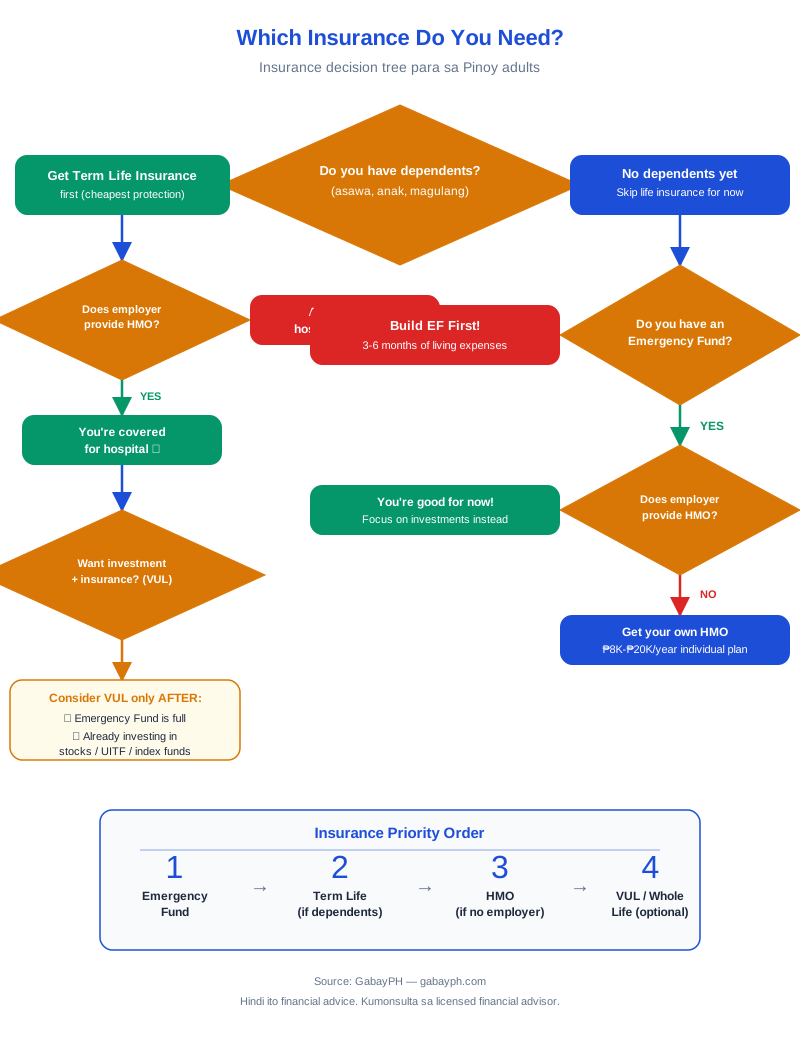
- Get term life insurance first — It's the cheapest way to get maximum coverage. If you have dependents, this is priority number one. Invest the difference between term life and VUL premiums in index funds or mutual funds for potentially better returns.
- Add HMO if your employer doesn't provide one — Medical emergencies are the number one financial emergency for Filipino families. Even a basic HMO plan gives you peace of mind. If your employer provides HMO, check if you can upgrade or add family members.
- Build your emergency fund before insurance — Have at least 3-6 months of expenses saved first. Insurance is for catastrophic events, not daily expenses. Your emergency fund handles small to medium surprises.
- Read the policy contract, not just the brochure — The brochure shows the highlights. The contract shows the exclusions, waiting periods, and fine print. Pay special attention to what is NOT covered.
- Consider VUL only after maxing out other investments — If you already have term life, an emergency fund, and regularly invest in index funds or mutual funds, then VUL can be an additional tool. But it should not be your first or only investment.
- Get quotes from at least 3 companies — Don't just go with the first agent who contacts you. Compare products, premiums, and coverage across multiple insurers. It's your money — shop around.
- Review your coverage annually — As your income grows, your family situation changes, or your debts decrease, adjust your coverage accordingly. What was enough 5 years ago may not be enough today.
- Kumuha muna ng term life insurance — Ito ang pinakamurang paraan para makuha ang maximum coverage. Kung may dependents ka, ito ang priority number one. I-invest ang pagkakaiba sa pagitan ng term life at VUL premiums sa index funds o mutual funds para sa posibleng mas magandang returns.
- Magdagdag ng HMO kung hindi nagbibigay ang employer mo — Ang medical emergencies ang number one financial emergency para sa mga pamilyang Pilipino. Kahit basic HMO plan ay nagbibigay ng peace of mind. Kung nagbibigay ang employer mo ng HMO, i-check kung pwede mong i-upgrade o magdagdag ng family members.
- Itayo muna ang emergency fund mo bago ang insurance — Mag-ipon muna ng kahit 3-6 buwan ng gastusin. Ang insurance ay para sa mga sakuna, hindi pang-araw-araw na gastos. Ang emergency fund mo ang humaharap sa maliit hanggang katamtamang mga surpresa.
- Basahin ang policy contract, hindi lang ang brochure — Ang brochure ay nagpapakita ng mga highlight. Ang contract ang nagpapakita ng mga exclusion, waiting periods, at fine print. Bigyang-pansin ang mga HINDI sakop.
- Isaalang-alang ang VUL pagkatapos ma-max out ang ibang investments — Kung may term life ka na, emergency fund, at regular na nag-i-invest sa index funds o mutual funds, ang VUL ay pwedeng karagdagang tool. Pero hindi ito dapat ang una o tanging investment mo.
- Kumuha ng quotes mula sa kahit 3 kumpanya — Huwag lang sumama sa unang agent na kumontakta sa iyo. Ikumpara ang mga product, premium, at coverage sa maraming insurer. Pera mo iyan — mag-shop around.
- I-review ang coverage mo taun-taon — Habang lumalaki ang income mo, nagbabago ang sitwasyon ng pamilya, o bumababa ang mga utang mo, i-adjust ang coverage mo nang naaayon. Ang sapat noon ay posibleng hindi na sapat ngayon.
Frequently Asked Questions
Mga Madalas Itanong
How much does insurance cost in the Philippines?
It varies widely depending on the type, coverage amount, your age, and health status:
- Term life insurance: ₱500-₱2,000/month for ₱1-3 million coverage (ages 25-35)
- VUL: ₱2,000-₱5,000+/month depending on coverage and investment allocation
- HMO (individual): ₱500-₱1,500/month for basic coverage; ₱1,500-₱3,000+ for comprehensive
- HMO (family): ₱2,000-₱5,000+/month depending on number of members and plan tier
Premiums increase with age, so getting insured younger means lower lifelong costs.
Magkano ang insurance sa Pilipinas?
Malawak ang pagkakaiba depende sa uri, halaga ng coverage, edad mo, at kalagayan ng kalusugan:
- Term life insurance: ₱500-₱2,000/buwan para sa ₱1-3 milyon na coverage (edad 25-35)
- VUL: ₱2,000-₱5,000+/buwan depende sa coverage at investment allocation
- HMO (individual): ₱500-₱1,500/buwan para sa basic coverage; ₱1,500-₱3,000+ para sa comprehensive
- HMO (pamilya): ₱2,000-₱5,000+/buwan depende sa bilang ng members at plan tier
Tumataas ang mga premium habang tumatanda, kaya ang pagkuha ng insurance nang mas bata ay nangangahulugang mas mababang lifetime costs.
Can I cancel my insurance policy?
Yes, you can cancel (surrender) your insurance policy at any time. However, the financial impact depends on the type:
- Term life: You can simply stop paying premiums. No penalty, but you lose coverage.
- VUL / Whole life: You'll receive the surrender value — which is often much less than what you've paid, especially in the first 5-10 years due to high upfront charges. This is one of the biggest complaints about VUL.
- HMO: Coverage ends at the current period. Some plans allow mid-year cancellation with prorated refund.
All policies have a free-look period (usually 15 days after delivery of the policy) during which you can cancel for a full refund, no questions asked.
Pwede ko bang i-cancel ang insurance policy ko?
Oo, pwede mong i-cancel (i-surrender) ang insurance policy mo anumang oras. Gayunpaman, ang financial impact ay depende sa uri:
- Term life: Pwede mong itigil na lang ang pagbabayad ng premiums. Walang penalty, pero mawawala ang coverage mo.
- VUL / Whole life: Matatanggap mo ang surrender value — na kadalasang mas mababa kaysa sa binayad mo, lalo na sa unang 5-10 taon dahil sa mataas na upfront charges. Ito ang isa sa pinakamalaking reklamo tungkol sa VUL.
- HMO: Natatapos ang coverage sa kasalukuyang period. Ang ibang plans ay nagpapahintulot ng mid-year cancellation na may prorated refund.
Lahat ng policies ay may free-look period (karaniwan 15 araw pagkatapos mai-deliver ang policy) kung saan pwede mong i-cancel para sa full refund, walang tanong.
What's the difference between an insurance agent and a broker?
An insurance agent represents ONE specific insurance company. They can only sell products from that company (e.g., a Sun Life agent can only offer Sun Life products). They are common and you'll encounter them most often.
An insurance broker is independent and can recommend products from MULTIPLE insurance companies. Brokers can compare across companies to find the best fit for you. They are less common in the Philippines but offer a more objective perspective.
Both must be licensed by the Insurance Commission. Always verify their license.
Ano ang pagkakaiba ng insurance agent at broker?
Ang insurance agent ay kumakatawan sa ISANG specific na insurance company. Mga product lang ng kumpanyang iyon ang pwede nilang ibenta (hal., ang Sun Life agent ay Sun Life products lang ang pwedeng i-offer). Karaniwan sila at madalas mong makakatagpo.
Ang insurance broker ay independent at pwedeng magrekomenda ng mga product mula sa MARAMING insurance company. Pwedeng ikumpara ng mga broker ang mga kumpanya para mahanap ang pinakaangkop para sa iyo. Hindi sila gaanong karaniwan sa Pilipinas pero mas objective ang pananaw nila.
Parehong kailangang lisensyado ng Insurance Commission. Palaging i-verify ang lisensya nila.
Do I need insurance if I'm single with no dependents?
If nobody depends on your income financially, you don't urgently need life insurance. Your priority instead should be:
- Emergency fund (3-6 months of expenses)
- HMO / health insurance — medical emergencies can happen to anyone at any age. One hospitalization can wipe out your savings.
- Start investing — grow your wealth while you're young and have fewer financial obligations
However, getting term life insurance while you're young and healthy locks in very low premiums — so it's worth considering even before you have dependents, especially if you plan to have a family eventually.
Kailangan ko ba ng insurance kung single ako at walang dependents?
Kung walang umaasa sa income mo nang financially, hindi mo agad kailangan ng life insurance. Ang priority mo sa halip ay dapat:
- Emergency fund (3-6 buwan ng gastusin)
- HMO / health insurance — ang medical emergencies ay pwedeng mangyari sa kahit sino sa kahit anong edad. Isang hospitalization lang ay pwedeng maubos ang savings mo.
- Magsimulang mag-invest — palaguin ang kayamanan mo habang bata ka pa at mas kakaunti ang financial obligations
Gayunpaman, ang pagkuha ng term life insurance habang bata ka pa at malusog ay nagla-lock in ng napakamurang premiums — kaya sulit itong isaalang-alang bago pa man magkaroon ng dependents, lalo na kung may plano kang magkaroon ng pamilya.
What happens if I miss a premium payment?
Most insurance policies have a grace period — usually 30-31 days after the due date — during which you can still pay your premium without losing coverage. If you die during the grace period, the benefit is still paid (minus the unpaid premium).
After the grace period:
- Term life: Your policy lapses (becomes inactive). Some companies offer reinstatement within 2-3 years if you pass a health check.
- VUL: The insurance charges may be deducted from your fund value. If your fund value runs out, the policy lapses.
- HMO: Coverage is suspended immediately after the grace period ends.
Set up auto-debit from your bank account or GCash to avoid missed payments.
Ano ang mangyayari kung hindi ako makabayad ng premium?
Karamihan ng mga insurance policy ay may grace period — karaniwan 30-31 araw pagkatapos ng due date — kung saan pwede mo pa ring bayaran ang premium mo nang hindi mawawala ang coverage. Kung mamatay ka sa grace period, binabayaran pa rin ang benefit (minus ang hindi nabayarang premium).
Pagkatapos ng grace period:
- Term life: Nala-lapse ang policy mo (nagiging inactive). Ang ibang kumpanya ay nag-o-offer ng reinstatement sa loob ng 2-3 taon kung pumasa ka sa health check.
- VUL: Ang insurance charges ay pwedeng ibawas sa fund value mo. Kung maubos ang fund value mo, nala-lapse ang policy.
- HMO: Naso-suspend kaagad ang coverage pagkatapos matapos ang grace period.
Mag-set up ng auto-debit mula sa bank account o GCash mo para maiwasan ang missed payments.
Is it worth getting insurance from my bank?
Bancassurance (insurance sold through banks) is convenient but not always the best deal. The products offered are typically from the bank's partner insurer only, so you don't get to compare across companies.
Advantages: convenient if you already bank there, easier premium payments, trusted institution. Disadvantages: limited product selection, bank staff may not be as knowledgeable about insurance as dedicated agents.
Our recommendation: Use bancassurance as one of your options, but still compare with direct insurance company products and independent brokers before deciding.
Sulit ba ang pagkuha ng insurance sa bangko ko?
Ang bancassurance (insurance na ibinebenta sa mga bangko) ay convenient pero hindi palaging pinakamahusay na deal. Ang mga products na ini-offer ay karaniwan mula sa partner insurer ng bangko lang, kaya hindi ka nakakakumpara sa maraming kumpanya.
Mga kalamangan: convenient kung nag-ba-bangko ka na doon, mas madaling pagbabayad ng premium, pinagkakatiwalaang institusyon. Mga disadvantage: limitadong product selection, posibleng hindi gaanong bihasa ang bank staff sa insurance kumpara sa dedicated agents.
Rekomendasyon namin: Gamitin ang bancassurance bilang isa sa mga opsyon mo, pero ikumpara pa rin sa direct insurance company products at independent brokers bago magdesisyon.